


“Free Ukraine Fund” encourages investments
25.02.2026
The Ukrainian Security and Cooperation Center, which celebrates its 3rd anniversary on April 2, is implementing…
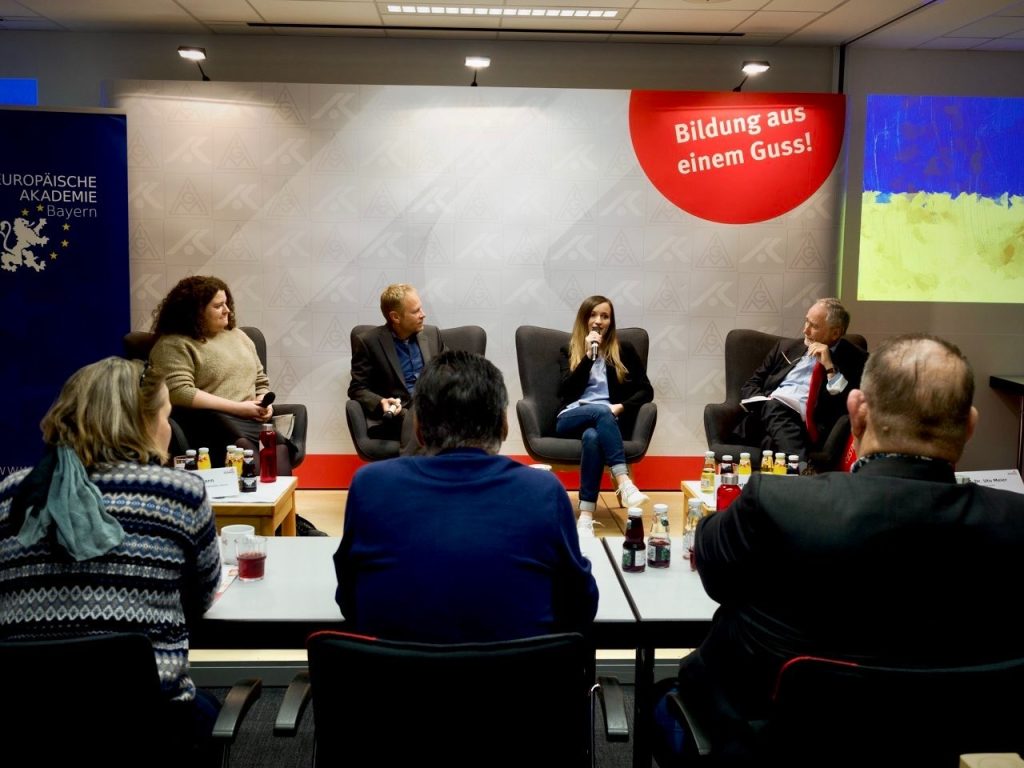
On November 10–11, the forum “Ukraine – An Era of Change” took place in the town of Inzell (Germany), with the participation of a representative of the Ukrainian Center for Security and Cooperation in Germany.
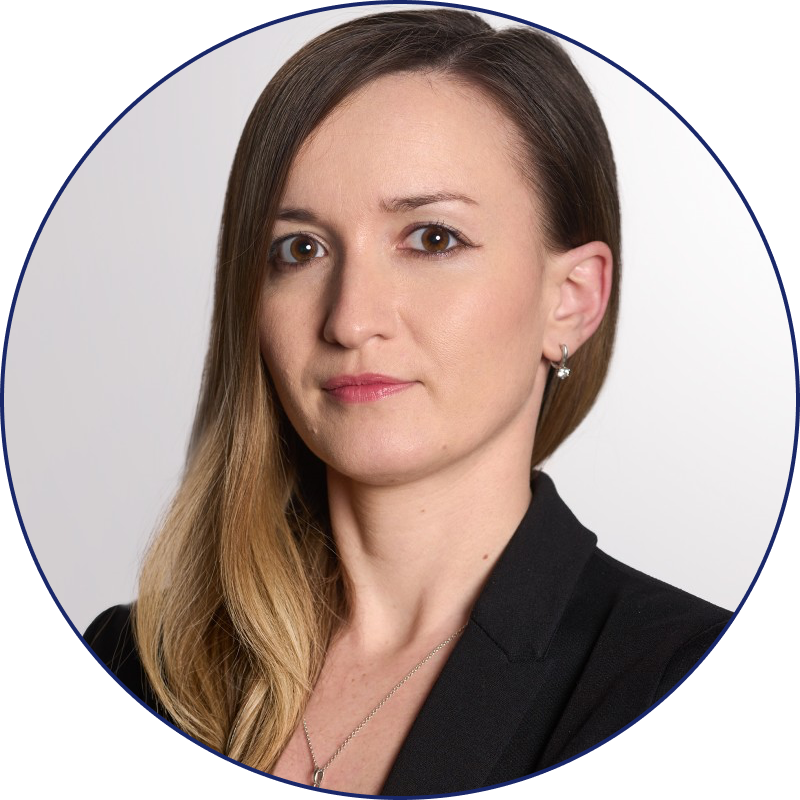
The event, dedicated to continued German support for Ukraine, brought together more than 90 participants from both countries and consisted of panel discussions focused on bringing peace closer in Ukraine and exposing the true “face” of Russia. One of the panel speakers in “Ukraine: Prospects for Peace and Recovery” was Kateryna Matei, UCBSS representative in Germany.
“The ‘negotiating table’ is exactly what Russia is striving for—speculating about Western fatigue from the war, activating its network of disinformation and accomplices worldwide, and striking Ukraine’s critical infrastructure.”
In her speech, Kateryna referred to the history of Ukraine’s relations with Russia over nine years of war:
“Between 2014 and 2022, Ukraine conducted nearly 200 rounds of negotiations with Russia. During this time, 20 ceasefire agreements were reached—and all of them were violated. On February 24, no diplomacy stood in the way of a direct war.”


Kateryna Matei, UCBSS representative, and participants of the forum “Ukraine – An Era of Change.” Photo – Wilfried Hess.
UCBSS speakers in Ukraine and around the world consistently emphasize that Russia’s key objective in pushing for negotiations is to freeze the war in order to restore its resources and retain control over Ukraine’s occupied territories.
Kateryna Matei also noted that on the issue of peace, Ukraine will act exclusively according to the Peace Formula of President of Ukraine Volodymyr Zelenskyy, which is supported worldwide.
The key goals after Ukraine’s victory remain unchanged:
1. Establishment of an international tribunal and fair punishment of all those responsible. Without justice and accountability, there can be no lasting peace with Russia, let alone reconciliation or future relations.
2. Reparations for reconstruction. It is obvious that Russians will not cooperate willingly on this issue; therefore, the West must confiscate frozen assets, real estate, and other holdings of sanctioned Russians and their families in Western countries, and create a legal framework to transfer these funds to Ukraine for reconstruction.
3. Demilitarization, deradicalization, and denazification of Russia and Russian society.
“A crucial factor for lasting peace worldwide must be countering Russian influence and local Russian agents. The next stage is the demilitarization and denazification of Russians. After decades of Russian disinformation and manipulation, and a series of ethnic conflicts provoked by Russia, the West must recognize the threat of a long-term hybrid war and take it seriously,” Kateryna emphasized at the end of her speech.
Read also: The Russian Hydra in Europe: Czechia Under Attack
“In addition to supporting Ukraine, Western countries must focus on the Russian presence within their own states—in the media, politics, and civil society. This will help prevent Russian lobbying and societal radicalization, and ensure unity among allies. The unity of democratic societies is the key weapon against Russian totalitarianism and dictatorship,” notes Kateryna Matei, UCBSS representative in Germany.
We thank Kateryna Matei for her participation and for being Ukraine’s voice to the Western world. Only by speaking openly about the true nature of Russia and Ukraine’s needs can we keep our partners focused on the war in Ukraine. We also thank the European Academy of Bavaria and the Critical Academy for organizing the event.
25.02.2026
The Ukrainian Security and Cooperation Center, which celebrates its 3rd anniversary on April 2, is implementing…
24.06.2024
An advocacy summit, Nordic Ukraine, took place in Helsinki, the capital of Finland. Participants included the…

24.04.2024
In Germany, with the support of the Ukrainian Center for Security and Cooperation, a discussion was…


