


“Free Ukraine Fund” encourages investments
25.02.2026
The Ukrainian Security and Cooperation Center, which celebrates its 3rd anniversary on April 2, is implementing…
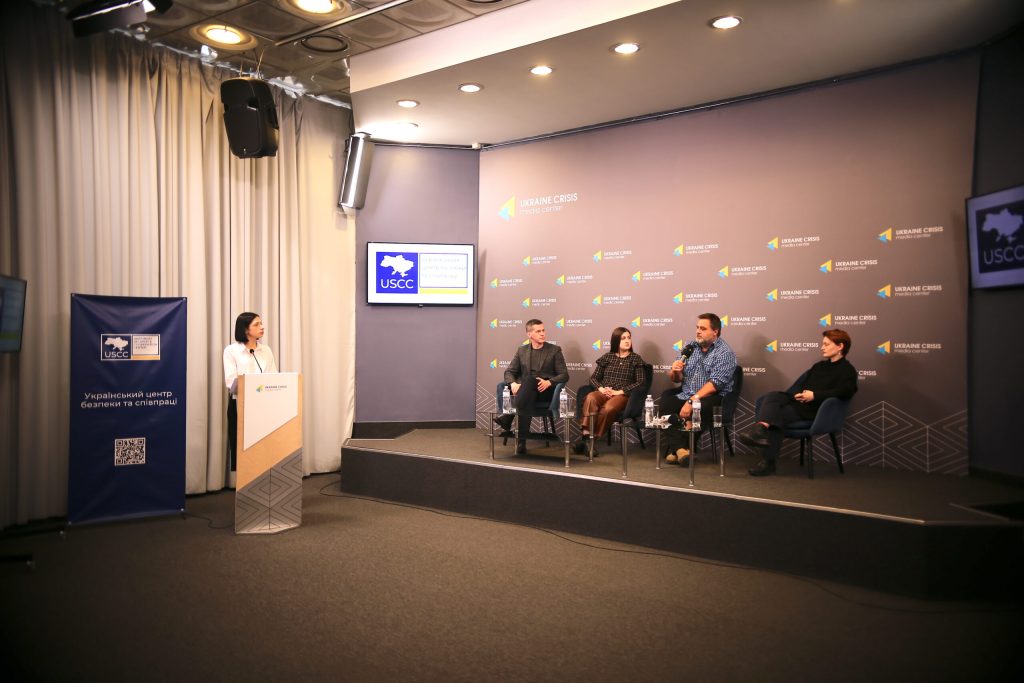
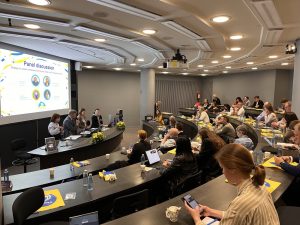
On March 14, a press briefing titled “Chairing the UN Security Council or Expulsion from the Organization: What Awaits Russia?” took place at the Ukrainian Crisis Media Center.
In two weeks, Russia is set to assume the chairmanship of the United Nations Security Council. At the same time, over the past year, the Russian Federation has violated all fundamental principles of the UN and launched a war—the very threat this international organization was created to counter after World War II.
“The Kremlin’s unprovoked war against Finland in 1939, just like the case of Ukraine, sparked a wave of mass protests around the world demanding that the international organization responsible for global security at the time—the League of Nations—act immediately. Within two weeks of the invasion, on December 14, the 20th Assembly of the League of Nations was convened, where the majority voted to expel the USSR from the organization. For more than a year now, the largest war in Europe since World War II has been ongoing. But I am convinced that we will all witness Russia’s expulsion from the UN as well, just as it was expelled from the League of Nations. And this time, humanity must learn the lesson,” said Serhii Kuzan, Head of the Ukrainian Center for Security and Cooperation, during the briefing.
Read also: Campaign #unrussiaUN to expel Russia from the UN Security Council
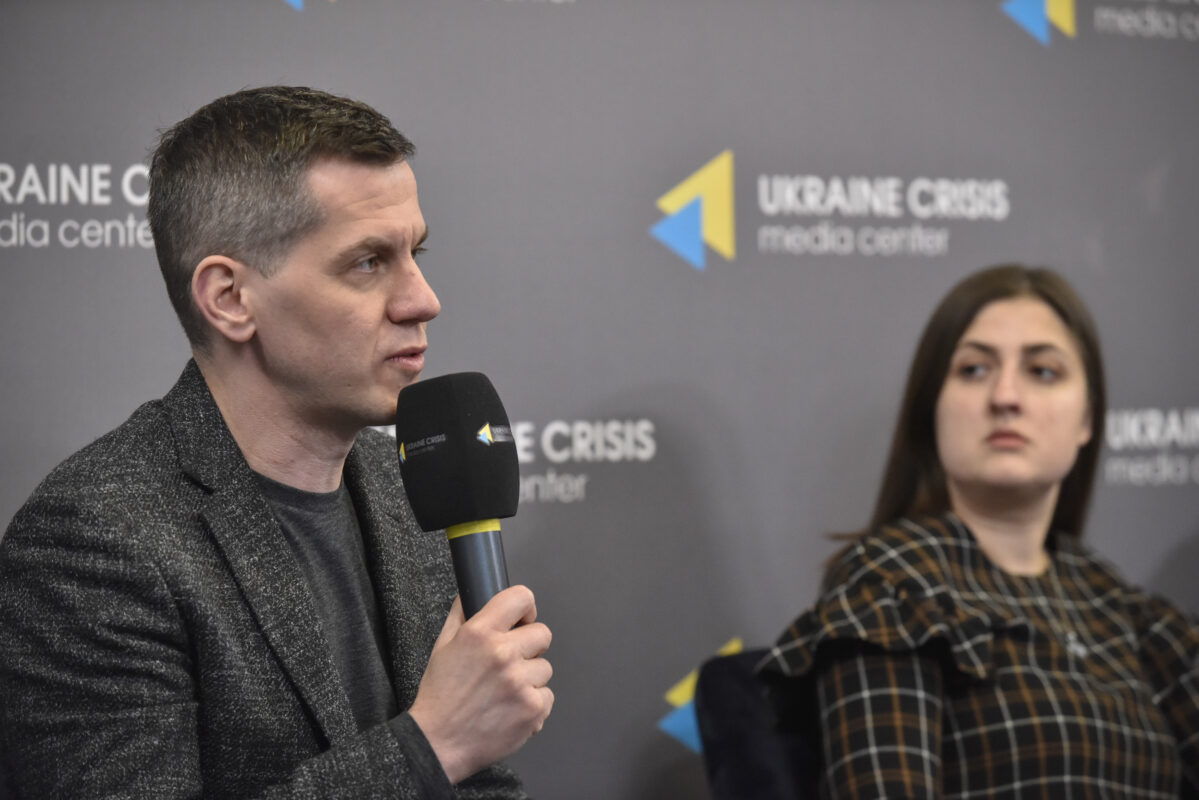
Head of the Ukrainian Center for Security and Cooperation Serhii Kuzan.
On February 24, 2022, Russia launched its full-scale invasion of Ukraine during a UN Security Council meeting. By exercising its veto power, Russia has exploited the ineffectiveness of this mechanism to shield itself from accountability for its crimes for years. On February 25, 2022, Russia vetoed a Security Council resolution condemning its criminal actions in Ukraine. On August 9, 2008, Russia blocked a resolution calling for the withdrawal of Russian troops from Georgia. On March 15, 2014, it similarly blocked a resolution on the non-recognition of the so-called referendum in temporarily occupied Crimea. On April 10, 2018, Russia prevented the Security Council from considering a resolution to investigate a possible chemical attack in Syria. The veto power—in the hands of a terrorist state.
“Russia’s membership in international institutions is based on trust. Despite its invasion of Ukraine and countless war crimes, it retains this ‘trust’ through the sophisticated use of strategic propaganda. This propaganda—whether in Australia or Africa—exploits what Russia knows about our own weaknesses. We are foolish if we fail to counter this informational and political assault on values, including those the UN supposedly upholds,” emphasized Australian author, civic and political activist Pete Shmigel during the briefing.
Read also: Patterns Emerge – Pete Shmigel on Russia at the UN
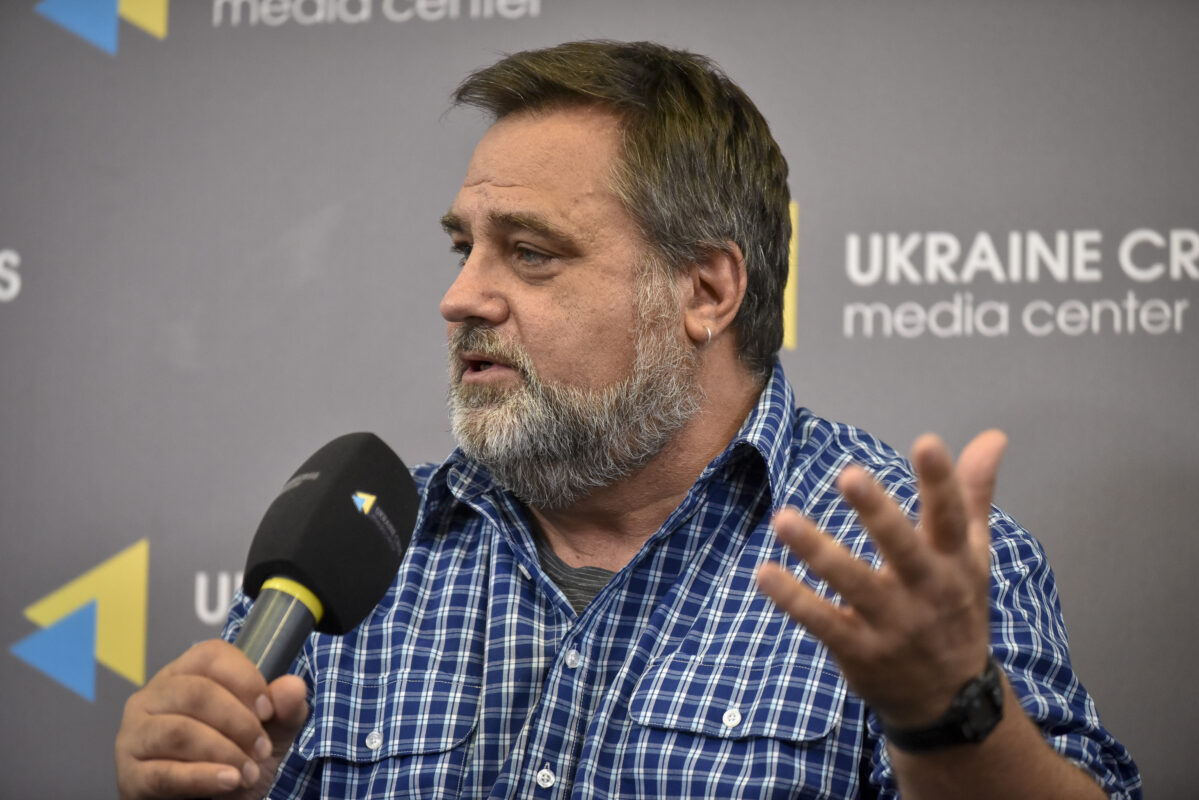
Australian author, civic and political activist Pete Shmigel.
On December 26, 2022, Ukraine’s Ministry of Foreign Affairs called on UN member states to restore the application of the UN Charter regarding the legitimacy of the Russian Federation’s presence in the UN, to strip Russia of its permanent member status in the UN Security Council, and to expel it from the UN entirely. In the summer of 2022, the UN General Assembly, during an emergency special session, adopted a resolution temporarily suspending Russia’s membership in the UN Human Rights Council. Therefore, Russia’s presence in the UN Security Council can likewise be deemed unacceptable.
“I once attended a meeting at UN headquarters on the situation of the Crimean Tatars in Crimea after its occupation by Russia. There was form, there was protocol, everything was recorded and the necessary reports were delivered. Did the meeting have any effect at all? I did not notice any. On the contrary, it felt like mere formality. When the future of the world is being decided—at the cost of Ukrainian lives—the main organization tasked with ensuring peace cannot afford to be dysfunctional and exist simply because there is no alternative. Change, or disappear,” said Alina Zubkovych, Head of the Swedish organization Nordic Ukraine Forum, during the briefing.
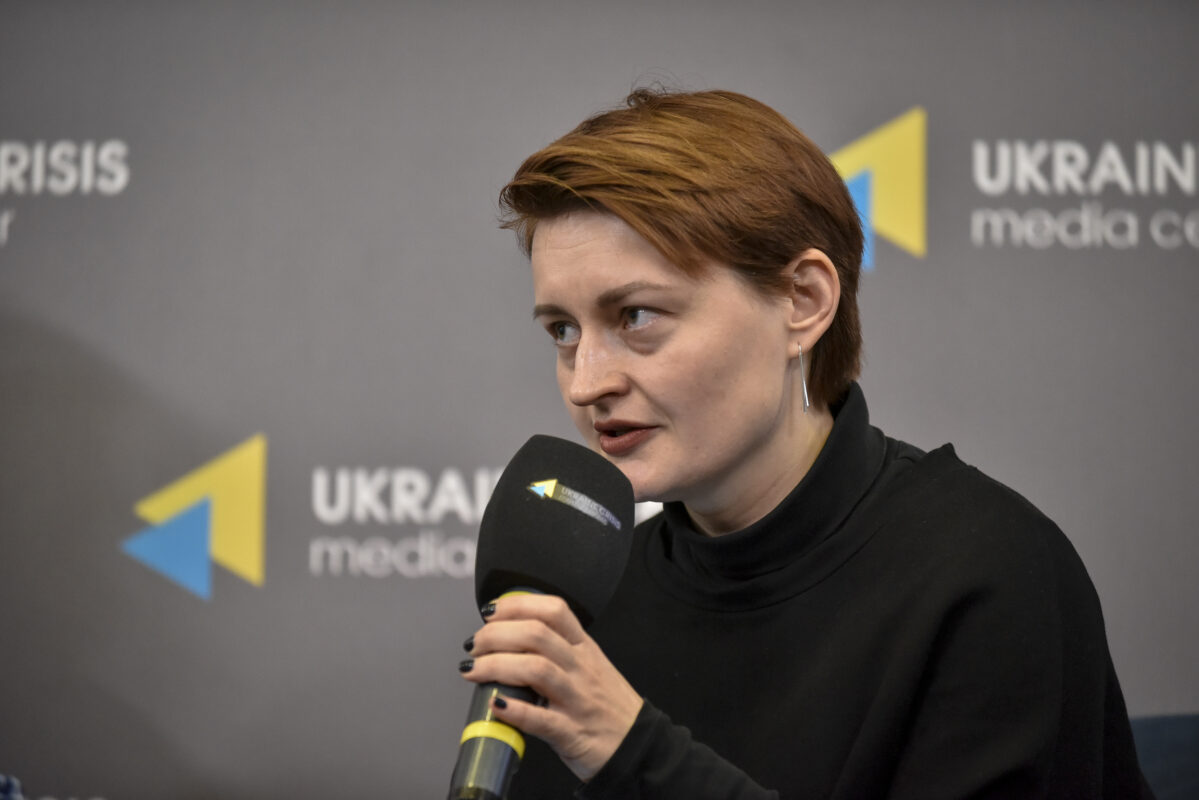
Head of the Swedish organization “Nordic Ukraine Forum” Alina Zubkovych.
Since the beginning of the full-scale invasion, civil society around the world has taken to the streets demanding Russia’s expulsion from the UN Security Council. As Finland’s experience in 1939 showed, public action drawing attention to the actions of a terrorist state was one of the decisive factors in the USSR’s expulsion from the League of Nations.
“The Czech Republic, where I found myself after the full-scale invasion, is a vivid example of a country that still has to fight Russian influence and knows from its own experience what Kremlin occupation means. Even a country that is a member of the EU and NATO must still defend its democracy. Public pressure from Czech-Ukrainian pro-democracy civil society plays a critically important role in resisting destructive pro-Russian influence. I am convinced that to achieve lasting peace in Ukraine and eliminate Russia’s influence on the domestic political situation in the Czech Republic and other European countries, this pressure must not weaken,” stated Anastasiia Sihnaievska, co-coordinator of the Czech initiative Hlas Ukrajiny, during the briefing.

Co-coordinator of the Czech initiative Hlas Ukrajiny Anastasiia Sihnaievska
The event was organized by the Ukrainian Center for Security and Cooperation.
25.02.2026
The Ukrainian Security and Cooperation Center, which celebrates its 3rd anniversary on April 2, is implementing…
24.06.2024
An advocacy summit, Nordic Ukraine, took place in Helsinki, the capital of Finland. Participants included the…

24.04.2024
In Germany, with the support of the Ukrainian Center for Security and Cooperation, a discussion was…


