


Mariupol is Putin’s blueprint for occupation, and the world is barely paying attention
18.05.2026
When Russia launched its full-scale invasion of Ukraine in 2022, Mariupol quickly became the site of…
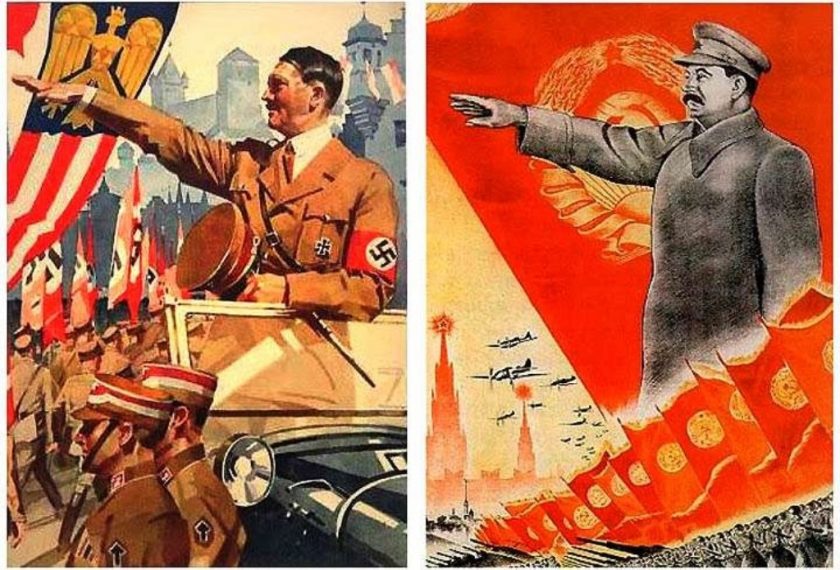
The Russian authorities, who have long used history not only as a tool of propaganda and disinformation but also as an instrument of hybrid aggression, have decided to “bury” a number of historical facts related to the outbreak of World War II and the role of the USSR.
In a comment to the Ukrainian Center for Security and Cooperation, Chief of Ukraine’s Military Intelligence Kyrylo Budanov noted that although World War II ended for the rest of the world in September 1945, it appears that for the Kremlin it is still ongoing and serves as an inexhaustible source of Russian propaganda, manipulation, and fake narratives. First and foremost, this is aimed at the domestic audience, which is raised on the myths of the so-called “Great Patriotic War” and the image of a “liberator nation.”
On June 9, the lower house of the Russian parliament adopted, in its third and final reading, Draft Law No. 1166218-7 amending the Federal Law “On Perpetuating the Victory of the Soviet People in the Great Patriotic War of 1941–1945.”
On July 1, it was signed by the President of the Russian Federation. The law establishes a ban on publicly denying the “decisive role of the Soviet people in the defeat of Nazi Germany” and the “humanitarian mission of the USSR in liberating European countries.” The ban applies to public speeches, publicly displayed works, as well as the media and the Internet.
In particular, the explanatory note to the bill states that its purpose is “to establish a prohibition on equating the goals, decisions, and actions of the leadership of the USSR, its command and servicemen with the goals, decisions, and actions of the leadership of Nazi Germany, its command and servicemen, and the Axis countries as established by the verdict of the International Military Tribunal (the Nuremberg Trials), as well as denying the decisive role of the Soviet people in the defeat of Nazi Germany and the humanitarian mission of the USSR in liberating European countries.”
What Is the Kremlin Trying to Ban?
On August 23, 1939, Germany and the USSR signed the Molotov–Ribbentrop Pact — a non-aggression treaty. In a secret protocol to the agreement, Moscow and Berlin agreed on the division of spheres of influence in Eastern Europe. Just one week after the signing of this document, World War II began. On September 1, 1939, Germany attacked Poland from the west, and on September 17, the Red Army entered Polish territory from the east. On September 23, 1939, a joint parade of the Wehrmacht and the Red Army, as allies, took place in Brest (now Belarus).
These historical facts have always been extremely inconvenient for both the USSR and its legal successor, Russia, since World War II — or rather a selectively chosen part of it — forms the foundation of the ideology of the “Russian world.”
Selective, because for Russia and its satellites the war did not begin on September 1, 1939, but on June 22, 1941 — the date Germany violated the non-aggression pact — and became known as the “Great Patriotic War.”
The law adopted on June 9 fully fits the narratives of modern Russia, which portrays the USSR as a “liberator” of oppressed peoples and a victorious state. At the same time, it conveniently ignores the fact that 62 countries took part in the war, hostilities were conducted across three continents and four oceans, and victory was achieved through the titanic and coordinated efforts of all members of the Anti-Hitler Coalition.
Why are these definitions and this interpretation so important to the Kremlin? Because what the Kremlin calls “liberation” was, in reality, the occupation of independent states.
Following the partition of Poland, Western Ukraine came under Soviet occupation. Between 1939 and 1941, approximately 100,000 people were deported from the region — primarily Poles, Jews, and members of Ukrainian patriotic organizations.
On November 30, 1939, Soviet troops (around half a million soldiers) invaded Finland, launching the so-called Winter War.
A year later, the occupation of the Baltic states began.
On June 14, 1940, the USSR issued an ultimatum to Lithuania, demanding a change of government and the opening of its borders. On June 15, the Red Army entered Lithuania, and on June 17 the same fate befell Latvia and Estonia.
In 1941, large segments of the population of these countries, including women and children, were deported. In particular, on the night of June 13–14, about 15,500 residents of Latvia — including 2,400 children under the age of 10 — were arrested without court decisions and deported to remote regions of the USSR.
Additionally, 34,000 people from Lithuania and 10,000 from Estonia — often entire families — were deported.
That is why Soviet — and now Russian — propaganda focuses exclusively on the period from June 22, 1941 (Germany’s breach of the non-aggression pact) to May 9, 1945 (Victory Day). In former Soviet states, Victory Day is celebrated on May 9 rather than May 8 because at the time of the signing of the German Instrument of Surrender, it was already May 9 in Moscow.
For the modern Russian authorities, who have inherited all the myths of Soviet propaganda and for whom the collapse of the USSR was the “greatest geopolitical catastrophe of the 20th century,” the role of the USSR in World War II is almost sacred. It underpins the myths of a “victor nation,” a “chosen people,” and a people who “defeated fascism alone” (with Nazism replaced by “fascism” in Soviet-Russian propaganda):
“We will always remember that this great feat was accomplished precisely by the Soviet people. In the most difficult moments of the war, in decisive battles, our people alone determined the outcome of the struggle against fascism,” — from Putin’s speech on May 9, 2021.
All historical facts and statements made in the European Parliament regarding the equal responsibility of Stalin and Hitler for unleashing the war are dismissed by the Russian president as “nonsensical rubbish” from people who “cannot read or write.”
The Propaganda of Victory
Entire generations of Russian children — as well as children living in territories occupied by Russia — are raised on the narrative of the “Great Patriotic War” and the “Great Victory” of the Soviet Union.
The scale becomes evident when examining the activities of the all-Russian Yunarmiya military-patriotic movement, funded by the Russian government through the Ministry of Defense and indoctrinated with Russian propaganda. Yunarmiya branches operate not only throughout Russia but also in occupied parts of Georgia, Ukraine (Donetsk and Luhansk regions, Crimea), and Moldova. According to the movement’s website, its membership currently stands at 808,000.
Despite the COVID-19 pandemic, which posed serious risks to public health, Russia once again brought thousands of people — including Yunarmiya children — into the streets for Victory Day parades this year.
This level of propaganda surrounding Russia’s interpretation of World War II serves not only as a unifying factor for the “Russian world,” but also as a tool for stigmatizing and demonizing countries perceived as hostile to the current Russian regime.
“The Main Directorate of Intelligence of the Ministry of Defense of Ukraine systematically monitors the actions of Russia’s top leadership, including the hybrid methods Russia uses to whitewash its own history and that of its predecessor state — the USSR. This narrative not only helps Russia divide the world into ‘friends’ and ‘enemies,’ but also motivates and justifies Russian armed aggression, which, as in the Soviet era, is presented as ‘liberation’ or a fight against ‘fascism,’” Kyrylo Budanov stated.
Author: Oksana Kuzan
18.05.2026
When Russia launched its full-scale invasion of Ukraine in 2022, Mariupol quickly became the site of…

05.05.2026
Russia pressed every Donbas sector in April, with assault tempo at a two-month high. The territorial…

16.03.2026
It is in the war against Ukraine that Russia is trying to adhere to this non-linear…


