


Ukraine flipped the drone math – and Russia`s assault tempo just stopped buying ground
05.05.2026
Russia pressed every Donbas sector in April, with assault tempo at a two-month high. The territorial…
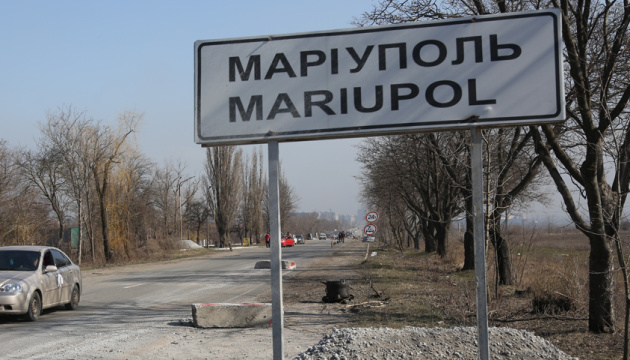
When Russia launched its full-scale invasion of Ukraine in 2022, Mariupol quickly became the site of one of the war’s most devastating and defining sieges.
The bombed maternity hospital, the theatre sheltering children reduced to rubble, the endless apartment blocks blackened by artillery fire became global symbols of the assault. A city of around 450,000 people was encircled within days and systematically pulverised. Tens of thousands of civilians are believed to have been killed, while more than 90 per cent of buildings were damaged or destroyed.
What has followed in the city has been equally insidious, though far less recognised. Mariupol is becoming the Kremlin’s blueprint for occupation and now serves as a case study in how modern Russia consolidates territorial conquest through propaganda, demographic engineering, surveillance and economic patronage.
Almost immediately after the bombardment, Russian officials reframed Mariupol’s future around the language of “liberation” and “reconstruction”. State-linked developers moved into occupied registries. Russian media channels began showcasing gleaming new apartment blocks as proof of Moscow’s supposed benevolence. Influencers were deployed to complete the illusion through aesthetic videos filmed on rebuilt sites of mass civilian casualties.
On TikTok and Telegram, pro-Russian content creators now post lifestyle videos presenting Mariupol as a thriving Russian city reborn from war. The purpose is not only to convince Russians that the war was justified and to hide the barbaric reality of life under occupation. It is to slowly condition audiences into accepting Russian control as permanent, ordinary and even successful. Destruction is followed by reconstruction. Reconstruction becomes propaganda. Propaganda becomes legitimacy.
Behind the glossy videos lies a far darker reality. Mariupol today functions as a surveillance state. Residents describe near-constant monitoring through checkpoints, phone inspections, online scrutiny and unannounced home searches. Personal devices are routinely checked for pro-Ukrainian content, subscriptions or contacts. In occupied territories, surveillance is not simply about security; it is about enforcing ideological conformity and severing any remaining connection to Ukraine people may hold on to.
Those suspected of “disloyalty” still risk abduction, torture and, in some cases, being killed by Russian security services or their proxies.
Religious life has also come under growing pressure. Faith communities seen as insufficiently loyal to Moscow face intimidation, arrest and torture, closure or forced re-registration under Russian systems. Religious institutions increasingly operate only with the approval of occupation authorities, further embedding Kremlin control into everyday civic life.
Mariupol’s population is now estimated to be roughly half its pre-2022 size. Yet the new housing developments are not primarily intended for displaced residents who lost everything during the siege. Instead, Russian citizens are being incentivised to relocate there with subsidised mortgages as low as two per cent. Teachers, doctors and cultural workers are encouraged to move into occupied territory, while thousands of supposedly “ownerless” homes are being confiscated from Ukrainians.
The economic networks reveal even more about how the Kremlin operates. Luxury housing complexes are being built by firms tied to Russian political elites, state contractors and oligarchic networks. Companies connected to sanctioned figures and Kremlin-linked businessmen are profiting directly from occupation. Mariupol has become an economic ecosystem where destruction creates opportunity for those within Russia’s patronage system.
What has emerged in Mariupol is not simply reconstruction, but a form of economic and demographic re-engineering. Researchers have identified at least 31 luxury housing developments underway in the city, involving 12 Russian construction firms of varying prominence. These are not ad hoc rebuilding efforts; they represent a coordinated influx of state-linked capital and imports of residents from Russia, loyal to the Kremlin. What is emerging is a systematic demographic transformation.
At the same time, repression for Ukrainians has become embedded into everyday life. Unannounced home searches are common. Phone inspections occur routinely across the city. Businesses reportedly pay military-linked actors for “protection”. Units such as Akhmat are alleged to exert pressure over local commerce through coercive arrangements that resemble organised criminal structures as much as military governance.
And then there is the militarisation of children. Three schools in Mariupol now reportedly train children to operate drones, and a UAV laboratory has been established at Priazovsky State Technical University. Russia has openly stated its ambition to train one million drone specialists by 2030, and occupied territories are increasingly part of that pipeline. Individuals with gaming experience can reportedly transition into FPV drone operations after only days of additional training. The Kremlin is not merely occupying territory. It is reshaping future generations inside it.
Public oath-taking ceremonies for adult recruits are staged to create the appearance of voluntary patriotism, masking what many locals describe as coercive mobilisation. Behind the symbolism lies a broader campaign of forced conscription across occupied territories. Civilians are pressured into Russian military service through intimidation, economic dependency and administrative coercion, while migrant workers and vulnerable residents are increasingly targeted to offset Russia’s mounting recruitment shortfalls. Occupied Ukrainians are treated not as protected civilians, but as a manpower reserve for the very army occupying their homes.
What is being tested there is a model for twenty-first century authoritarian occupation: destroy resistance, flood the information space with curated narratives, replace populations, reward loyal economic actors, militarise youth and gradually erase the memory of what came before.
Mariupol, therefore, is not only a symbol of destruction, but of how that destruction is leveraged to entrench control, redistribute resources and normalise occupation over the long term. It offers a stark insight: the end of open Russian bombardment against civilians does not mark the end of their ordeal – it marks the beginning of a quieter, more systematic form of violence.
05.05.2026
Russia pressed every Donbas sector in April, with assault tempo at a two-month high. The territorial…

16.03.2026
It is in the war against Ukraine that Russia is trying to adhere to this non-linear…

13.03.2026
Russia planned to launch its spring offensive from Dnipropetrovsk Oblast. Ukraine got there first—and Starlink’s collapse…


