


Ukraine Is a Key Pillar of Europe’s Defense
13.06.2025
At the summit of the Bucharest Nine (B9) and Nordic countries held on June 2, 2025,…
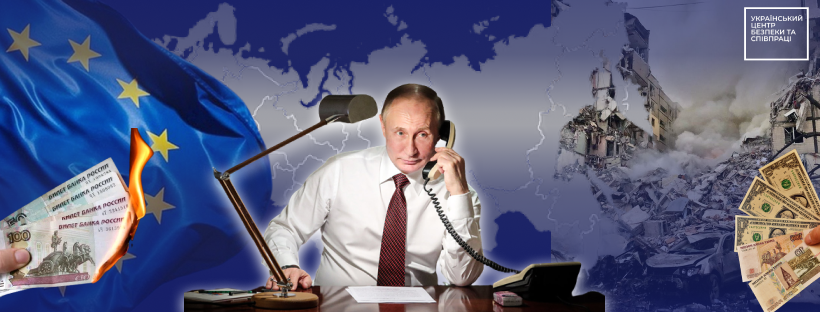
During a year and a half of Russia’s full-scale war against Ukraine, the EU has introduced 11 sanctions packages against companies and individuals in an effort to restrain Russia’s military machine. However, this pressure is still insufficient to stop the war and the deaths of Ukrainian civilians. Moreover, ways to circumvent sanctions are being sought not only by Russians themselves, but also by global corporate giants.
Expectations surrounding the first EU sanctions imposed on Russia can, without exaggeration, be described as sky-high. The collapse of the Russian economy, a focus on domestic problems, rapid loss of military equipment on the battlefield, and economic isolation of Russia – this was how the future of the Russian Federation was imagined once all sanctions policies were implemented.
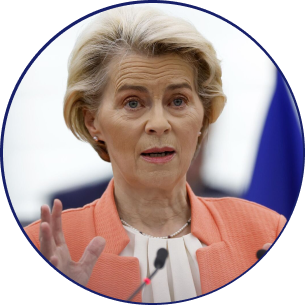
“Our sanctions are significantly eroding Russia’s economic base, depriving it of any prospects for modernization. We will pursue those who help Russia circumvent sanctions or replenish its military arsenal,” – commented European Commission President Ursula von der Leyen during a press conference on February 24, 2023.
Thus, in 2022 Russia became the country with the largest number of sanctions imposed against it. However, this did not stop the war in Ukraine, as effective sanctions require strict enforcement. Given the long-standing relationships Russia had built and its “oil and gas needles” embedded in dozens of countries, such control required double the effort.
EFFECTIVENESS OF SANCTIONS AGAINST RUSSIA
The effectiveness of sanctions against Russia cannot be denied, as their impact is a long-term process. In some cases, sanctions that significantly affect certain sectors of Russia’s economy take time to be adopted, or only come into force after a delay. For example, oil sanctions with a six-month delay took effect on December 5, 2022, and fuel sanctions on February 5, 2023. This time was given to EU countries to find alternative energy supply routes in order to reduce pressure on their economies.
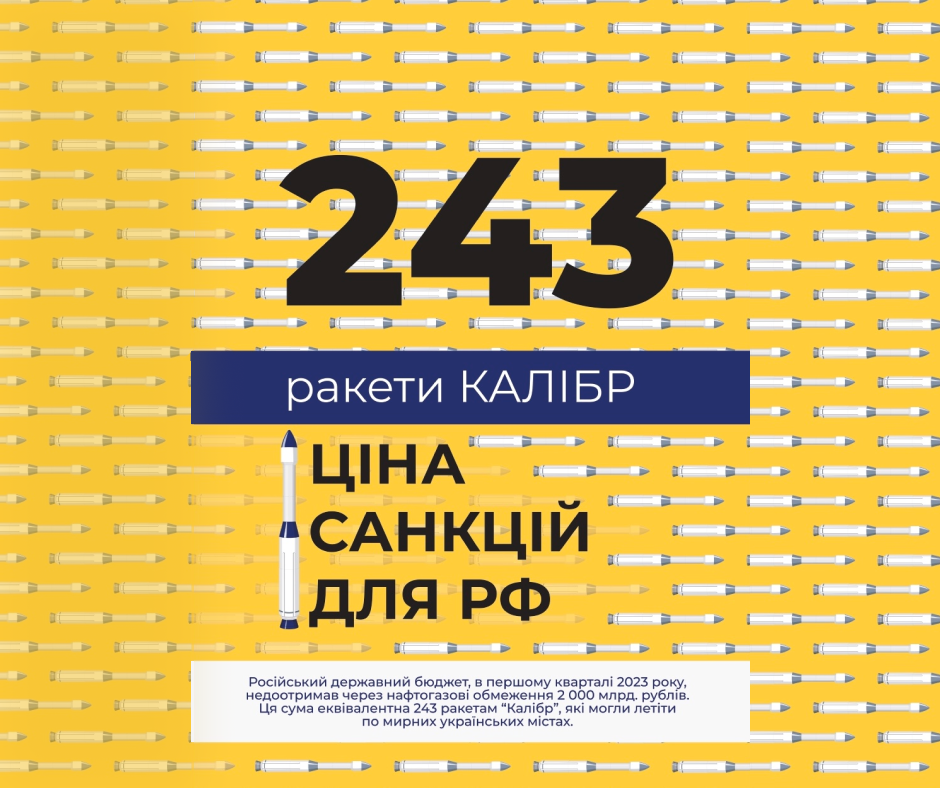
In the first quarter of 2023 alone, Russia’s budget lost 2 trillion rubles due to sanctions restrictions – equivalent to 243 Kalibr cruise missiles, as previously analyzed by the UCCSC. Comparing lost revenues to the number of missiles Russia could have produced directly illustrates how sanctions can save human lives.
Among the full range of sanctions measures, the most painful for Moscow has been Europe’s and the G7’s отказ from Russian energy resources. Before the full-scale invasion, around 40% of the federal budget was formed from oil and gas export revenues. In the first half of 2023, Russia’s budget revenues from oil and gas fell by 47% to 3.38 trillion rubles ($37.4 billion) compared to the same period in 2022.
The KSE Institute states in its analytical report that in 2023 alone, due to the oil price cap, embargo on seaborne imports of Russian oil, and rejection of Russian gas, Russia’s oil and gas revenues will be halved to $166 billion. The EU emphasizes in its report that due to sanctions, exports from the EU and imports from Russia in 2023 fell by more than 50% compared to 2021, leading to an “unprecedented rupture of trade relations.” The U.S. Treasury states that sanctions have significantly weakened Russia’s military-industrial complex and defense supply chains, though they have not fully stopped it.
At the same time, Russia has managed to reestablish imports of critical components by circumventing sanctions. As a result, European governments now face the task of limiting Russia’s ability to bypass sanctions. This was one of the goals behind the EU’s 11th sanctions package. Following its introduction, 87 new entities were added to the list of those directly supporting Russia’s military-industrial complex in its war of aggression against Ukraine. In addition to Russian and Iranian legal entities already under sanctions, this now includes companies registered in China, Uzbekistan, the UAE, Syria, and Armenia. On September 14, the U.S. announced sanctions against five Turkish firms assisting Russia’s foreign trade. Overall, the U.S. imposed new sanctions on more than 150 companies worldwide, including those from the European Union.
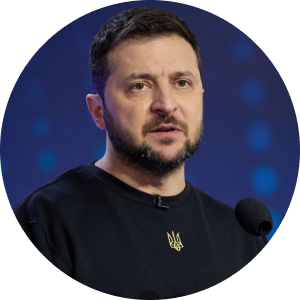
“Autumn should become the time for a new EU sanctions package against Russia,” commented the current situation President of Ukraine Volodymyr Zelenskyy. Global media report active work on the 12th sanctions package. New restrictions may be presented in the first half of October or announced during the EU–U.S. summit.
13.06.2025
At the summit of the Bucharest Nine (B9) and Nordic countries held on June 2, 2025,…

13.06.2025
The full-scale war against Ukraine is setting new rules and military doctrines that must be taken…

09.06.2025
In the fall of 2024, the Kremlin took another step toward renewed nuclear blackmail. On September…


