


The Architecture of a New European Security System Must Be Built on a Ukrainian Foundation
13.06.2025
The full-scale war against Ukraine is setting new rules and military doctrines that must be taken…
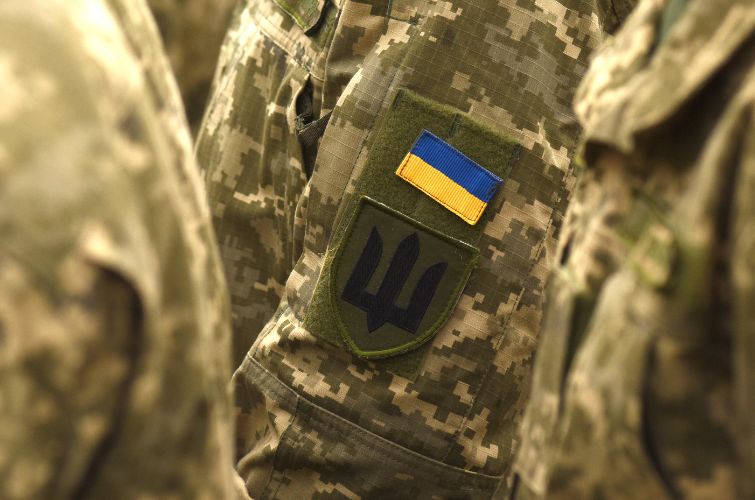
At the summit of the Bucharest Nine (B9) and Nordic countries held on June 2, 2025, in Vilnius, participants issued a joint statement supporting Ukraine’s swift accession to the North Atlantic Alliance.
The defining feature of these countries is their close proximity to Russia’s borders or their historical experience of Soviet and Russian occupation. From the very beginning of Russia’s full-scale invasion, NATO’s Eastern Flank countries clearly understood Ukraine’s critical role in the defense system of Eastern Europe. This is clearly reflected in the volume of military assistance: the Baltic states alone have provided Ukraine with support equivalent to 6.6% of their combined GDP. The absolute leader is Estonia, whose contribution amounts to 2.6% of GDP.
Denmark also deserves special mention, having allocated total assistance equal to 2.6% of GDP, or €8.6 billion. Perhaps even more important, however, was Copenhagen’s decision to begin investing directly in Ukraine’s defense sector. This approach later became known as the “Danish model.” Within this framework, European partners began investing funds into the production and procurement of Ukrainian-made weapons, long-range missiles, and drones.
Overall, since the start of the full-scale invasion, the Nordic countries and the Bucharest Nine have provided Ukraine with more than €32 billion in assistance.
This policy is also the result of an awareness of potential Russian aggression, which European intelligence agencies are currently warning about. Ukrainian President Volodymyr Zelenskyy, who was invited to the Vilnius summit, also reminded participants in his speech of the real threat posed by Russia and Belarus in the foreseeable future.
The Kremlin publicly proclaims peace, but in reality it is preparing for a new major war in Europe, continuing to expand military production and its mobilization reserve. In particular, it is worth noting the joint Russian-Belarusian military exercises “Zapad-2025,” which will effectively simulate an operation against NATO countries, with the potential objective of seizing the Suwałki Gap and securing a land corridor to Kaliningrad.
Today, all of Ukraine’s partners on the European continent must recognize that in the coming years, Ukraine will remain the main bastion around which not only the defense of Europe’s eastern border, but also the defense of the entire North Atlantic Alliance will be built. For example, Polish and Finnish units, as part of NATO training campaigns, are already conducting exercises based on Ukraine’s wartime experience, modeling operations that took place during the first days of Russia’s full-scale invasion. Despite Moscow’s resistance and attempts by certain political circles within the EU to promote alternative scenarios, Ukraine’s accession to NATO — with its experienced and combat-ready army — remains a crucial factor in ensuring a peaceful future for Europe.
The full article was published on lb.ua
Author: Anton Zemlianyi
Photo: Bumble-Dee/Depositphotos
13.06.2025
The full-scale war against Ukraine is setting new rules and military doctrines that must be taken…

09.06.2025
In the fall of 2024, the Kremlin took another step toward renewed nuclear blackmail. On September…

22.07.2024
Full version of the article is published on Dagens Nyheter Despite the introduction of 14 packages…


