


Mariupol is Putin’s blueprint for occupation, and the world is barely paying attention
18.05.2026
When Russia launched its full-scale invasion of Ukraine in 2022, Mariupol quickly became the site of…
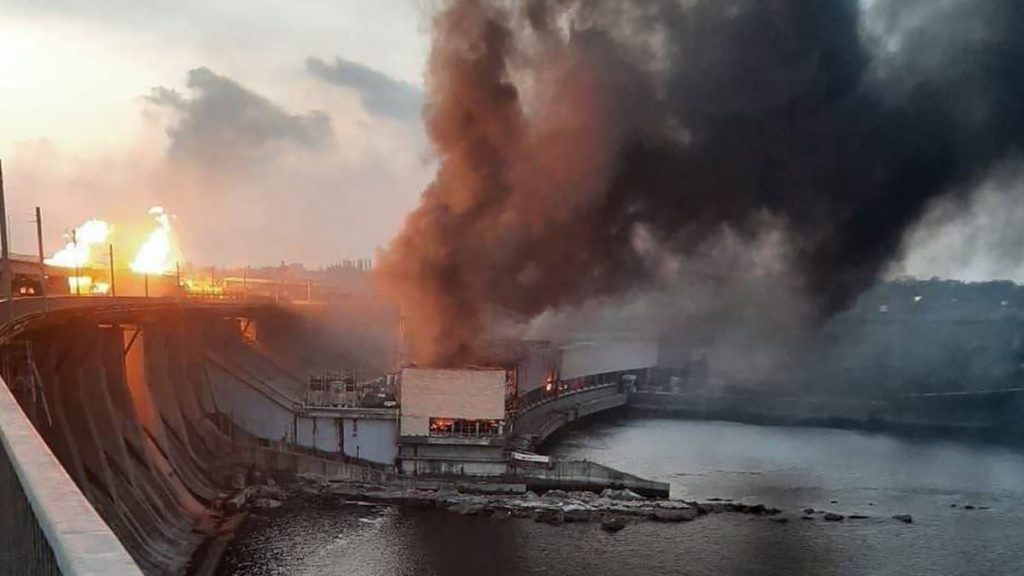
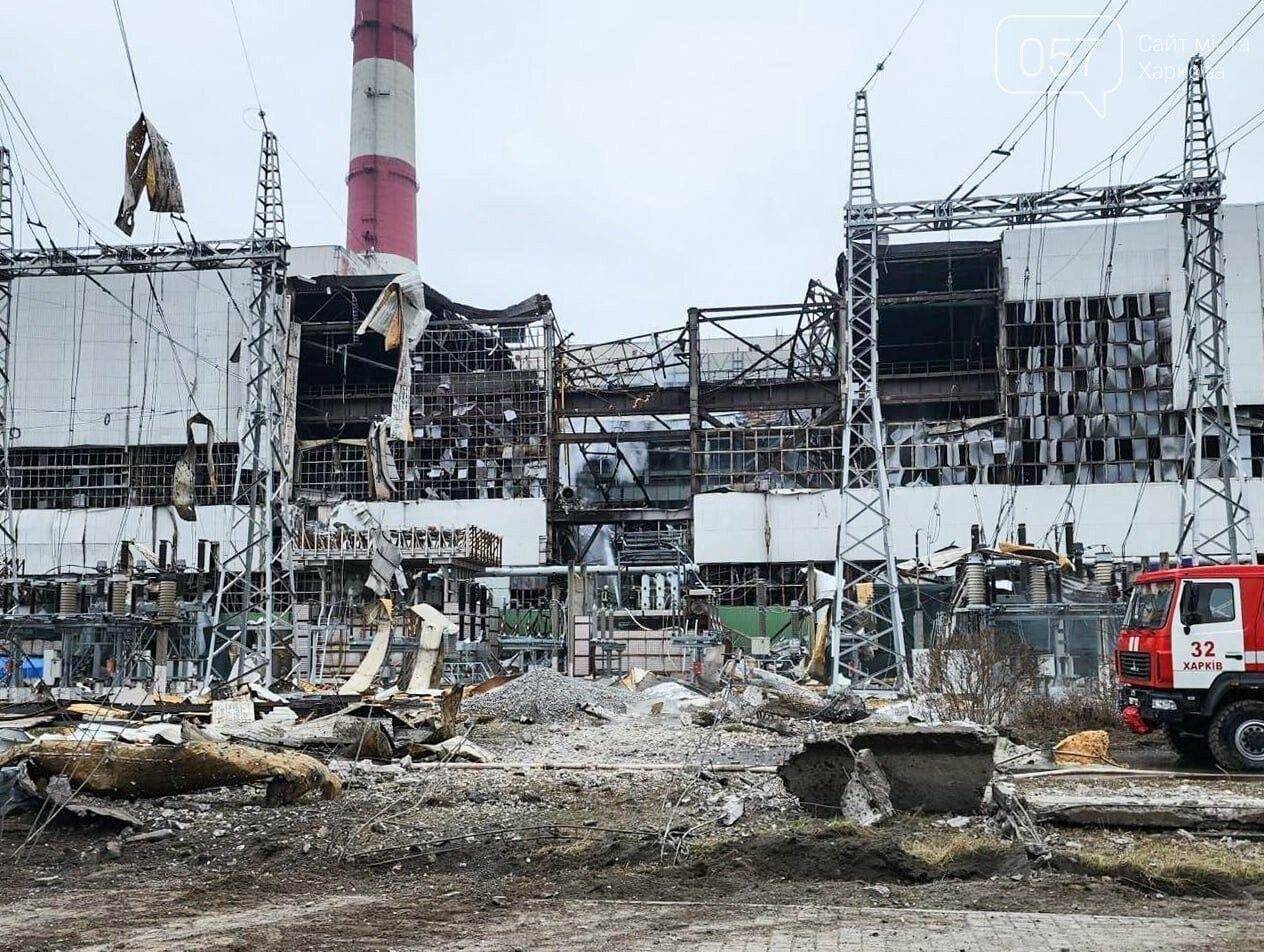
Having suffered a terrorist attack and declaring on every platform its readiness to “fight terrorism,” Russia itself continues to kill. A striking example is the missile strike on a residential area in Kharkiv on March 27, which killed one person and injured 19 others, according to preliminary data, including four children. And even that was not enough. On Vladimir Solovyov’s program on the Russia-1 channel, State Duma deputy Andrei Lugovoi called for deliberately creating a humanitarian catastrophe in Kharkiv to force people to flee the city.
Without halting its terror, the Russian authorities, following the attack on “Crocus City Hall,” are intensifying rhetoric about alleged Western and Ukrainian threats in order to increase domestic support for the war in Ukraine.
This has already been noted, in particular, by analysts at the U.S.-based Institute for the Study of War (ISW). They point out that Russia’s Investigative Committee and Prosecutor General’s Office accepted for review an appeal by the State Duma calling for an investigation into alleged American and Western financing and organization of terrorist attacks against Russia. Although this decision is not formally linked to the events at “Crocus City Hall,” ISW notes that Moscow previously attempted to connect Ukraine and the West to the attack on the concert venue. However, no official accusations have been made to date, as all available evidence continues to indicate that ISIS is most likely responsible for the attack.
Against the backdrop of these broad narratives accusing the West, messages from the Russian leadership about the possibility and desire for cooperation with it appear rather strange. In particular, Kremlin spokesperson Dmitry Peskov stated that such cooperation was possible. “We are open to dialogue and have political will, but we are in favor of a comprehensive discussion of all issues,” Peskov hinted quite transparently at readiness for dialogue.
Later, a similar statement calling for cooperation with Western countries was made by Prosecutor General Igor Krasnov.
And while in its statements toward the West the Kremlin behaves more or less cautiously, it shows no such restraint toward Ukraine, labeling Ukrainian strikes on legitimate military targets in temporarily occupied territories and within Russia as terrorism.
“Putin wants to divert attention from the crimes Russia is committing in Ukraine. This is the same scenario as during the terrorist attacks of 1999. Through this disinformation, Russia pursues a dual goal: to force the West to stop military aid to Ukraine and to remobilize the Russian population, which is experiencing war fatigue.”
says Serhii Kuzan, head of the Ukrainian Center for Security and Cooperation, as quoted by the Romanian outlet Podul.
It is precisely through this lens that one should view the words of Russian Foreign Ministry spokesperson Maria Zakharova, who, commenting on a Bloomberg article titled “Some in Putin’s Circle Don’t See a Link Between Ukraine and the Moscow Attack,” called it a “masterpiece of news, the mother of all fakes,” thus expressing her attitude toward the supposed “disbelief” in Ukraine’s non-involvement.
However, the Kremlin’s version was contradicted even by Belarusian self-proclaimed president Alexander Lukashenko. He stated that the attackers who fled the Russian “Crocus City Hall” intended to enter Belarus, but due to security measures “turned away” and headed toward the Ukrainian-Russian border.
Since the end of last week, Russian authorities and propagandists have also stepped up efforts to equate the Russian Volunteer Corps and the “Freedom of Russia” Legion with terrorist organizations—likely to prevent any sympathy toward the volunteers.
And the fact that Russia has threatened the leaders of Ukraine’s security services with death is meant to signal almost a direct accusation of their involvement in organizing the terrorist attack.
By exploiting the Ukrainian narrative, the Kremlin kills two birds with one stone.
The emergence and spread of disinformation about Ukraine benefits Moscow. On the one hand, it fuels a wave of hatred and mass hysteria within Russia, accompanied by calls for revenge against Kyiv. On the other hand, as Serhii Kuzan emphasizes, it allows the authorities to proceed with the predictable post-“election” tightening of repression.
Following recent proposals by officials for harsher measures against migrant communities in response to the attack on “Crocus City Hall,” increased legal pressure on migrants is already being recorded in Russia.
On March 27, it became known that Russian National Guard forces raided warehouses of a Russian marketplace to inspect migrant workers, with reports that some detained foreigners were taken to military enlistment offices. Earlier, RIA Novosti, citing a source in Russia’s Foreign Ministry, reported that efforts to tighten control over migrant inflows through government channels could accelerate after the attack at “Crocus.”
Discussions about reinstating the death penalty have intensified in Russian society and media. Dmitry Medvedev was the first among officials to “float” this topic.
And it is obvious that in an atmosphere of fear and hostility, nothing will prevent Putin from intensifying mobilization.
Thus, using old and proven methods, the Kremlin seeks to achieve its goal: by constantly linking Ukraine to the shooting at “Crocus,” to intensify anti-Ukrainian hysteria in society and increase readiness to go fight in a foreign country. As a result, in Putin’s view, he receives a carte blanche to carry out terror—against which he publicly calls to fight. So, what comes next?
18.05.2026
When Russia launched its full-scale invasion of Ukraine in 2022, Mariupol quickly became the site of…

05.05.2026
Russia pressed every Donbas sector in April, with assault tempo at a two-month high. The territorial…

16.03.2026
It is in the war against Ukraine that Russia is trying to adhere to this non-linear…


