


Mariupol is Putin’s blueprint for occupation, and the world is barely paying attention
18.05.2026
When Russia launched its full-scale invasion of Ukraine in 2022, Mariupol quickly became the site of…
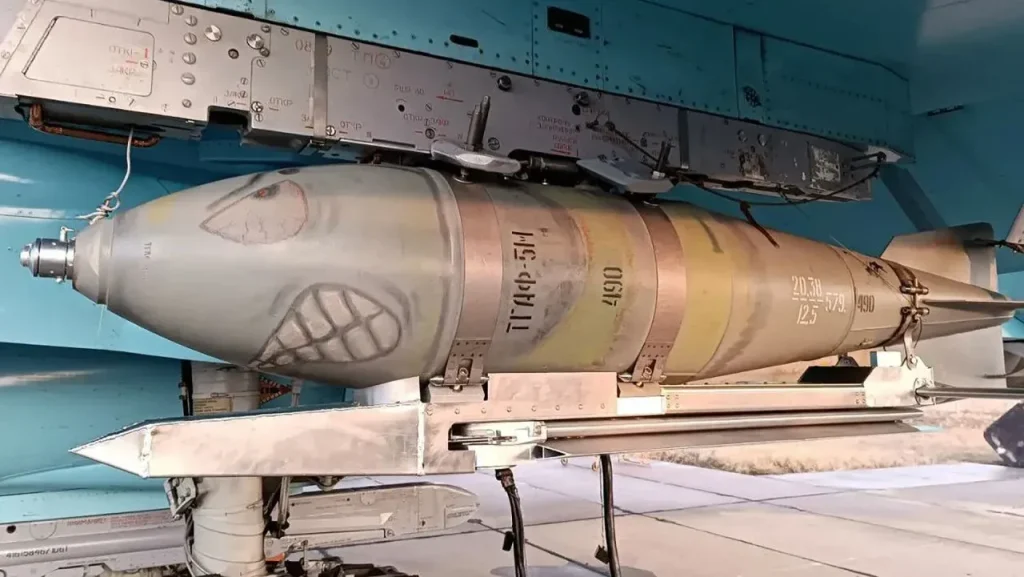
Virtually immediately after the start of the full-scale war, Ukraine showed Russia that it should not expect to confine the theater of hostilities exclusively to Ukrainian territory.
And today, Russians should probably no longer be surprised by Ukrainian drones reaching Tatarstan, where unmanned aerial vehicles struck facilities vital to Russia’s military-industrial complex. Before that, they had already seen—and many had felt firsthand—the power of Ukrainian weapons in many other locations, first and foremost along Russia’s border regions.
Belgorod gets a “payback”
Belgorod Oblast, in particular, has been bearing the brunt. It is from there that the enemy most often launches missiles, strike UAVs, and, more recently, guided and unguided aerial bombs at Ukraine’s million-strong city of Kharkiv—and, accordingly, receives retaliatory strikes, or, in Russian parlance, “otvetka” (“payback”). This word has already entered the local lexicon, as residents now know well that after a strike on Kharkiv, something may also come flying toward Belgorod Oblast.
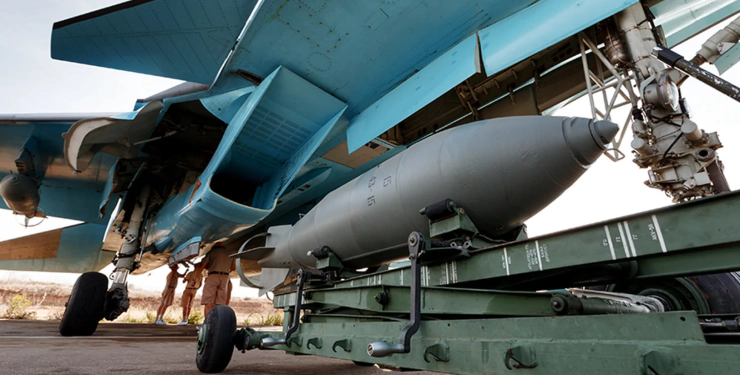
But the danger for locals does not stem only from such “paybacks.” After Russia began using heavy high-explosive and guided aerial bombs in its bombing of Ukraine, many of these munitions have turned into so-called “dumped loads”: aircraft simply “lose” the bombs shortly after takeoff, and they fall on the heads of residents in Belgorod Oblast.
Over just the past two weeks, Russian aviation has “dropped” 16 heavy munitions on the region in this way. In particular, two FAB-500 aerial bombs were recently found near the hamlet of Nina, another near the village of Kryukove—just 20 kilometers from the border with Ukraine’s Kharkiv region. And on March 28, a guided KAB-1500 aerial bomb, weighing 1.5 tons in TNT equivalent, was discovered between the villages of Bessonivka and Vesela Lopan—“dropped” by a Russian bomber.
And since March 12, Belgorod Oblast—and not only it—has also become the site of a new joint operation in Russia’s border areas by Russian volunteer units fighting on Ukraine’s side: the “Freedom of Russia” Legion, the Russian Volunteer Corps, and the Siberian Battalion. Their stated goal is to liberate Russia from Putin’s regime.
“We are coming to free you from destitution, poverty, and dictatorship.”
the Legion says in a video address to residents of the region.
Ukrainian military experts believe the choice of areas for the volunteers’ operations was not accidental, as border districts could serve as staging grounds for the Russian army in the event of preparations for a new offensive on Kharkiv and Sumy regions.
As a result, local authorities were forced to restrict entry to some settlements and set up checkpoints staffed by police, Rosgvardia units, and Russia’s Ministry of Defense. However, this was evidently insufficient to ensure safety, and the authorities of Belgorod Oblast announced the evacuation of children from border settlements, who are being relocated to various regions of Russia—a process that continues to this day.
Notably, the decision to evacuate civilians was also supported by the Russian volunteer units themselves. In a joint statement, they urged the governors of Belgorod and Kursk oblasts to accelerate the evacuation of civilians and stated that pro-Kremlin forces were using civilians as “human shields.”
“Shut up, you animals!”
Of course, such information is taboo in central Russian media, as it contradicts the core narratives of Kremlin propaganda about the successes of the so-called “special military operation” (SMO) and the strength of Russia’s air defense.
This has angered Belgorod residents to the point that phrases like “the Kremlin has forgotten Belgorod” are no longer rare in local media, while social media users have begun to criticize the central authorities and national media in chats and comment sections.
Such “aggressiveness” did not go unnoticed by top Russian propagandist Vladimir Solovyov, who hosts shows on the state-run Russia-1 channel. During one broadcast, he called on people criticizing the authorities to “shut up,” calling them “animals.”
“A large number of various animals pretending to be bloggers have appeared, saying: ‘The federal authorities have forgotten Belgorod, help the people! People have nothing, it’s a nightmare, people feel abandoned—how can you!’ All of this is vile hysteria immediately picked up by ‘Ukro-Nazi’ media.”
he said on his show.
The propagandist said he had visited Belgorod and found that in December the region was allocated a billion rubles for armored film and shelters. “So to all those trying to say the federal authorities abandoned them: shut up, you animals!” Solovyov declared. In response, Belgorod residents launched a flash mob, leaving hundreds of angry comments under the video shared by numerous local public pages on VKontakte.
Belgorod residents themselves say their attitudes toward the so-called “SMO” have changed, with levels of support varying depending on how close a region is to the border. After the announcement of mobilization and Ukraine’s counteroffensive, many people tore propaganda stickers supporting the war off their cars.
It is worth noting that despite overall dissatisfaction with the authorities and the active phase of Russian volunteer operations in border settlements and in Belgorod itself, local officials reported an 87% turnout in the so-called “presidential elections” in mid-March 2024. This is 14% higher than in 2018, with the Kremlin leader credited with over 90% of the vote—an outcome that, of course, raises a smile.
A “sanitarian” with missiles and bombs
No matter how much Kremlin-controlled media try to hush up the situation in Belgorod Oblast, what is happening there is clearly troubling the Russian authorities. Otherwise, why would Putin once again start talking about creating a so-called “sanitary zone” on Ukrainian territory?
He first voiced this idea after Russian volunteer units began operations along Russia’s border and the active use of UAVs last year, and then repeated it again in March—once more following the active phase of a new operation by the Freedom of Russia Legion and the Russian Volunteer Corps.
Against the backdrop of these statements, Russia has intensified its use of heavy high-explosive aerial bombs, struck Ukraine’s energy infrastructure more aggressively, and the topic of creating a “sanitary zone” has been picked up by propagandists of various levels as well as by senior Russian officials.
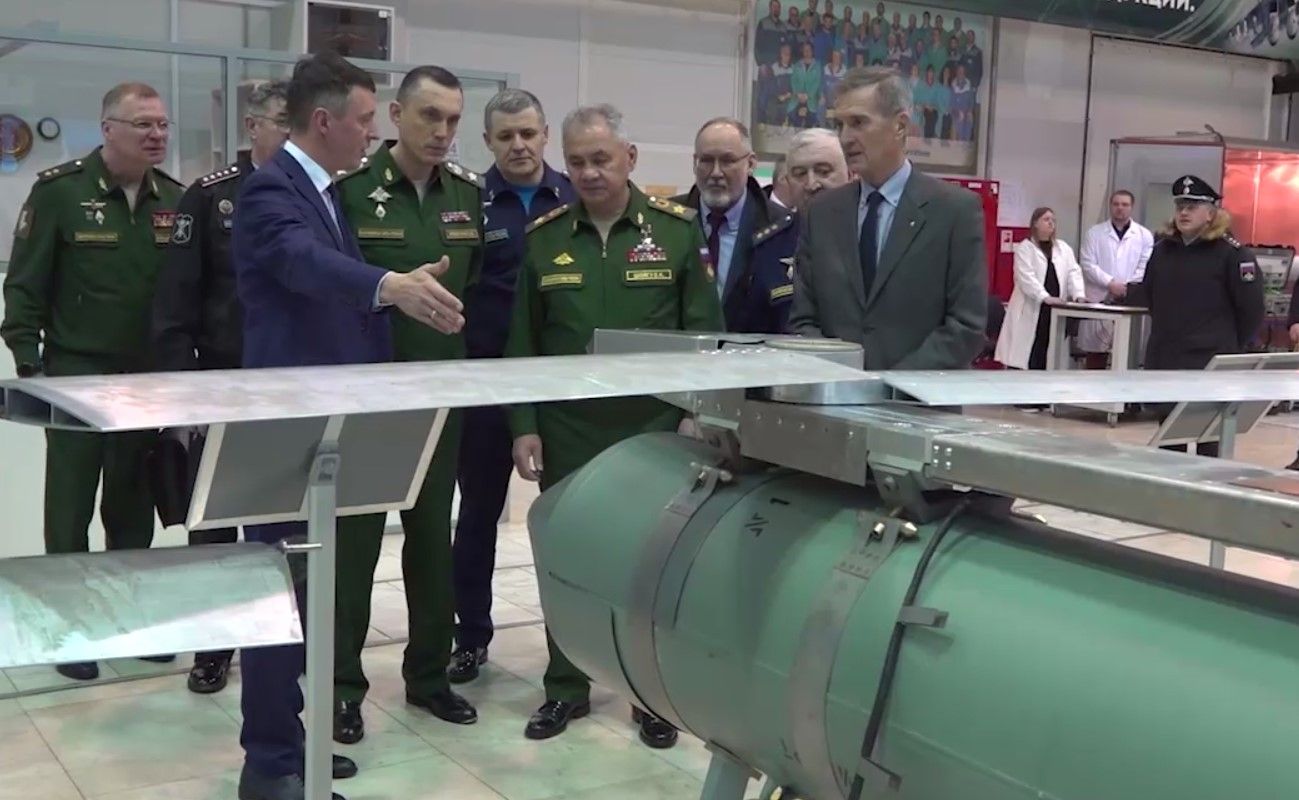
In particular, on March 26, Russian Defense Minister Shoigu stated that creating a so-called “sanitary zone” near Belgorod would not require an additional mobilization of 300,000 men.
Meanwhile, State Duma deputy Andrei Lugovoi, appearing on Solovyov’s program on the Russia-1 channel, called for creating a humanitarian catastrophe in Ukraine’s Kharkiv to force all residents to leave.
“They need to be put in their place. Kharkiv must be cut off from power to the point that it becomes unfit for life. So that the 800,000 people still there get into cars, walk, carry bundles, use carts—and go west. And the same must be done with other cities, including Kyiv.”
Andrei Lugovoi stated.
Such rhetoric is hardly unusual for Russian television, especially Kremlin-controlled outlets, where calls to commit war crimes—both on Ukrainian territory and in Western countries—have become commonplace.
Russia has also launched an information wave about the imminent capture of Kharkiv, though Ukrainian intelligence has described this as an information-psychological operation aimed at intimidating the population.
“At the same time, other things are happening—once again the Belarusian theme has become active, for example. Or some others the enemy likes to use to stir panic, including inside the country. Nothing strategically new has occurred regarding the formation of strike groupings.”
said Andrii Yusov, a representative of Ukraine’s Main Intelligence Directorate, on the national telethon.
Nevertheless, the new Commander-in-Chief of the Armed Forces of Ukraine, Oleksandr Syrskyi, stated that the Ukrainian army is monitoring all hostile statements and taking measures to respond adequately to such possibilities. “We already have combat experience in Kharkiv Oblast—we managed to ‘outcalculate’ the enemy and liberate a significant part of the region. That was when a large-scale collapse of the Russian front occurred. If the Russians move there again, Kharkiv will become a fatal city for them,” Syrskyi said.
Putin’s “re-election” with a record result in the so-called elections this March was meant to send a signal both to the West and to all Russians dissatisfied with Kremlin policies that the authorities are stronger than ever and that the chosen course of continuing the war—both against Ukraine and against the West—is exactly what all Russians supposedly want.
In reality, however, the more Russians directly experience the impact of the war and see how the authorities respond to it, the less motivated they are to fight or support the so-called “SMO.” This is evident even among residents of Belgorod. This poses a problem for the Kremlin, which has announced plans to put 300,000 new recruits “under arms” in June.
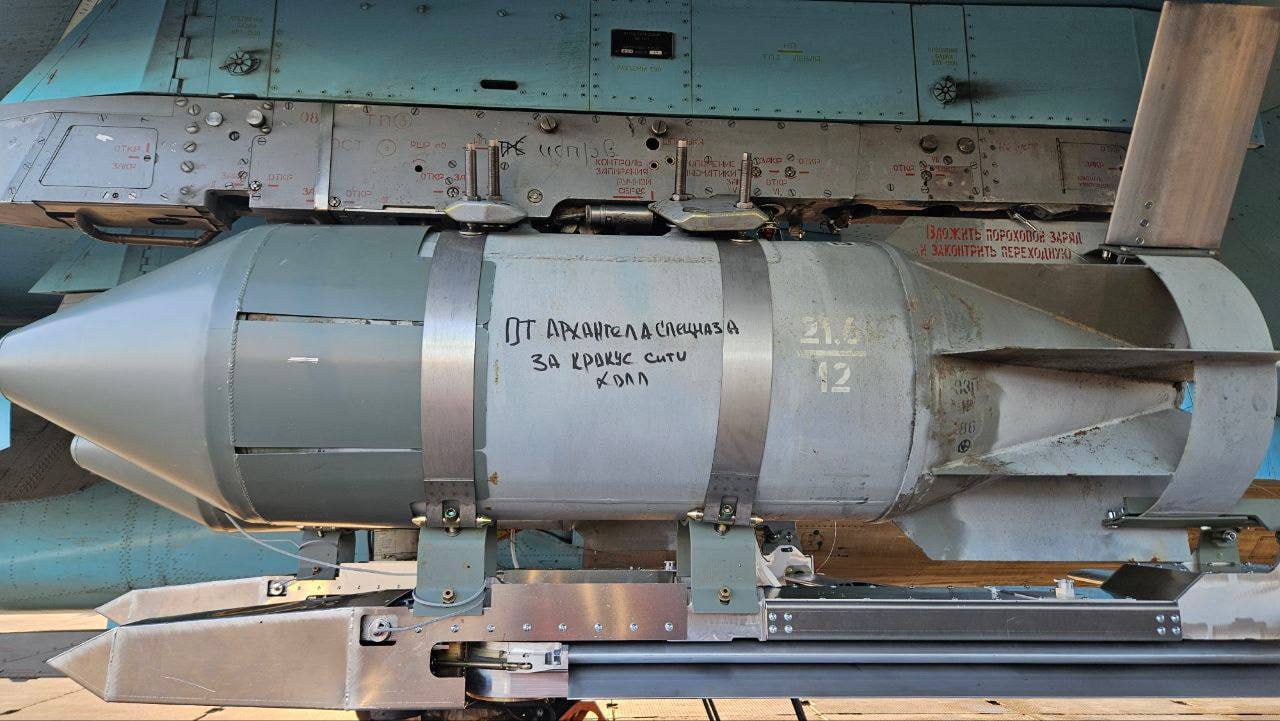
Thus, all available resources are being used to stoke belligerent sentiment—even accusations that Ukraine financed the terrorist attack at the Moscow-region “Crocus City Hall.” According to Russia’s Ministry of Defense, this worked: on April 3 it claimed that “Russian military enlistment offices recorded a significant increase in the number of people applying for contract military service across Russia.” In the end, this is not the first time Moscow has used the aftermath of terrorist attacks for mobilization—this was also the case in 1999.
But the more people in Russia learn about the war not from Solovyov’s or Skabeeva’s broadcasts, but by feeling its breath firsthand—and the more they worry that Putin’s proclaimed “sanitary zone” could end up on their side of the border—the fewer among them will be willing to die for Putin and his cronies.
18.05.2026
When Russia launched its full-scale invasion of Ukraine in 2022, Mariupol quickly became the site of…

05.05.2026
Russia pressed every Donbas sector in April, with assault tempo at a two-month high. The territorial…

16.03.2026
It is in the war against Ukraine that Russia is trying to adhere to this non-linear…


