


Mariupol is Putin’s blueprint for occupation, and the world is barely paying attention
18.05.2026
When Russia launched its full-scale invasion of Ukraine in 2022, Mariupol quickly became the site of…
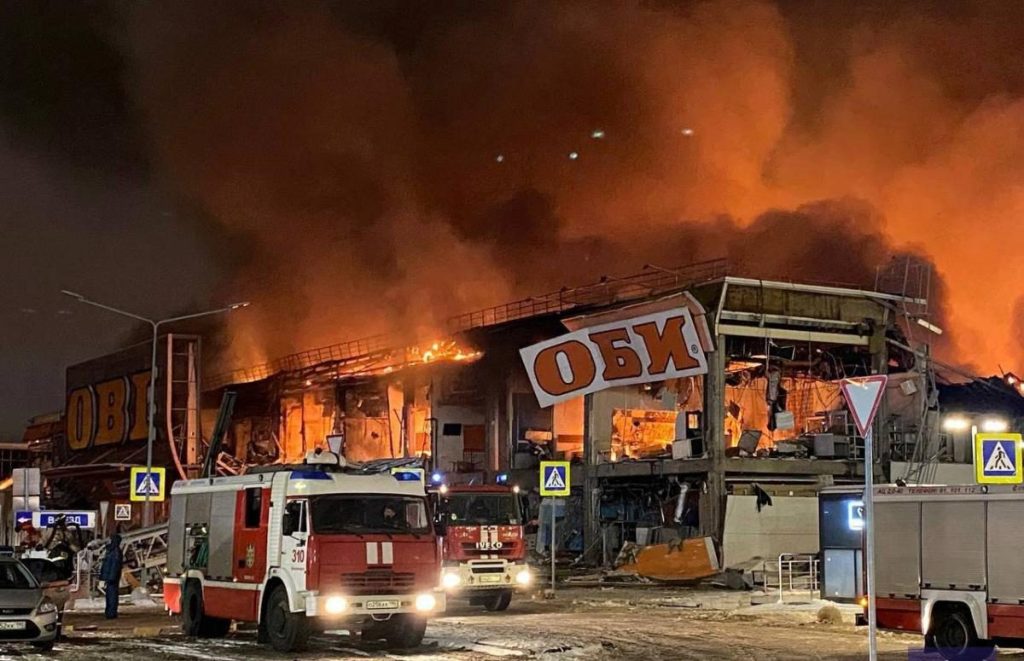
Explosion in a shopping mall in Moscow. Source: UNIAN
After 19 months of the full-scale war in Ukraine, Russian headlines that once screamed about the successes of the “SVO” have turned into attempts to calm the Russian population.
Until autumn 2022, the news feeds of Russian federal agencies TASS and Interfax consisted mainly of statements about total “victory.”
Thus, the headlines of leading Russian outlets constantly featured the “victory hysteria” vocabulary: captured, destroyed, liberated, taken prisoner, and so on. These were mostly illustrated by demonstrations of the successful performance of Russian weapons, massive military forces, or videos of missile launches from the sea.
Over time, the real situation at the front increasingly diverged from news headlines, so propagandists gradually adapted their content. As before, many materials are now devoted to themes of “war fatigue” in the West, with claims that Western weapons supplies to Ukraine will decrease.
However, more and more often the Russian Armed Forces command, reporting on its own “successes,” has shifted to a “defensive vocabulary”: these are now news reports about successfully repelling Ukrainian Armed Forces attacks, intercepting/shooting down Ukrainian UAVs in the temporarily occupied territories or on Russian territory, destroying Ukrainian naval drones, and so on.


Source: TASS, 24.09.2023 and RIA Novosti, 26.09.2023
Of course, this is also explained by the fact that the occupation army is mostly on the defensive in the seized Ukrainian territories, while the Ukrainian Armed Forces are advancing. However, this is hardly the information agenda supporters of the “special operation” would like to see after so many months of war. The change in narratives on leading Russian propaganda channels is a red flag indicating the vulnerability of the Russian authorities.

Sergii Kuzan – Head of the Ukrainian Center for Security and Cooperation, political expert.
“We see how Russian rhetoric is gradually changing. Let’s be honest: this change did not occur as a result of sanctions or declining living standards, nor due to international isolation or global condemnation of Russia’s actions. All of this is exclusively the result of successful missile and drone strikes. Defeats at the front and sabotage in the enemy’s rear trigger public discussion and call into question Putin’s authority and the ‘course’ he has chosen for the state. We need to multiply drone and missile production, significantly increase strike range, to strengthen this trend.”
Only major military defeats of Russia will become a catalyst for a change of its elites, just as the defeat near Bakhmut resulted in Prigozhin’s mutiny. And only a change of elites will lead Russia to abandon its militaristic policy.
The situation with UAV attacks on Moscow and on military and strategic facilities in temporarily occupied Crimea appears particularly telling. Under such news items, there are countless angry comments from Russians who were accustomed to a completely different “agenda.”
Readers’ reactions include references to “red lines” and “Judgment Day,” which Deputy Chairman of Russia’s Security Council Dmitry Medvedev had promised for Ukraine in the event of attempts to attack Crimea.


Source: Interfax
How reality has changed in Crimea is also visible in local chats. In particular, in temporarily occupied Feodosia, people are no longer discussing the velvet season, as they did before 2014, but rather how best to tape up windows: with duct tape or masking tape. These new concerns of Crimean residents clearly correlate with the real situation on the peninsula, marked by explosions and sabotage.
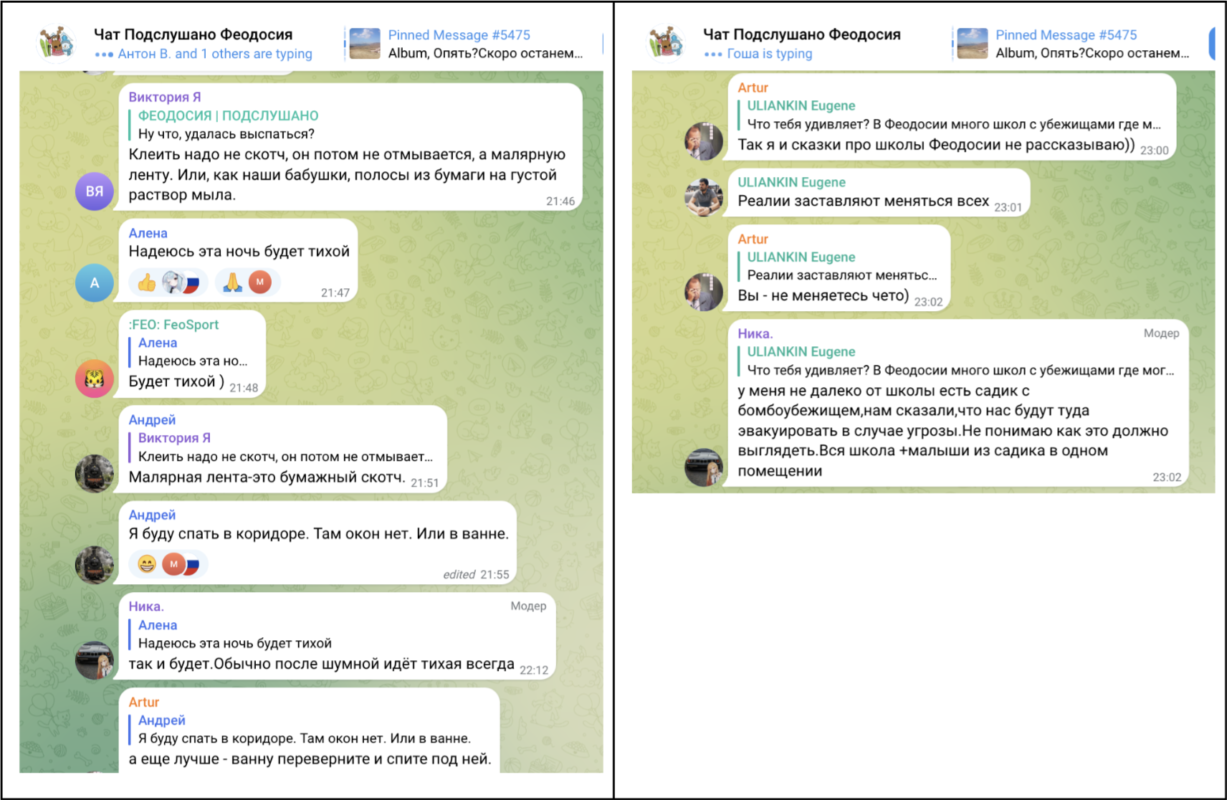
Source: Telegram
At first glance at Russian media today, it is already clear: if the war is still “going according to plan,” then this plan is no longer the Kremlin’s.
18.05.2026
When Russia launched its full-scale invasion of Ukraine in 2022, Mariupol quickly became the site of…

05.05.2026
Russia pressed every Donbas sector in April, with assault tempo at a two-month high. The territorial…

16.03.2026
It is in the war against Ukraine that Russia is trying to adhere to this non-linear…


