

Mariupol is Putin’s blueprint for occupation, and the world is barely paying attention
18.05.2026
When Russia launched its full-scale invasion of Ukraine in 2022, Mariupol quickly became the site of…
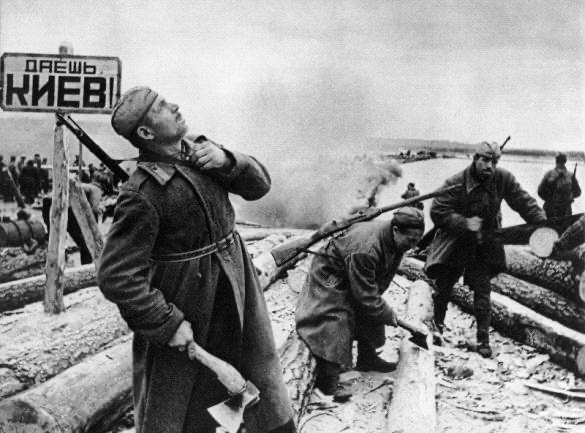
For the first time in the history of modern Russia, the “Immortal Regiment” marches have been canceled in most Russian cities. And the reason is not concern for participants’ safety, but the regime’s growing inability to keep the masses under control. The authorities openly fear that participants would come not with portraits of “grandfathers” carefully prepared by local officials, but with photos of their own children, husbands, wives, brothers, and sisters killed during the so-called “special military operation.” Even today, May 9 took place amid reports of explosions near Russia’s Ministry of Defense, threats of UAV strikes on Moscow, and dozens of anti-war actions across Russia.
The Historical Context of the Victory Day Myth
Due to its participation in the Anti-Hitler Coalition, the Soviet Union effectively avoided responsibility for jointly unleashing World War II together with Nazi Germany and was never held accountable for crimes against its own population. During the war, millions of Ukrainians and representatives of other peoples colonized by Moscow died as a result of Soviet military command decisions. This process reached its peak in 1943, when residents of territories previously under Nazi occupation were mass-mobilized into so-called “black infantry” units — suicide squads without training, weapons, equipment, or uniforms, used as cannon fodder. These were the realities that bore no resemblance to the Kremlin myth of a “patriotic” war.
Read also: “Russian Culture and Russia’s War of Conquest Against Ukraine”: a panel discussion by the UCCS
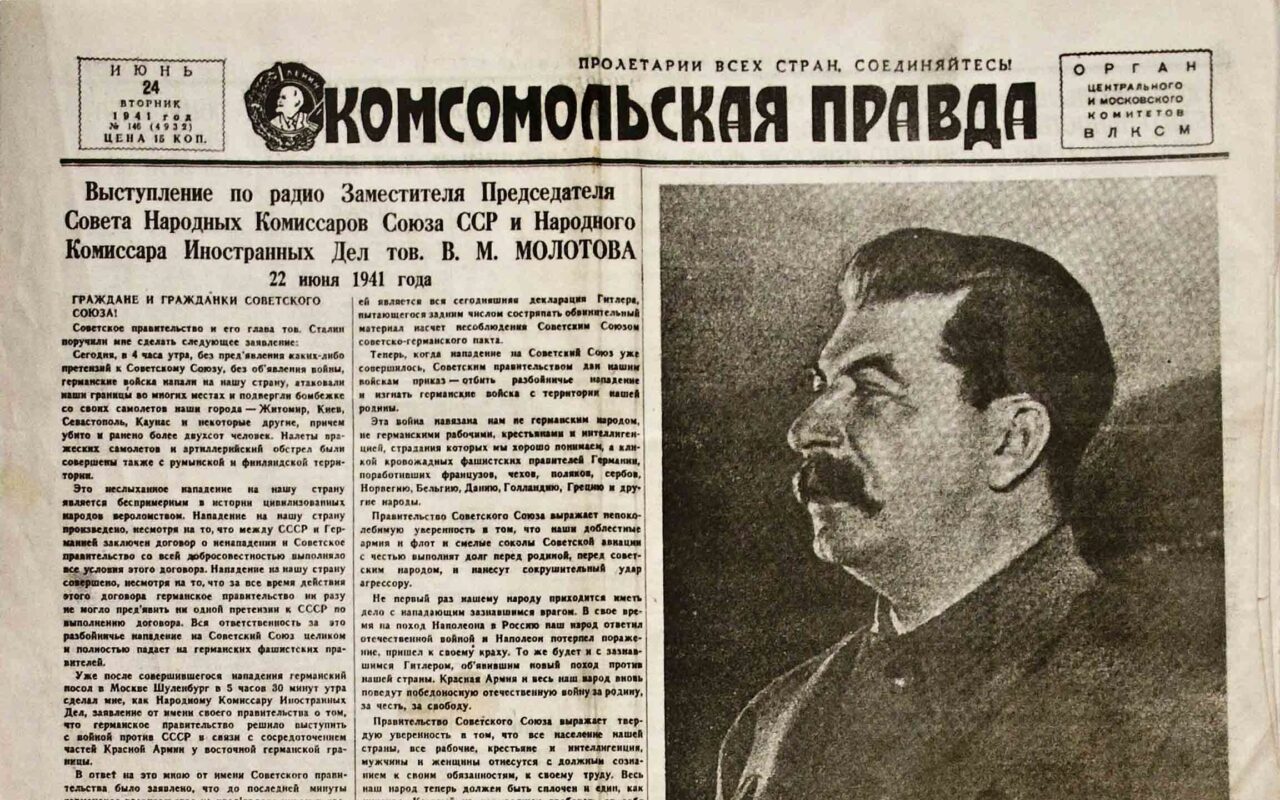
The term “Great Patriotic War” first appeared on the pages of the newspaper “Pravda” on June 22, 1941, in a speech published by Soviet Foreign Minister Vyacheslav Molotov, who compared the confrontation with Hitler to the war of 1812 against Napoleon Bonaparte. Cynically so, given that Soviet authorities had long rejected their imperial past, only to suddenly draw a direct analogy. The first mass celebrations of Victory Day began only in 1965, when the majority of frontline soldiers had already died from wounds, injuries, and illnesses. Across cities of the USSR and throughout Central and Eastern Europe where Soviet troops set foot, monuments to “liberator-heroes” appeared as markers of a new ideology of “victors.”
In 1991, Russia proclaimed itself the sole successor of the USSR and effectively continued Soviet foreign policy, building international relations from the standpoint of victors and the defeated — or, as propaganda framed it, “liberated” peoples.
The Collapse of the “We Can Repeat It” Ideology
As recently as ten years ago, nearly all members of the Anti-Hitler Coalition sent their troops to Moscow’s military parade. In Germany, Austria, the Czech Republic, and other European cities, the Kremlin — through local proxies — organized mass “victory-mania” gatherings near monuments to “liberator soldiers.” This policy was systematically supported through propaganda and work with local elites generously bribed with Russian oil and gas money. The myth of Moscow’s exclusive role in defeating Nazism became deeply rooted not only in Russian society, but also among Europeans.
Despite the apparent contradiction between “defeated” and “victor,” mutually beneficial relations developed between Germany and Russia. The two countries effectively divided and controlled Europe’s energy market, creating powerful levers of political influence. Even after the start of Russia’s war against Ukraine in 2014, German and other European companies continued supplying Russia, while German industry freely expanded on the Russian market. The same applied to Russia’s military-industrial complex, which continued to receive critical technologies by circumventing sanctions.
Confidence in Russian weapons, the Kremlin’s nuclear arsenal, dependence on oil and gas, the threat of a new continental war, an extensive intelligence network, and the Kremlin’s boastful slogan “We can repeat it!” shaped relations with Russia. This entire geopolitical architecture, built since the end of World War II, collapsed within a year of Ukrainians’ heroic resistance — raising the question of revising an unjust peace and holding the aggressor accountable for crimes against humanity.
Revisiting an Unjust Peace
On the 440th day of heroic resistance to Russian aggression, Ukraine is no longer asking the world about survival — but about building a new global security system without Russia. Institutions meant to resist evil, such as the UN Security Council — created in response to crimes against humanity during World War II — once again demonstrate their inability to prevent the return of Nazism or resist Kremlin influence. A new war confronting the free world forces a reassessment of who stands on which side.
Russian military hardware reached Kyiv’s Khreshchatyk only in destroyed form. Russia’s border with NATO has expanded de jure by 1,271 kilometers via Finland and de facto by another 2,295 kilometers along Ukraine’s border. The Kremlin is no longer thinking about victory, but about “saving face” and avoiding a new Nuremberg for Russia’s leadership. Russia’s central myth of the “Great Victory on May 9” is now turning against itself, forcing authorities to invent new explanations to keep their population obedient. The regime cannot allow relatives of the fallen to discover one another and the true scale of the tragedy during another “Immortal Regiment” march. After such massive losses in Ukraine, no FSB or National Guard will be capable of suppressing potential uprisings.
Destroyed Russian military equipment on Kyiv’s Khreshchatyk, summer 2022. Source – hromadske.
At the cost of extraordinary heroism by its people, Ukraine is in practice revising the unjust peace imposed after World War II.
However, a won battle is not yet a won war. Ahead lie further difficult days: a counteroffensive and liberation of Ukrainian lands, strengthening the international coalition and increasing weapons supplies, continued identification and neutralization of Russian agents who are far from eliminated. Only then will Ukraine achieve a truly just peace and its own Victory Day — this time, over rashism.
18.05.2026
When Russia launched its full-scale invasion of Ukraine in 2022, Mariupol quickly became the site of…

05.05.2026
Russia pressed every Donbas sector in April, with assault tempo at a two-month high. The territorial…

16.03.2026
It is in the war against Ukraine that Russia is trying to adhere to this non-linear…


