


Mariupol is Putin’s blueprint for occupation, and the world is barely paying attention
18.05.2026
When Russia launched its full-scale invasion of Ukraine in 2022, Mariupol quickly became the site of…
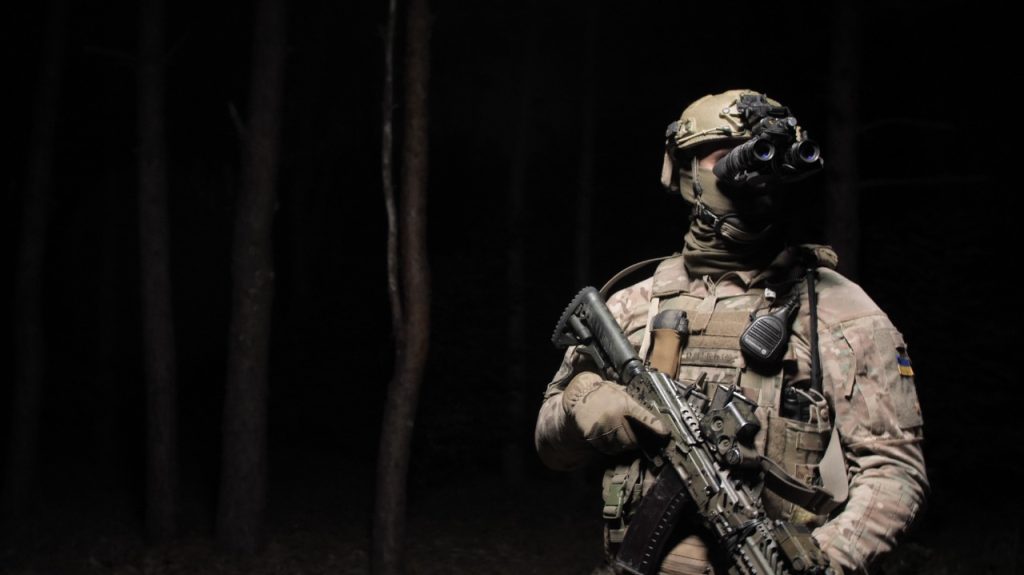
Their names and faces are unknown to the public; they are rarely shown on television. Their insignia bears an owl raising a sword over Russia, and Russian intelligence services relentlessly hunt their commanders. They are Ukrainian intelligence.
On September 7, the Main Intelligence Directorate of the Ministry of Defense of Ukraine will mark the 29th anniversary of its establishment. Its officers continue to carry out their extremely difficult and dangerous work every day for the sake of the state and the people, without any right to glory.
How was Ukrainian intelligence formed and what were its first years like? How was it subjected to deliberate destruction, and how did it manage to be reborn? How did it stop the Russian invasion and continue to destroy the enemy to this day? How did it earn the respect of partners and the hatred of enemies?
Loyal to Ukraine
With the restoration of Ukraine’s independence in 1991, there arose an urgent need to build its own national security and defense system. Alongside the formation of the Ukrainian Armed Forces, the creation of national intelligence agencies began. The core of this process consisted of Ukrainian officers who had served in Soviet Army intelligence units both in Ukraine and abroad. They bore the main burden of organizational and кадрова work, essentially building Ukrainian military intelligence from scratch.
Few people know that initially there were two main intelligence structures in Ukraine.
In February 1992, the Intelligence Directorate of the then General Staff of the Armed Forces of Ukraine was established. Its task was to build a unified intelligence system for the Ukrainian army at the operational level. The next step was the creation of a strategic-level military intelligence system. Thus, on September 7, 1992, by Presidential Decree, the Directorate of Military Strategic Intelligence of the Ministry of Defense of Ukraine was formed. It is this date that Ukrainian intelligence officers celebrate as their professional holiday.
The existence of two main intelligence bodies subordinated to different authorities—the Minister of Defense and the Chief of the General Staff—created numerous obstacles, required additional time for coordination, and generally slowed the creation of an effective military intelligence system. Therefore, on July 6, 1993, President Leonid Kravchuk issued a decree establishing the Main Directorate of Military Intelligence on the basis of the two structures. On April 14, 1994, it received its current name—the Main Intelligence Directorate of the Ministry of Defense of Ukraine (HUR).
“Military intelligence had certain difficulties and, as life shows, also an advantage—the advantage that we did not transform like other security structures that could simply change flags and symbols,” recalled the first head of HUR, Oleksandr Skipalskyi, emphasizing that military intelligence was built from the very beginning on loyalty to the young independent Ukraine.
With the formation of a unified structure, intensive training of special-purpose units of military intelligence began under the supervision of Yaroslav Horoshko. A veteran of the Afghan war and one of the few Heroes of the Soviet Union to receive the title during his lifetime, he returned to his homeland immediately after Ukraine regained independence. Strong-willed, professional, and strict—this is how comrades and special forces remember him. Among other duties, he trained combat divers, to which he paid particular attention. Tragically, Yaroslav Horoshko died during a training dive, but his name is forever inscribed in the Hall of Glory of HUR.
By the call of conscience
Throughout the years of independence, Ukrainian troops have taken part in dozens of peacekeeping missions abroad, where Ukrainian intelligence officers were always on the front lines.
The 1990s were extremely difficult not only for Ukraine but for the entire world. Russia fueled conflicts in Moldova and Georgia; Russian mercenaries fought in Azerbaijan and other hotspots, including the Balkans. War-torn Bosnia and Herzegovina descended into three-front confrontation. In 1995, the world was shocked by the genocide committed by Bosnian Serb forces in Srebrenica, where 8,000 Muslim civilians aged 12 to 77 were killed. The same fate threatened the enclave of Žepa, defended by the Ukrainian contingent led in part by intelligence officer Mykola Verkhohliad.
Unlike Dutch peacekeepers in Srebrenica, Ukrainians could not abandon civilians to certain death. At that time, Žepa was guarded by only 79 Ukrainian soldiers under constant shelling. Verkhohliad personally negotiated with Bosnian Serb leader Ratko Mladić and ultimately secured the evacuation of civilians. As a result, more than 10,000 Bosnian Muslims were saved.
That same year, Ukrainian military intelligence repelled Russia’s first attempt to seize Crimea by installing the so-called “President of Crimea,” Yuriy Meshkov. Ukrainian intelligence also took part in peacekeeping in Iraq from 2002 to 2005 and prevented Russia’s 2003 attempt to annex Tuzla Island in the Kerch Strait.
In the early 2000s, Ukraine adopted the Law “On Intelligence Agencies of Ukraine,” defining the Main Intelligence Directorate of the Ministry of Defense as a special state authority.
Attempted destruction and rebirth
With the establishment of Yanukovych’s dictatorship in 2010, difficult times began for the Armed Forces and military intelligence. Pro-Russian officials were appointed to key positions, deliberately destroying Ukraine’s intelligence system. By early 2014, a treaty with Russia even prohibited mutual intelligence activities. As a result, before the outbreak of the war, Ukrainian intelligence lacked crucial information about Russian troop movements.
HUR officers had to urgently restore combat capability and obtain vital intelligence to stop the Russian advance.
Sapiens dominabitur astris*
We may never learn the names of many intelligence officers or details of hundreds of special operations. Yet it was intelligence that enabled the successful Ukrainian counteroffensive in summer 2014, liberating Sloviansk, Kramatorsk, and other cities.
The heroic defense of Donetsk Airport began with an operation by an HUR unit led by Colonel Maksym Shapoval, whose fighters became the first “cyborgs.” Shapoval was killed in a terrorist attack in 2017 and posthumously awarded the title Hero of Ukraine.
Intelligence never abandons its own—a principle exemplified by Yevhen Zelenskyi, Yurii Kovalenko, Oleksandr Petrakivskyi, and many others who sacrificed their lives for Ukraine.
“Above us are only the stars,” says the aggressor’s intelligence. “The wise shall rule over the stars”—Sapiens dominabitur astris—reply thousands of Ukrainian intelligence officers whose names we may never know, but thanks to whom Ukraine continues to defend Europe from the “Russian bear.”
Faith in the future
Today, the Main Intelligence Directorate is one of the most professional institutions in Ukraine. It continues to grow, modernize, cooperate with NATO partners, and protect Ukraine’s future.
Therefore, on September 7, we honor the heroes thanks to whom our peaceful present is possible and thank those who bring victory and glory to Ukraine every day.
18.05.2026
When Russia launched its full-scale invasion of Ukraine in 2022, Mariupol quickly became the site of…

05.05.2026
Russia pressed every Donbas sector in April, with assault tempo at a two-month high. The territorial…

16.03.2026
It is in the war against Ukraine that Russia is trying to adhere to this non-linear…


