

Mariupol is Putin’s blueprint for occupation, and the world is barely paying attention
18.05.2026
When Russia launched its full-scale invasion of Ukraine in 2022, Mariupol quickly became the site of…
This year, on April 4, NATO marks its 75th anniversary. The Alliance has become the foundation of a unified Euro-Atlantic security system stretching from Canada to the Baltic states.
To mark the occasion, a jubilee summit will be held this summer in Washington, where on April 4, 1949, the agreement that established the North Atlantic Alliance was signed. Considerable attention at the summit will be devoted to Ukraine, for which NATO membership is one of the key foreign policy goals and is enshrined in the country’s Constitution.
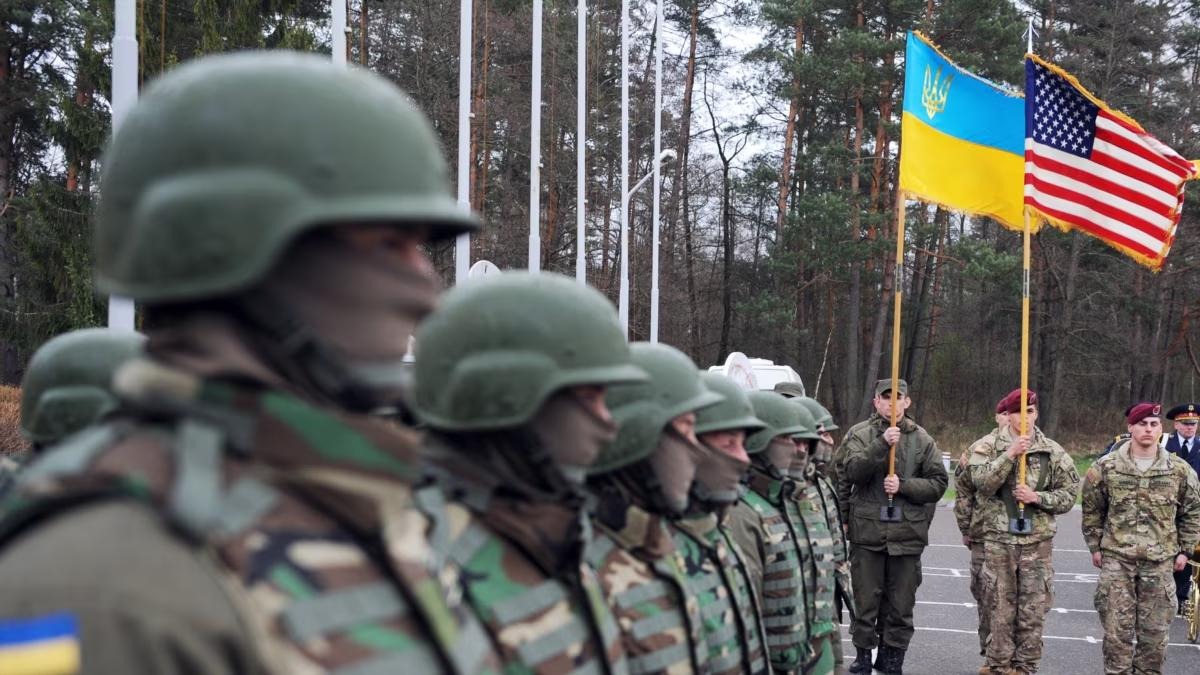
Despite the third year of Russia’s full-scale invasion, near-daily missile attacks on cities, and intense fighting along a front line exceeding 1,200 kilometers, Kyiv continues to modernize its armed forces and implement NATO standards, hoping for a positive decision at the anniversary NATO summit in Washington. Such a decision would also send a clear signal to Moscow that could affect both the determination and the duration of further aggression.
Although Western experts and politicians still do not share a unified position on Ukraine’s membership in the Alliance, Kyiv continues to do its “homework,” while public support for joining NATO remains high—77 percent, according to a survey conducted in November 2023.
Will the Washington summit bring Ukraine closer to NATO?
It is clear that official Kyiv would like to receive a positive answer to this question, as it is convinced that the Ukrainian issue in the context of European security has already “matured” for NATO.
On April 1, President of Ukraine Volodymyr Zelenskyy stated: “This year poses several fundamental questions for relations between Ukraine and NATO. In particular, this concerns the Washington summit and many other aspects of our interaction. Only with Ukraine in the Alliance can true security in Europe be ensured.”
And this is indeed the case. Ukraine has repeatedly emphasized that it is fighting in a war between the West and Russian expansionism and that it has weakened NATO’s main enemy in Europe. Therefore, it has a moral right to the security guarantees that NATO membership provides.
However, Kyiv has repeatedly been told that “as long as the war continues, Ukraine cannot become a full-fledged NATO member.” Such statements do not go unnoticed in Moscow, which closely monitors Ukraine–NATO relations and the narratives promoted by the West. It is worth recalling that despite aggressive rhetoric from Russian authorities in early 2022 regarding NATO’s eastward expansion through Ukraine, Moscow reacted relatively calmly to the accession of another neighboring country—Finland—as well as Sweden’s entry into the Alliance. This suggests that what truly concerns Moscow is not NATO enlargement itself, but the prospect of realizing its own ambitions in the heart of Europe. In this context, vague Western positions or statements about the impossibility of Ukraine’s membership while part of its territory remains occupied send a clear signal: as long as the war continues, the Kremlin need not worry. Russian authorities clearly understand that once Ukraine joins the Alliance, dreams of restoring the USSR 2.0 can be forgotten—if not forever, then at least for decades.
Whether NATO will dare to give Kyiv the long-awaited answer this year remains largely a rhetorical question. By and large, little has changed since the Vilnius summit, and NATO leaders are approaching the Washington meeting facing essentially the same challenges as a year ago. Still, even under these circumstances, Ukraine may achieve tangible progress: clearer steps toward closer integration with the Alliance, more explicit signals regarding membership timelines, and, most importantly, concrete security guarantees. Moreover, Ukraine’s NATO membership is by no means a one-sided benefit. Kyiv’s accession would be an investment not only in European security but also in global security, significantly strengthening the Alliance with a capable and battle-hardened army and demonstrating Western unity and consistency.
International partners are signaling that the Washington summit may indeed result in concrete decisions favorable to Ukraine. This was stated in particular by U.S. Assistant Secretary of Defense for International Security Affairs Celeste Wallander at the Kyiv Security Forum.
“While it is still too early to talk about specifics, you should know that steps will be taken at the Washington summit that will build a strong bridge to Ukraine’s future NATO membership,”
Wallander said.
According to her, Western investments in Ukraine’s defense are also investments in shared transatlantic and global security.
“That is why Ukraine’s strategic success is critically important across multiple dimensions: economic development, reconstruction, the return of refugees, progress toward EU membership, defense and security, justice, and accountability,” the Pentagon representative summarized.
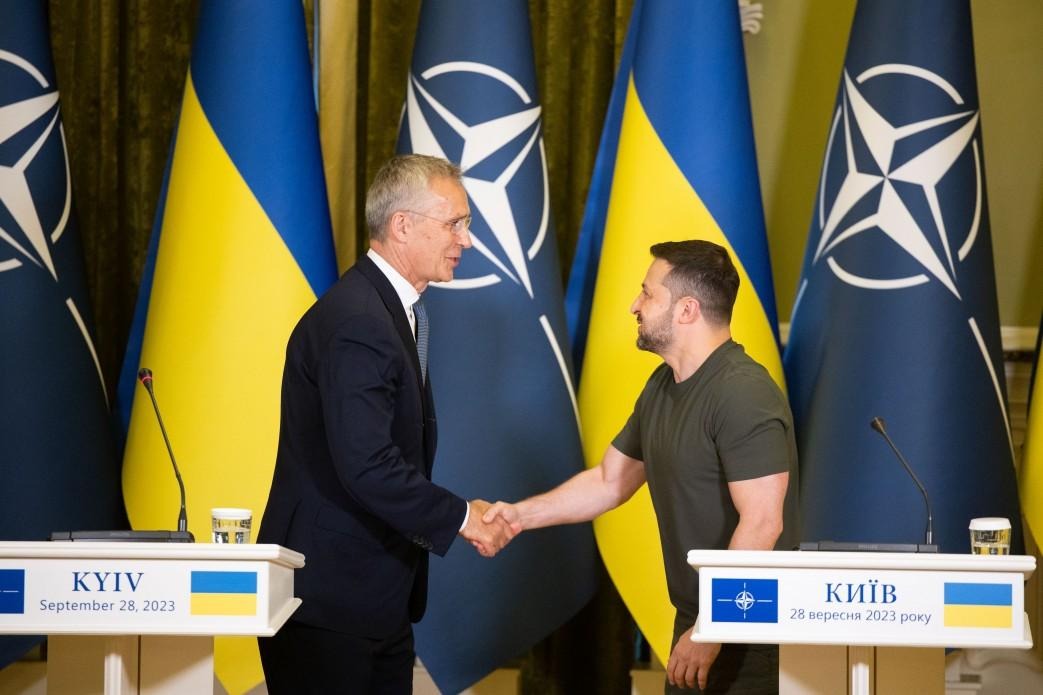
U.S. Secretary of State Antony Blinken also referred to a “bridge” between Ukraine and the Alliance during his visit to France on April 2, emphasizing the importance of preparing a roadmap for Ukraine’s NATO accession ahead of the Washington summit.
“I think that the NATO summit marking its 75th anniversary will be very concretely focused on how we can create this roadmap—or, using another image, the necessary bridge that will allow Ukraine to become a NATO member,”
Blinken said at a joint press conference with French Foreign Minister Stéphane Séjourné.
The Armed Forces of Ukraine implement NATO standards during wartime
Meanwhile, despite the hot phase of the war, Ukraine continues to reform its armed forces to meet NATO standards. This includes the digitalization of the military, strengthening cybersecurity, improving recruitment, launching a new stage of defense management reform, and comprehensive reform of the security and defense sector to achieve interoperability with NATO member states in the future.
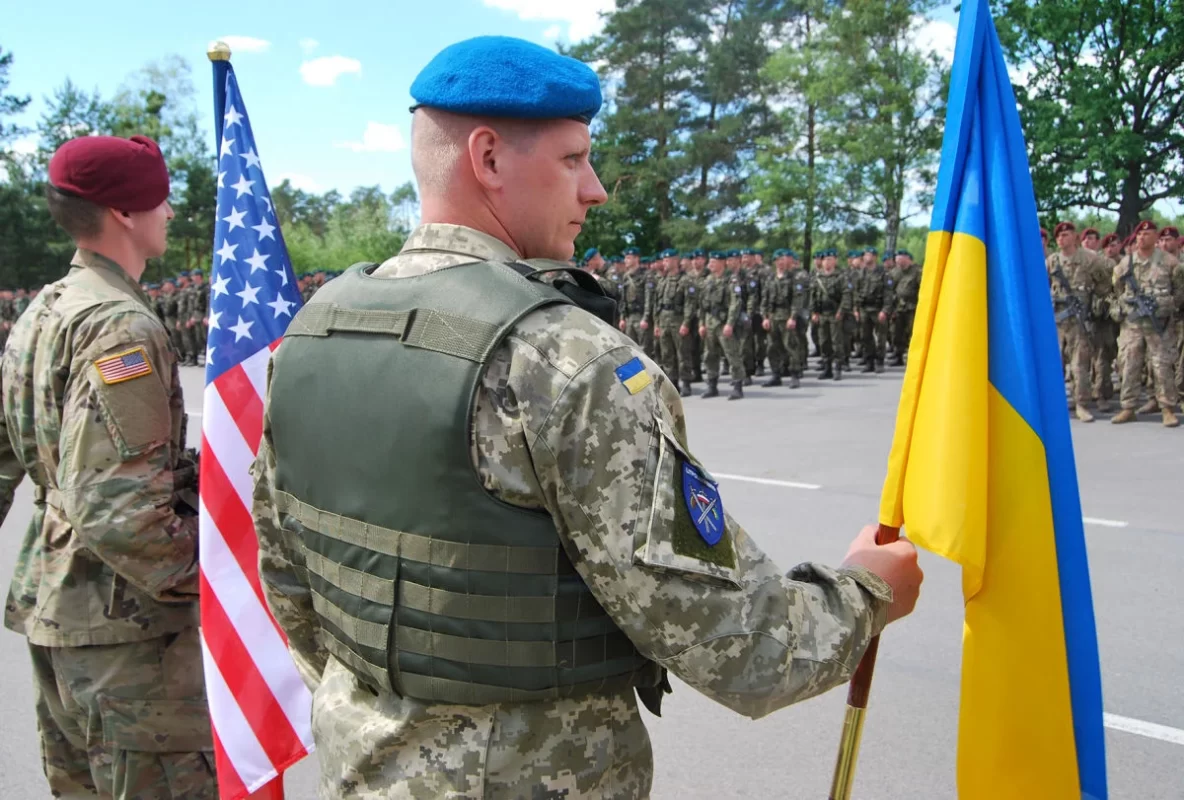
As noted on the official website of the Ministry of Defense, 301 NATO standards have currently been implemented within the Ministry and the Armed Forces of Ukraine: 181 within the framework of the Ukraine–NATO Partnership Goals (priority Alliance standards) and 116 on an initiative basis, implemented outside the Partnership Goals.
In March this year, Ukraine’s Minister of Defense Rustem Umerov signed the Action Plan for implementing the adapted Annual National Program of Ukraine–NATO cooperation (aANP) for 2024, developed pursuant to agreements reached at the Vilnius NATO summit. The program includes more than 50 measures across 17 objectives to be implemented this year, with reform of Ukraine’s security and defense sector as its key priority. Previously, NATO Assistant Secretary General Boris Ruge emphasized that the aANP is an important framework instrument for further systemic integration.
Also in March 2024, the Ministry of Defense and the General Staff of the Armed Forces of Ukraine announced the launch of a new stage of defense management reform. This reform is also aimed at achieving long-term functional interoperability with NATO partners, enabling joint action both during military operations and in planning responses to future threats.
“We can speak about operational and functional interoperability. Operational interoperability enables joint actions during crisis response operations, within NATO Response Forces, and during multinational exercises. Such operations require compatibility in weapons, ammunition, communication systems, and more,”
explained Deputy Minister of Defense Stanislav Haider.
Recruitment instead of conscription
Another step toward NATO is the approval, by an order of the Minister of Defense on November 5, 2023, of the Concept of Military Personnel Policy through 2028, which предусматриває the creation of an effective recruitment system for staffing the Armed Forces with professional and motivated personnel.
The core focus of the concept is guaranteed fulfillment of the Armed Forces’ manpower needs during a full-scale war, integration into the Euro-Atlantic security space, and interoperability of the Armed Forces with those of NATO member states.
From November 2023 through March 25, more than 10,000 vacancies were posted across four platforms, receiving over 130,000 applications.
The Ministry of Defense of Ukraine has announced plans to open 27 recruitment centers in regional capitals and major cities in the first half of 2024 alone.
“As of April 2, seven recruitment centers have been opened, including two that have just opened in Kharkiv. In the first half of the year, we will be present in most regions of Ukraine, with up to 30 centers, and by the end of the year we will be represented in all regions and all major cities. When developing new recruitment algorithms, we studied the experience of NATO member states, which continuously recruit citizens into their armed forces,”
said Oleksii Bezhevets, Commissioner of the Ministry of Defense of Ukraine for Recruitment, in a comment to the UCSS.
According to him, the experience of the United States, the United Kingdom, and several European countries was used as a model. He describes the launched process as successful, noting that further progress will depend on scaling and improving services. After just a month and a half of operation, there are already individuals undergoing training at training centers, as well as those serving in their military units.
At the end of March, Commander-in-Chief of the Armed Forces of Ukraine Oleksandr Syrskyi stated: “We expect to have enough people capable of defending the Motherland. This concerns not only mobilized personnel but also volunteers. We must bear in mind that people are not robots. They become exhausted, physically and psychologically, especially under combat conditions.”
Shooting down aircraft, sinking ships
Indeed, the renewed Ukrainian army has proven its ability to conduct modern large-scale offensive and defensive operations against an enemy superior in manpower and resources, inflicting significant losses with limited available means.
This April marks the second anniversary of the liberation of northern Ukraine from Russian forces. Ukraine demonstrated resilience and strength of spirit when it was predicted to last no more than three days. Later came the Kharkiv and Kherson operations, defensive battles in the east, and the southern counteroffensive. Ukraine has carried out successful strikes against military targets in the air and at sea, destroying enemy ships and aircraft. Moreover, Ukrainian weapons are striking the aggressor on its own territory, forcing it to consider building defensive lines there. According to Ukrainian intelligence data, following raids by Russian volunteer units fighting within the Armed Forces of Ukraine—the “Freedom of Russia” Legion, the “Siberian Battalion,” and the Russian Volunteer Corps—the enemy intensified efforts to reinforce border areas in the Belgorod, Kursk, and Bryansk regions. This ties down Russian forces and complicates plans to advance in the Kharkiv region.
“We are not only holding the defense, but every day on various fronts we are also advancing ourselves. Moreover, the number of positions we have regained exceeds those we have lost. The enemy has failed to make significant advances in strategic directions; any territorial gains it may have are of tactical significance. We control this situation,”
Commander-in-Chief of the Armed Forces of Ukraine Oleksandr Syrskyi said in late March.
What’s next?
Over two years of war, Ukraine’s Defense Forces have gained immense combat experience. Every day, Ukrainian servicemembers master Western weaponry used by Alliance members. Today, Ukraine’s military is among the most combat-capable on the European continent and has achieved strong results in conducting successful military operations—operations that few NATO countries have carried out since World War II.
During this war, Ukraine has proven that it is more than ready for NATO membership and has much to offer the Alliance in return. On this path, Ukraine diligently fulfills all assigned tasks and implements reforms to meet NATO requirements at all levels. In other words, it is doing its “homework,” and now the Washington summit must provide an appropriate assessment.
18.05.2026
When Russia launched its full-scale invasion of Ukraine in 2022, Mariupol quickly became the site of…

05.05.2026
Russia pressed every Donbas sector in April, with assault tempo at a two-month high. The territorial…

16.03.2026
It is in the war against Ukraine that Russia is trying to adhere to this non-linear…


