


Mariupol is Putin’s blueprint for occupation, and the world is barely paying attention
18.05.2026
When Russia launched its full-scale invasion of Ukraine in 2022, Mariupol quickly became the site of…
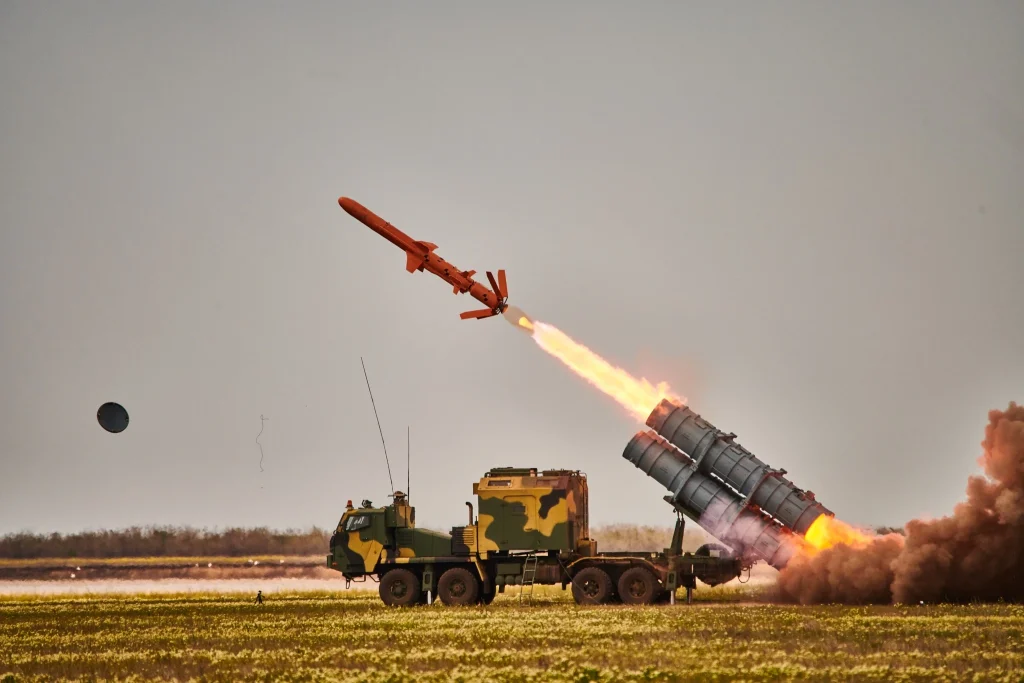
Will Ukraine be able to survive without U.S. military assistance? Can Kyiv’s European partners potentially fill the gap in weapons supplies? Politicians, analysts, and commentators around the world have been grappling with these questions in recent weeks as they try to come to terms with U.S. President Donald Trump’s foreign policy pivot away from Europe and his administration’s rapprochement with Russia.
While the urgency and importance of this debate cannot be overstated, there is a growing tendency to overlook Ukraine’s own agency and its capacity for self-defense. It is true that Ukraine’s military effort since 2022 has relied heavily on Western support, but over the past three years the Ukrainian Armed Forces have also undergone significant development, emerging today as the largest and most effective fighting force in Europe.
At present, around one million people in Ukraine are defending the country against Russia’s invasion with weapons in their hands. This makes Ukraine’s Armed Forces more than four times larger than the next biggest army in Europe. Ukrainian troops are also battle-hardened and possess unparalleled expertise in conducting warfare in the twenty-first century. In fact, in many areas they are now setting the standards that others must follow.
The Ukrainian army relies on a highly innovative and rapidly developing domestic military-industrial complex that draws on the advanced expertise of Ukraine’s pre-war technology sector while reviving long-neglected capabilities from the Soviet era. Therefore, any discussion of the likely future course of the war with Russia and the terms of any peace agreement must take into account the fact that Ukraine itself is a major military power.
Over the past year, international media coverage of Russia’s invasion has often created the impression that Putin’s army is slowly but steadily advancing toward a costly yet inevitable victory. The reality is far less clear-cut.
Russian forces regained the initiative on the battlefield in early 2024 and have since been advancing with some confidence, but they have achieved only relatively modest territorial gains while suffering record losses. According to analysts’ estimates, at the current pace it would take Russia nearly a century to complete the conquest of Ukraine.
When Ukraine’s military successes are viewed in a broader context encompassing the entire full-scale invasion, they appear even more impressive. Since the spring of 2022, the Armed Forces of Ukraine have managed to liberate around half of all the territory captured by the Russian army and to win a series of key battles in the Kyiv, Kharkiv, and Kherson regions. Russia has failed to seize and hold a single Ukrainian regional capital and is still struggling to push Ukrainian forces out of Russia itself following Kyiv’s audacious cross-border incursion into the Kursk region in August 2024.
Far beyond the battlefield, Ukraine has also achieved significant successes. In the Black Sea, Ukrainian naval drones have revolutionized maritime warfare and forced Putin to withdraw his fleet from Russian-occupied Crimea to the relative safety of Russian ports. Deep inside Russia, long-range Ukrainian drones are increasingly striking military facilities, logistics hubs, and energy infrastructure.
The full version of the article was published on the Atlantic Council
Author: Serhii Kuzan
Photo by Oleksii Bobovnikov
18.05.2026
When Russia launched its full-scale invasion of Ukraine in 2022, Mariupol quickly became the site of…

05.05.2026
Russia pressed every Donbas sector in April, with assault tempo at a two-month high. The territorial…

16.03.2026
It is in the war against Ukraine that Russia is trying to adhere to this non-linear…


