


Mariupol is Putin’s blueprint for occupation, and the world is barely paying attention
18.05.2026
When Russia launched its full-scale invasion of Ukraine in 2022, Mariupol quickly became the site of…
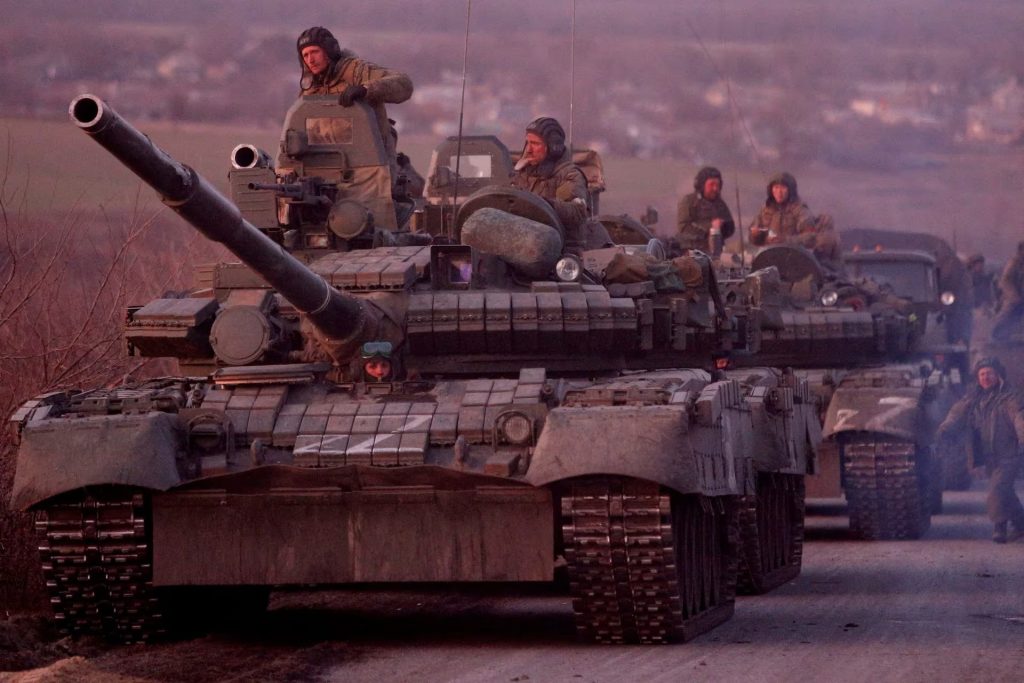
Photo – Reuters
Analysis of the war in Ukraine is an information weapon that helps soberly assess one’s own actions during the full-scale invasion. On the eve of 2024, the analytical department of the Ukrainian Center for Security and Cooperation prepared an extensive forecast of Western aid, enemy actions, and Ukraine’s strategy based on open sources. The first part of the study focuses on assessing Russia’s military capabilities.
The Soviet Union, and later Russia, spent colossal sums on the military. After the collapse of the USSR, the Russian Federation inherited an extremely powerful military-industrial complex and the largest stockpiles of weapons: tanks, artillery systems, aircraft, and missile systems.
For a long time, the Kremlin sought to maintain the image of a leading military superpower by investing heavily in rearmament, military technology development, wars in Georgia, Moldova, and Ukraine, as well as military support for the Assad regime in Syria and countries of the Global South. However, following the full-scale invasion of Ukraine, Russia is losing millions of dollars every day—resources it had invested in its military since the early 2000s.
MILITARY AND FINANCIAL LOSSES OF THE RUSSIAN FEDERATION
After a year and a half of war, the Russian Federation has suffered significant losses in manpower and equipment and has considerably reduced its stock of long-range missiles. According to the General Staff of the Armed Forces of Ukraine, as of December 1, the value of destroyed military equipment amounts to approximately $40 billion. According to the Oryx project, which documents losses based on photo evidence, the estimate is $10.1 billion, including equipment destroyed, damaged, or captured:
According to the Oryx project and the “The Military Balance 2022” report by the IISS research center
Due to heavy equipment losses, Russian forces are forced to “deconserve” old Soviet-era equipment stored at military depots: tanks, armored vehicles, and artillery systems.
Visual analysis of satellite imagery from October 2023 shows that at least 5,450 tanks are stored at Russian Ministry of Defense facilities, of which only 3,529 appear to be in visually good condition. As of April 2023, that number stood at 3,911 units—meaning at least 382 tanks (9.7%) were removed from storage within six months. The same applies to armored fighting vehicles: prior to 2022, their number was estimated at around 9,604 units, while by 2023 only 5,737 remained (3,867 vehicles were “deconserved” during the war). These estimates are not claimed to be fully precise but clearly illustrate the trend toward restoring obsolete stockpiles.
Due to sanctions, Russia cannot mass-use Western components to restore its stockpiles. For example, “deconserved” tanks almost entirely lack modern high-tech equipment required to ensure sufficient fire accuracy. Nevertheless, this equipment continues to pose a threat and creates new challenges for Ukraine’s Defense Forces.
ATTEMPTS TO INCREASE ARMAMENT PRODUCTION
Note: Information in this section is largely speculative due to the closed nature of the Russian military-industrial complex.
Production of heavy combat equipment
In March of this year, Dmitry Medvedev claimed that Russia would produce 1,500 tanks within a year. However, such statements do not correspond with the reality of relying on Soviet-era reserves. The head of Rostec, Sergey Chemezov, stated that tank production in Russia increased sevenfold over the year, light armored vehicles by 4.5 times, artillery and MLRS by 2.5 times, and ammunition by 60 times. In practice, this “increase” most likely refers to refurbishing deconserved equipment rather than producing new systems.
Previously reported estimates suggest that Russian factories can produce approximately 20 new tanks per month and refurbish 60–90 units. Even these figures are insufficient to offset battlefield losses in Ukraine (for example, 118 tanks were lost in October alone).
Despite everything, Russia aims to increase military production. However, this effort is constrained by a lack of skilled labor, specialized equipment, and the loss of critical manufacturing technologies. The head of Rostec reported that 23,000 vacancies remain unfilled at defense enterprises. Meanwhile, Finance Minister Siluanov announced plans to allocate 130 billion rubles to machine-tool manufacturing—likely a forced measure due to limited access to Western equipment under sanctions.
SUMMARY
In 2024, despite heavy losses in equipment and personnel, Russia remains committed to a prolonged war in Ukraine and continues to seek ways to restore its military resources by refurbishing Soviet stockpiles and conducting covert mobilization.
A major challenge for sanctions enforcement remains the Kremlin’s ability to circumvent restrictions and import critical components for its military-industrial complex—particularly for high-precision weapons. This is evidenced by continued production and stockpiling of cruise missiles, ballistic missiles, and UAVs. At the same time, limited access to foreign equipment prevents Russia from expanding production in other sectors, such as tank manufacturing. As a result, Russia has limited capacity to produce new military equipment and relies primarily on restoring Soviet-era reserves.
18.05.2026
When Russia launched its full-scale invasion of Ukraine in 2022, Mariupol quickly became the site of…

05.05.2026
Russia pressed every Donbas sector in April, with assault tempo at a two-month high. The territorial…

16.03.2026
It is in the war against Ukraine that Russia is trying to adhere to this non-linear…


