


Mariupol is Putin’s blueprint for occupation, and the world is barely paying attention
18.05.2026
When Russia launched its full-scale invasion of Ukraine in 2022, Mariupol quickly became the site of…
The full text of the article was published by The Moscow Times
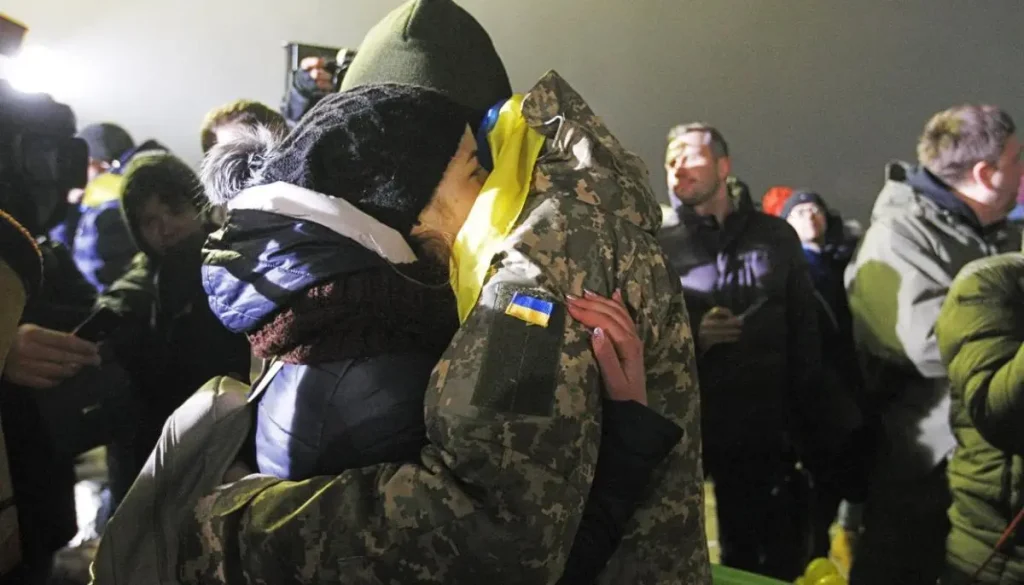
Over the past several years, Ukraine has been calling on all international organizations to put pressure on the Russian side in order to reinvigorate the process of exchanging prisoners of war and civilians, as well as to gain access to all captives — information about whom Russia deliberately conceals. In particular, the International Committee of the Red Cross has been slow to fulfill its mandate and appears to ignore the problems caused by the war in Ukraine. For example, during the 34th International Conference in Geneva at the end of October, the organization made no mention whatsoever of the fact that the Russian side denies access to all places where Ukrainian prisoners are held. In other words, Russia is preventing the organization from carrying out its mission — monitoring the treatment of prisoners.
Overall, as a result of more than fifty exchanges between Moscow and Kyiv, approximately 3,767 Ukrainian prisoners of war and deported civilians have been returned home. However, according to the latest data, 14,000 Ukrainian citizens remain in Russian captivity, and nothing is known about the condition of the majority of them.
At least 177 Ukrainians have been killed in Russian captivity since the start of the full-scale invasion. One example is the cynical mass execution of Ukrainian prisoners of war who defended Mariupol and the Azovstal steel plant in the Olenivka penal colony on July 25, 2022. As a result of the Russian terrorist attack, at least 53 Ukrainian defenders were killed and another 130 were injured to varying degrees. The most recent high-profile case is the death in Russian captivity of Ukrainian journalist Viktoriia Roshchyna (in total, 25 Ukrainian journalists remain in captivity). Russian authorities did not even manage to return her body during the repatriation on November 8, 2024.
Due to the lack of international oversight, the actual number of deaths is most likely much higher, as not all bodies are returned. In addition, until recently, Moscow did not provide confirmation of the detention of most hostages. Only on November 8, 2024 did information emerge about an exchange of prisoner lists visited by both sides (the Ukrainian side — Russian prisoners of war in Ukraine, and the Russian side — Ukrainian prisoners of war on its territory). However, there are strong grounds to believe that the lists provided by Russia are incomplete.
According to data from the UN Monitoring Mission as of October 1, 2024, the torture of Ukrainian prisoners of war is systematic in nature. Among the established methods of torture cited in the report are beatings, electric shocks, suffocation, sleep deprivation, mock executions, sexual violence, threats of severe violence against the individual or their family members, and humiliation of human dignity. According to testimonies from Ukrainian authorities and the UN, 95% of prisoners were subjected to abuse in Russian captivity.
Despite well-documented facts of Russian crimes, including in prisoner camps, the Red Cross has shown little initiative in attempting to gain access to at least some Ukrainian captives of the Kremlin. The vast majority of released prisoners testified that they never once saw representatives of the International Committee of the Red Cross. In particular, more than 150 detention facilities holding Ukrainian prisoners on Russian territory remain “outside the access zone” of the International Committee of the Red Cross.
Photo: Ministry of Reintegration
Author: Anton Zemlianyi, Senior Analyst at the Ukrainian Center for Security and Cooperation
18.05.2026
When Russia launched its full-scale invasion of Ukraine in 2022, Mariupol quickly became the site of…

05.05.2026
Russia pressed every Donbas sector in April, with assault tempo at a two-month high. The territorial…

16.03.2026
It is in the war against Ukraine that Russia is trying to adhere to this non-linear…


