


Mariupol is Putin’s blueprint for occupation, and the world is barely paying attention
18.05.2026
When Russia launched its full-scale invasion of Ukraine in 2022, Mariupol quickly became the site of…
The Kremlin enjoys playing spy games and engaging in hybrid aggression. This is precisely how Russia operated in Ukraine for years—gradually “probing” defenses, searching for weak points, and testing reactions. Only when Moscow, despite all efforts, failed to achieve its desired outcomes—particularly in the Donbas—did it resort to an open full-scale invasion. But even then, the Kremlin “broke its teeth,” having failed to anticipate the unity and resilience of the Ukrainian people.
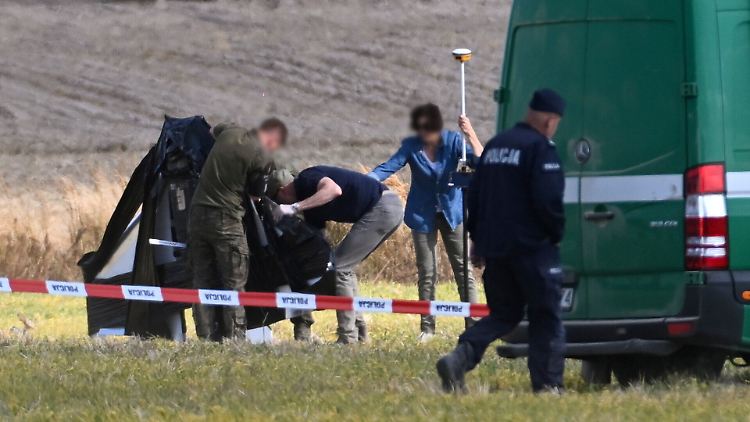
The drone attack that crossed into Polish territory on the night of September 10 became yet another episode in this hybrid game that Moscow is now playing in the West. Its goal is obvious: to destabilize Ukraine’s allies and undermine the unity of the North Atlantic Alliance.
These events are the result of aggressive actions to which the Kremlin has not received an adequate response. Polish airspace has previously been violated not only by drones, but also by missiles. The lack of a decisive reaction—both from Polish command and from NATO—has only encouraged Moscow to continue more actively “probing” defenses. Each time, the Kremlin has attempted to deflect responsibility, hiding behind claims such as “it wasn’t us” or “it was a Ukrainian provocation.”
We have already witnessed Russian acts of aggression against aviation in the Baltic and Black Seas, flights with transponders turned off, acts of sabotage, and effectively sub-threshold actions on the territory of NATO member states. This is not coincidence or a “series of unfortunate events.”
All these incidents form a clear pattern of small-scale provocations through which Moscow expands the boundaries of what is permissible and overloads systems of command, decision-making, and threat response. The Kremlin forces Western command centers to expend time, resources, and logistics on each individual incident—and exploits this dynamic.
In this way, Russia seeks to divert Western resources away from the war in Ukraine, intimidate populations, and undermine support for Kyiv, depriving it of critically important assets. This concerns not only political attention or finances, but also air defense systems, which may now be redirected from protecting Ukraine to protecting NATO countries.
At present, Russia is bogged down on the Ukrainian front and unable to open a second front. However, in this “soft” mode of hostilities, the Kremlin can accumulate reserves for future provocations against Poland and the Baltic states.
What should be done? The example of the operation in the Kursk region proves that proactive actions can disrupt Moscow’s plans, divert resources, destroy reserves, and simultaneously protect one’s own territory. This is a lesson allies must take into account.
Therefore, the only adequate response to the Kremlin’s nighttime attacks is to strengthen and develop Europe’s security system and to increase assistance to Kyiv, which must serve as the foundation of this architecture. If allies are not ready to shoot down drones and missiles over Poland, they should at least close the sky over Ukraine’s Lviv and Volyn regions—without waiting for official decisions or the end of hostilities. This is the only way to render Russian provocations meaningless. This is not NATO’s intervention in the war, but a demonstration of its unity and strength. Moscow understands only this language.
Although Poland has limited air defense resources, it is entirely feasible to ensure protection at least for Ukraine’s right-bank regions in coordination with partners and NATO.
Let us recall once again that only after Ukraine took active measures in the Black Sea—namely striking Russian ships and bases—did shipping resume and the “grain corridor” begin to function.
The same must happen in the air. Protecting Ukraine’s airspace is not the final goal, but the first active step. It should be followed by increased assistance and a stronger allied presence in the air, at sea, on land, in cyberspace, and in infrastructure projects. Only in this way can Russia’s war against Ukraine be neutralized and the Kremlin’s plans for future aggression be definitively thwarted.
The article was first published by Kyiv Post
Author: Serhii Kuzan
Photo: dpa Picture Alliance / PAP / Wojtek Jargilo
18.05.2026
When Russia launched its full-scale invasion of Ukraine in 2022, Mariupol quickly became the site of…

05.05.2026
Russia pressed every Donbas sector in April, with assault tempo at a two-month high. The territorial…

16.03.2026
It is in the war against Ukraine that Russia is trying to adhere to this non-linear…


