


Mariupol is Putin’s blueprint for occupation, and the world is barely paying attention
18.05.2026
When Russia launched its full-scale invasion of Ukraine in 2022, Mariupol quickly became the site of…
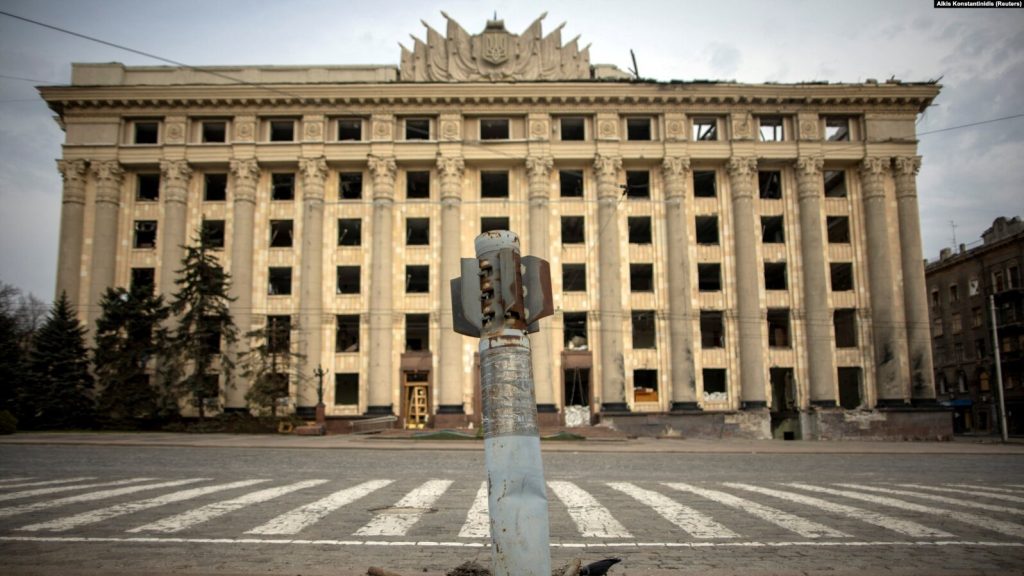
Kharkiv has been and remains one of Russia’s key targets during the full-scale invasion.
From the first day of the war, the enemy tried to encircle the city, shelling it daily with rocket and tube artillery. Kharkiv was even within the range of Russian mortar units. As a result, the city suffered significant destruction: civilian infrastructure was destroyed or damaged, including apartment buildings, schools, kindergartens, and hospitals.
However, Kharkiv did not surrender.
As early as February 25, Russian military equipment was burning en masse on the Kharkiv ring road near the village of Tsyrkuny, and on February 27 Ukrainians destroyed a column of Russian armored “Tigr” vehicles that had managed to break into the city itself. In the spring of 2022, the Ukrainian command launched the first offensive operation to push the enemy away from Kharkiv and deprive Russian artillery of the ability to strike and destroy Ukraine’s second-largest city.
Liberation of the Kharkiv region in spring 2022
In late March–early May 2022, the Armed Forces of Ukraine conducted the final stage of the defense of Kharkiv. This operation, as well as the September counteroffensive and liberation of the Kharkiv region, was led by the Commander of the Ground Forces at the time and now Commander-in-Chief of the Armed Forces of Ukraine, Colonel General Oleksandr Syrskyi.
The Ukrainian advance developed north and northeast of the regional center. Units of the Ground Forces, the Main Intelligence Directorate of the Ministry of Defense, the Territorial Defense Forces, and volunteer units joined the operation.
On March 10, the Defense Forces of Ukraine pushed Russian troops out of the outskirts of Derhachi, and on March 25 the Ukrainian army managed to liberate the village of Mala Rohan from Russian forces. Later, on April 15, the Defense Forces also liberated the nearby urban-type settlement of Rohan, which made it possible to reduce shelling of Kharkiv’s Industrial District.
On April 29–30, the Defense Forces de-occupied the village of Ruska Lozova, located north of the city near the Kharkiv–Belgorod highway. This event was of great importance for the city’s defense, as from the heights in the village Russian forces shelled Oleksiivka and Piatykhatky—densely populated residential areas of Kharkiv. The liberation of Ruska Lozova involved, among others, the “Kraken” special unit of the Main Intelligence Directorate and the head of the HUR, Kyrylo Budanov. At the same time, fighters of the 92nd Brigade liberated the village of Kutuzivka east of the city.
In early May, the Ukrainian command announced a transition to counteroffensive actions in the Kharkiv and Izium directions.
Ukrainian forces pushed the occupiers out of Kharkiv’s suburbs—Tsyrkuny, Cherkaski Tyshky, and Ruski Tyshky. On May 10, the Armed Forces of Ukraine liberated another strategically important settlement with elevated terrain—Pytomnyk.
Overall, during the spring offensive operation, the Defense Forces liberated 24 settlements and reached the state border in one sector. The spring operation reduced shelling of the city and restored hope that life in Kharkiv would recover.
Three months later, during the lightning-fast counteroffensive in September, the Defense Forces of Ukraine liberated almost the entire Kharkiv region. According to analysts, the Russian army suffered devastating losses.
The third year of the war
The city has gradually recovered. A large portion of residents have returned to Kharkiv (as of February 2024, the approximate population is 1.3 million). Children walk the streets, there are many cars in the city center, cafés are operating. Locals have become accustomed to air raid alerts occurring after strikes, as missiles launched from Russia’s Belgorod region reach Kharkiv in 30–40 seconds. Authorities have begun building underground schools for children and have already opened the first one. Earlier, five Kharkiv metro stations were converted into classrooms for 1,000 students to study offline—this is the reality of a frontline city at war.
Nevertheless, Russia has not abandoned its intention to destroy Kharkiv or create a humanitarian catastrophe there. Such statements continue to come from Russian authorities and top propagandists. In recent months, Russia has intensified its terror against civilians: it destroyed the largest power plants—the Zmiiv Thermal Power Plant and Kharkiv CHP-5—began using heavy aerial bombs, spread information about plans to seize the city, and intensified offensive actions in the Kupiansk direction.
Since February 24, 2022, 2,355 civilians have been killed in the Kharkiv region (as of January 1, 2024), including 79 children. Another 546 people are considered missing, including 128 women and 88 children. Unfortunately, the number of victims continues to grow almost daily.
In spring 2024, the Kharkiv Defense Council decided on the forced evacuation of children together with their parents from border areas to protect their lives. In March, the Velykoburluk and Vilkhuvatka territorial communities were added to the list, and in April—settlements near the Russian border in the Kharkiv, Bohodukhiv, and Izium districts.
All of this significantly affects public sentiment, but people remain resolute. They believe in the Armed Forces of Ukraine and that Western partners will not abandon Ukraine.
Kharkiv is fortifying
Despite skepticism among the military regarding the possibility of Russia capturing the city, and despite experts calling the spread of panic via social media a deliberate campaign to sow fear and despair, the Ukrainian command considers it necessary to strengthen security measures and the region’s defensive capabilities.
In particular, a second line of fortifications is currently being built in the territories of the Kharkiv region de-occupied in 2022. According to Commander-in-Chief Syrskyi, the defense line will consist of platoon strongpoints, anti-tank ditches, an integrated system of obstacles, reinforced concrete underground shelters, and systems of concrete and non-concrete firing positions.
Local authorities report that construction crews are working 24/7 under extremely difficult conditions and enemy fire. The Armed Forces of Ukraine currently hold the first line, while the so-called third line was built in Kharkiv and its outskirts immediately after the spring pushback of Russian forces from the city. However, protection against heavy aerial bombs capable of penetrating concrete has become increasingly urgent. This requires different solutions—namely Patriot systems or F-16 aircraft that would allow Ukraine to push enemy aviation to a safe distance.
The Commander-in-Chief of the Armed Forces of Ukraine assures that if Russia attempts to capture Kharkiv again, it will end in another defeat for them.
“We already have combat experience in the Kharkiv region. We managed to ‘read’ the enemy and liberate a significant part of the region. That was when the Russian front collapsed on a large scale. If the Russians move there again, Kharkiv will become a fatal city for them.”
said Syrskyi.
The article was published in El Independiente.
18.05.2026
When Russia launched its full-scale invasion of Ukraine in 2022, Mariupol quickly became the site of…

05.05.2026
Russia pressed every Donbas sector in April, with assault tempo at a two-month high. The territorial…

16.03.2026
It is in the war against Ukraine that Russia is trying to adhere to this non-linear…


