


Mariupol is Putin’s blueprint for occupation, and the world is barely paying attention
18.05.2026
When Russia launched its full-scale invasion of Ukraine in 2022, Mariupol quickly became the site of…
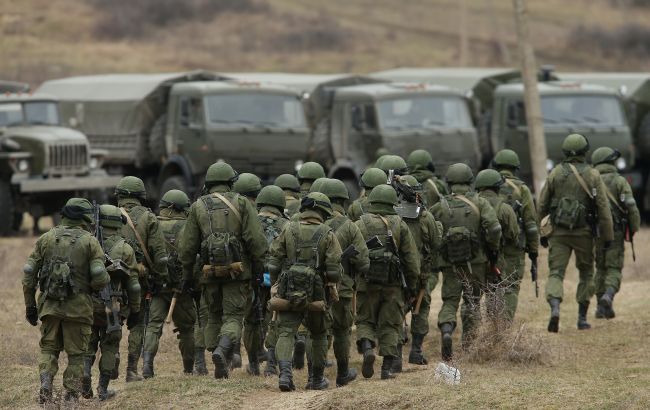
Against the backdrop of the de facto suspension of diplomatic relations with EU countries, the Belarusian leadership is significantly accelerating and strengthening integration with the Russian Federation. At least, such statements are being voiced by the country’s leadership and the illegitimate president Alyaksandr Lukashenka. In particular, the Prime Minister of Belarus stated that the integration process with Russia is almost complete. Integration between the two countries in the military sphere is also continuing.
According to sources of the Ukrainian Center for Security and Cooperation (UCSC) within Ukrainian special services, Russia is carrying out active measures aimed at expanding the presence of its troops on the territory of Belarus. Since March, it has also intensified joint military exercises involving units of the Armed Forces of the Russian Federation (RF) and the Republic of Belarus (RB), using modern Russian-made weapons and military equipment.
According to Ukrainian intelligence services, this is linked to preparations of military personnel of both countries for the joint strategic exercise “Zapad-2021,” as well as the establishment of training centers for joint training both in Russia and Belarus.
Thus, within the framework of the bilateral strategic partnership program between Moscow and Minsk, the creation of three such centers is planned — one in Belarus and two in Russia.
Military exercises
From March to September 2021, at least four joint exercises between Russia and Belarus were planned. They involve Special Operations Forces and mechanized units of the Armed Forces of Belarus, as well as air assault and training units of the Russian Armed Forces. The latter were engaged in joint training of mechanized and tank units of the armed forces of Belarus and Russia using Russian combat equipment, primarily BMP-2 infantry fighting vehicles and T-72B3 tanks.
In addition, the training of certain units, including a consolidated peacekeeping unit of the armed forces of Russia and Belarus, envisages practicing assault operations in densely populated areas with combat escort and support by mechanized units.
Exercises at the Mulino and Polivno training grounds (Russia)
In March 2021, one of the key objectives of the bilateral exercises of the armed forces of Belarus and Russia at the Mulino and Polivno training grounds was the use of modern Russian weapons and military equipment: T-72B3 tanks, BMP-2, BTR-MDM “Rakushka,” RPO-A “Shmel,” Orlan-10 UAVs, Eleron-3 UAVs, 120-mm “Sani” mortars, BM-21 “Grad,” and others.
At the same time, interoperability was practiced between units of the 333rd Combat Training Center (Russia) and the 6th and 120th separate mechanized brigades of the Armed Forces of Belarus, as well as between an airborne unit of the Russian Armed Forces and Special Operations Forces units of Belarus.
On June 19, the joint Russian-Belarusian-Serbian exercise “Slavic Brotherhood-2021” concluded. It included airborne insertion of personnel and cargo, overcoming water obstacles, non-parachute landing, and live-fire exercises.
All these activities are likely stages of preparation for the large-scale strategic exercise “Zapad-2021”, scheduled for mid-September. Its main theme will be the escalation of the military-political situation around “conditional countries”, as well as practicing covert troop deployment.
However, it cannot be ruled out that the real purpose of “Zapad” may be different, as during the stages of joint preparation significant attention was paid to practicing actions of assault units in urban and densely populated areas with support from mechanized forces.
The transfer of Russian military personnel to Belarus began a month and a half before the start of the exercises. As early as July 21, the Ministry of Defense of Belarus reported the arrival of the first echelons of Russian Armed Forces personnel and equipment.
NATO has promised to closely monitor “Zapad-2021”. In particular, the Alliance called on Moscow and Minsk to “act predictably and transparently.” Former Commander-in-Chief of the Armed Forces of Ukraine Ruslan Khomchak stated that the joint Russian-Belarusian exercises potentially pose a threat to Ukraine.
International experts agree that after “Zapad-2021,” some Russian troops may remain in Belarus to reinforce the current regime.
On July 30, Lukashenka stated that Belarus had coped with unrest on its own and could mobilize about 500,000 people in a short period, but if necessary would not hesitate to invite Russian troops.
At the same time, within Belarus itself, exercises of territorial defense forces were held almost weekly, mainly along the borders with the EU and NATO.
Earlier, during a meeting on territorial defense in Shklov, Lukashenka hinted that these forces would also be used to counter “destructive influences” inside the country.
“Over the past year, we have experienced destructive informational influence, economic and political pressure coming from the West, which affected the worldview of our people and pushed some of them toward betrayal of their own nation. It is always necessary to resist such actors so that the enemy remembers it for many years. Only nationwide defense is capable of this, if we all defend our land,” his press service quoted Lukashenka as saying.
Escalation of repression inside the country
The fight against these “destructive forces” continues.
Both public figures and ordinary citizens who dare to express dissatisfaction with the situation or show any support for repressed individuals or the protest movement are subjected to repression.
As of August 31, the total number of people imprisoned for political reasons stands at 653.
According to the human rights center “Viasna,” 107 politically motivated convictions were handed down in July 2021 alone.
National Belarusian symbols were also banned. In June alone, 25 fines were issued, 94 administrative arrests imposed, and 246 detentions carried out for their use or for participation in peaceful protests.
Former detainees who managed to regain their freedom report mass torture in detention facilities, systematic in nature and widespread across the country.
On July 8, the KGB of Belarus reported an operation “to cleanse the country of radical elements.”
Security forces identified participants in Telegram chats and carried out searches and detentions to check their involvement in alleged crimes. According to Belarus-1 TV channel, the communities “Belarus Civil Self-Defense Units” and “Busly Latsyats” (“Storks Are Flying”) were allegedly involved in recruiting young people for new mass unrest and even terrorist acts.
Lukashenka also confirmed that he sees a threat to his regime primarily in Belarusians themselves and internal protest actions, as stated during a ceremony honoring graduates of higher military educational institutions and senior officers.
“Theoretically, we are preparing for war differently than before. You understand perfectly well that the war will most likely not begin with external aggression. It will begin from within — with the destruction of living conditions, the sowing of chaos, and only then, if necessary, the introduction of foreign troops. This is the essence of our national security concept,” Lukashenka stated.
However, Minsk also keeps an eye on its closest neighbors who did not recognize Lukashenka as the legitimate president of Belarus.
Belarus–Lithuania
After EU sanctions were imposed on Belarus, the number of illegal migrants attempting to cross the EU border (especially Lithuania) increased dozens of times. Lithuania was even forced to declare a state of emergency and increase the number of border guards.
According to Lithuanian intelligence services, as of July 29, 3,145 migrants were detained on the border with Belarus this year — 39 times more than in all of 2020.
The situation with illegal migrants improved after Iraq suspended flights to Belarus. In the first week of August, only 271 migrants arrived in Lithuania from Belarus, compared to 1,106 the week before.
On August 23, Lithuania, Poland, Latvia, and Estonia issued a joint statement calling on the UN to respond to Belarus’s “blackmail using migrants.”
On August 24, Lithuania submitted to the EU a list of Belarusian companies and individuals for sanctions over facilitating illegal migration.
“We must send a very clear signal not only to Belarus, but to any dictator who decides to use such a tool against the European Union or any of its states — it will not work, and there will be consequences,” said Lithuanian Foreign Minister Gabrielius Landsbergis.
Ukraine–Belarus
Lukashenka also does not forget about Ukraine. On August 9, during a press conference, he stated that if he and Putin wanted, they could put Ukraine “on its knees” within a day.
At the same event, Lukashenka personally accused Ukrainian President Zelensky of training militants and transferring weapons to Belarus, noting that this forced him to close the Belarusian-Ukrainian border.
“We have now practically sealed this border, although it is hard to seal completely. But why are you doing this? These are neighbors, close people…,” the self-proclaimed president of Belarus remarked.
It should be recalled that Lukashenka issued an order to completely close the border with Ukraine as early as July 2 due to alleged arms smuggling. However, as of July 29, no “complete closure” was observed.
Despite Belarus’s clear subordination to Russian interests in international affairs, the situation regarding possible recognition of the occupation of Crimea and the so-called L/DNR remains unclear. For example, an invitation to the peninsula from the head of occupied Crimea, Sergey Aksyonov, addressed to Lukashenka, went unanswered.
On August 9, during a press conference, the illegitimate president of Belarus said he would recognize occupied Crimea as “Russian” when “the last Russian oligarch” begins supplying products to the peninsula.
Thus, despite all statements and events, the overall impression is that Lukashenka’s regime is deliberately bargaining and slowing integration with Russia, at least where possible, not rushing fully into “brotherly embraces.”
At the same time, the focus is on total control over internal Belarusian processes and preventing any confrontation. Possibly, Lukashenka also seeks to demonstrate his own capability and strength to the Kremlin leadership. In this context, events of Ukraine’s Revolution of Dignity and the experience of Yanukovych’s regime in suppressing protests — which ultimately failed Moscow’s objectives — are likely being studied.
Thus, the question remains open whether Russian troops will stay on Belarusian territory after the completion of the joint exercise “Zapad-2021,” and if they do, what their tasks will be. The answers to these questions are extremely important both for the future of neighboring countries and for Belarus itself. One thing is a national army; another is armed soldiers carrying out orders, even if of a so-called “Union State.”
Authors: Borys Hrachov, Oksana Kuzan
18.05.2026
When Russia launched its full-scale invasion of Ukraine in 2022, Mariupol quickly became the site of…

05.05.2026
Russia pressed every Donbas sector in April, with assault tempo at a two-month high. The territorial…

16.03.2026
It is in the war against Ukraine that Russia is trying to adhere to this non-linear…


