


Mariupol is Putin’s blueprint for occupation, and the world is barely paying attention
18.05.2026
When Russia launched its full-scale invasion of Ukraine in 2022, Mariupol quickly became the site of…
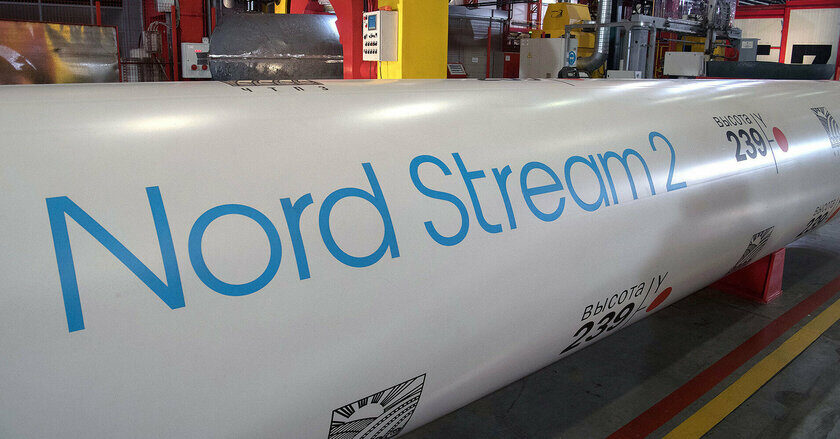
“Putin’s triumph”, “the Kremlin’s greatest geopolitical victory” – this is how global media reacted to the outcome of the agreements between the United States and Germany regarding the Russian gas pipeline Nord Stream 2 (NS2).
The Kremlin’s project, which is openly described as Europe’s Russian gas needle and a threat to the national security of Ukraine and Central Europe, appears set to be completed after years of sanctions. And this despite Russia’s aggressive policy toward NATO, interference in U.S. elections, Russian cyberattacks and hacks of official German institutions, assassinations and poisonings of Kremlin opponents in the EU, not to mention the occupation of Crimea, parts of Georgia, and the war in eastern Ukraine.
However, completion does not mean launch. This fact is already forcing Moscow to resort to additional pressure on European consumers. A suspicious accident at a Gazprom plant in Novy Urengoy affected gas transit through the Yamal–Europe pipeline, while the Russian monopolist has begun talking about the emergency condition of its infrastructure (seven accidents at “large gas” facilities this year alone), subtly hinting at the necessity of launching NS2.
All of this means that Kyiv must not give up, but instead focus on ensuring that, if the project cannot be stopped, Ukraine at least secures real and enforceable security guarantees.
The Agreement
On July 21, the United States and Germany officially announced an agreement on completing construction of the Russian gas pipeline. Such a step was expected. On May 26, U.S. President Joe Biden stated that his administration would not impose new sanctions on NS2, as the project was nearly finished and sanctions would harm relations with European allies.
Details of the July agreement were simultaneously published by the German Foreign Ministry and the U.S. State Department in a document titled “U.S.–German Joint Statement on Support for Ukraine, European Energy Security, and Our Climate Goals.”
The document declares strong support for Ukraine’s territorial integrity and its aspirations for a European future, and confirms the need to take action against Russian aggression if the Kremlin uses gas as a weapon.
“Should Russia attempt to use energy as a weapon or commit further aggressive acts against Ukraine, Germany will act at the national level and press for effective measures at the European level, including sanctions, to limit Russia’s export capabilities in the energy sector, including gas, or take effective measures in other economically relevant sectors,” the document states.
The declaration also outlines Germany’s commitment to use all available leverage to facilitate an extension of the gas transit agreement between Ukraine and Russia for up to ten years.
In addition, Germany commits to establishing and managing a Green Fund for Ukraine, aimed at supporting energy efficiency and energy security, contributing at least USD 175 million as a grant and working to increase this amount. Together, the United States and Germany pledged to “strive to mobilize and facilitate investments” of at least USD 1 billion for the fund.
Global Reaction
Germany
The lack of concrete steps in response to potential geopolitical pressure from Moscow, as well as the absence of security guarantees for Ukraine, sparked criticism not only from official Kyiv but also from European and American experts and politicians.
In particular, German expert Ralf Fücks, director of the think tank Zentrum Liberale Moderne (designated an “undesirable foreign organization” in Russia), wrote in a column for the influential outlet Spiegel.de that the agreement “unties the Kremlin’s hands to increase political and military pressure on Ukraine without risking its gas business with the EU.” He also criticized Germany for rejecting a U.S. proposal to include a clause that would allow gas supplies to be halted if the Kremlin takes aggressive actions against its neighbors.
The deal was also negatively received by Germany’s opposition. “The pipeline is a bad idea for climate reasons, but above all for geostrategic reasons,” said Annalena Baerbock, the chancellor candidate from Alliance 90/The Greens.
United States
The new stance on NS2 was met with strong resistance in the United States as well.
Immediately after Biden’s May statement on waiving new sanctions, a group of Republican congressmen and some Democrats addressed the State Department with criticism, noting that the administration was disregarding the interests of countries “on the front line in Central and Eastern Europe, including Ukraine,” and prioritizing Berlin’s interests over those of the rest of Europe. They also met with the President of Ukraine and stated they would continue opposing Nord Stream 2 together with their Ukrainian counterparts.
After the agreement was published, 12 Republican senators, in a letter to Treasury Secretary Janet Yellen, said they would oppose nominees for senior Treasury positions until the administration complies with Section 228 of CAATSA. They urged Yellen to “change course on Nord Stream 2” and take steps to “protect European allies and partners from malicious Russian aggression.”
On July 20, U.S. Congresswoman Marcy Kaptur, co-chair of the Congressional Ukraine Caucus, stated that Congress must reject any agreements that fail to protect transatlantic security and Ukraine’s sovereignty.
Republican Senator Ted Cruz said he was blocking State Department nominations due to the Nord Stream 2 situation.
On August 4, opposition to the U.S.–German agreement was voiced by U.S. Senate Foreign Relations Committee Chair Robert Menendez, as well as the heads of parliamentary foreign affairs committees from Estonia, Ireland, Latvia, Lithuania, Ukraine, the United Kingdom, the Czech Republic, and Poland.
In their statement, they noted that NS2 would give Russia another tool for pressure and blackmail against Ukraine, which continues to face brutal Russian aggression and military occupation due to its pro-European choice. “More and more Ukrainian soldiers are giving their lives to defend their homeland and all of Europe. The EU and the United States must work together to increase sanctions pressure on the Kremlin to counter aggression in Ukraine,” the statement reads.
Ukraine and Poland
The foreign ministries of Ukraine and Poland also condemned the U.S.–German agreement in a joint statement. “This decision has created additional political, military, and energy threats for Ukraine and Central Europe as a whole. It increases Russia’s ability to exert destructive influence on security in Europe and deepens divisions within NATO and the EU,” the statement said.
Author: Oksana Kuzan
18.05.2026
When Russia launched its full-scale invasion of Ukraine in 2022, Mariupol quickly became the site of…

05.05.2026
Russia pressed every Donbas sector in April, with assault tempo at a two-month high. The territorial…

16.03.2026
It is in the war against Ukraine that Russia is trying to adhere to this non-linear…


