


Ukraine Is a Key Pillar of Europe’s Defense
13.06.2025
At the summit of the Bucharest Nine (B9) and Nordic countries held on June 2, 2025,…
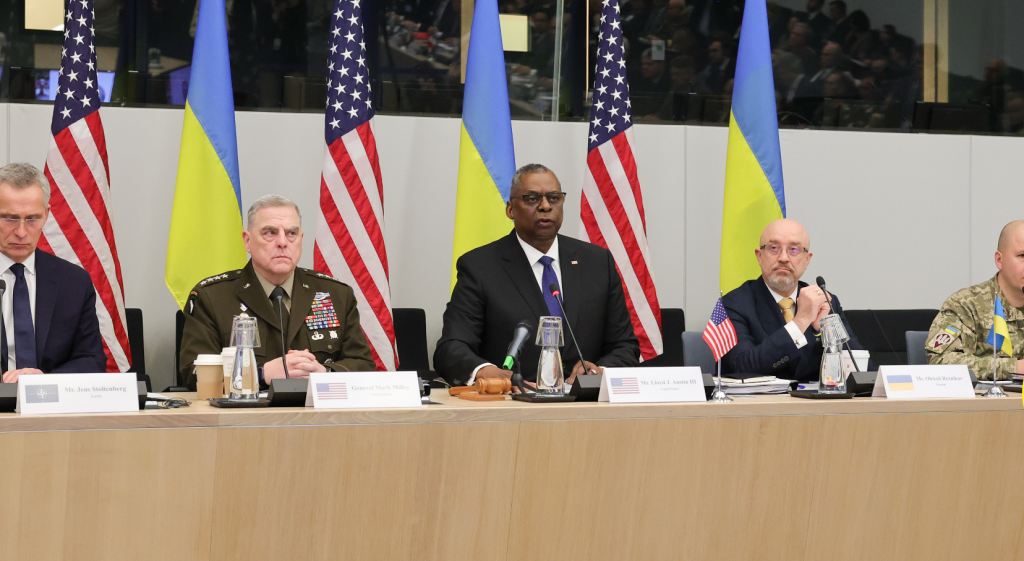
“The tenth, anniversary Ramstein meeting was not revolutionary or breakthrough for Ukraine; however, this gathering of allies was key in light of several important aspects,” said the Head of the Ukrainian Center for Security and Cooperation in a comment to *Telegraf*.
The tenth Ramstein should be viewed as a practical working meeting aimed at addressing current issues. First and foremost, the main problem is the shortage of ammunition so that, amid the ongoing Russian offensive, we can counter the enemy’s superior forces.
At present, the Russians retain an advantage both in manpower and in the volume of ammunition they use to shell Ukrainian forces. Accordingly, this meeting was necessary to resolve urgent, concrete issues, as well as to take stock of previous agreements and analyze what will be delivered and within what timeframe.
As Serhii Kuzan explained, when it comes to Ukraine’s current needs, first, Ukraine will receive a larger quantity of ammunition. Second, the coalition is discussing and agreeing on how to produce and increase stockpiles of this ammunition, which is strategically important for us.
Under any circumstances, even if Russia plans to continue a war of attrition a year from now, thanks to this Ramstein meeting the Western coalition will be prepared for such a scenario. As for current weapons supplies, there is now a very noticeable effort to “tie up loose ends” on all previous agreements. In particular, this includes the same 150 Leopard tanks from a coalition of nine countries, whose transfer to Ukraine has already been announced by partners.
“This is important; it is a working instrument, because we need not only the transfer of tanks, but also training and maintenance with repairs,” the UCBSS Head continued. “This entire mechanism is complex, because Europe has never faced a military challenge of this scale before, and today it is being worked through.”
Kuzan also separately drew attention to the issue of supplying Ukraine with short-range air defense systems: man-portable systems as well as modern medium-range systems such as NASAMS and IRIS-T.
Read also: Why the example of Afghanistan matters in the context of the Biden–Zelenskyy meeting
We see understanding from Belgium and the United States, which are providing these systems, as well as from those we are still expecting—SAMP/T and Patriot. These are surface-to-air missile systems that can potentially intercept ballistic targets.
“The dialogue with our allies is finally reaching a level where we are no longer discussing isolated deliveries, but rather comprehensive provision of short-, medium-, and long-range air defense systems. The conversation is now about a systemic approach and a comprehensive solution to the problem. This was not a revolutionary Ramstein. It was a fully working meeting focused on practical issues,” Serhii Kuzan concluded.
13.06.2025
At the summit of the Bucharest Nine (B9) and Nordic countries held on June 2, 2025,…

13.06.2025
The full-scale war against Ukraine is setting new rules and military doctrines that must be taken…

09.06.2025
In the fall of 2024, the Kremlin took another step toward renewed nuclear blackmail. On September…


