


Ukraine Is a Key Pillar of Europe’s Defense
13.06.2025
At the summit of the Bucharest Nine (B9) and Nordic countries held on June 2, 2025,…
In October, a number of important events took place that directly affect Ukraine’s national security and defense. In particular, the publication of the appeal letter “Memorandum to the President of the United States,” signed by more than 40 national security experts from the American think tank Atlantic Council (Atlantic Council), as well as the address of the U.S. President to the American people.
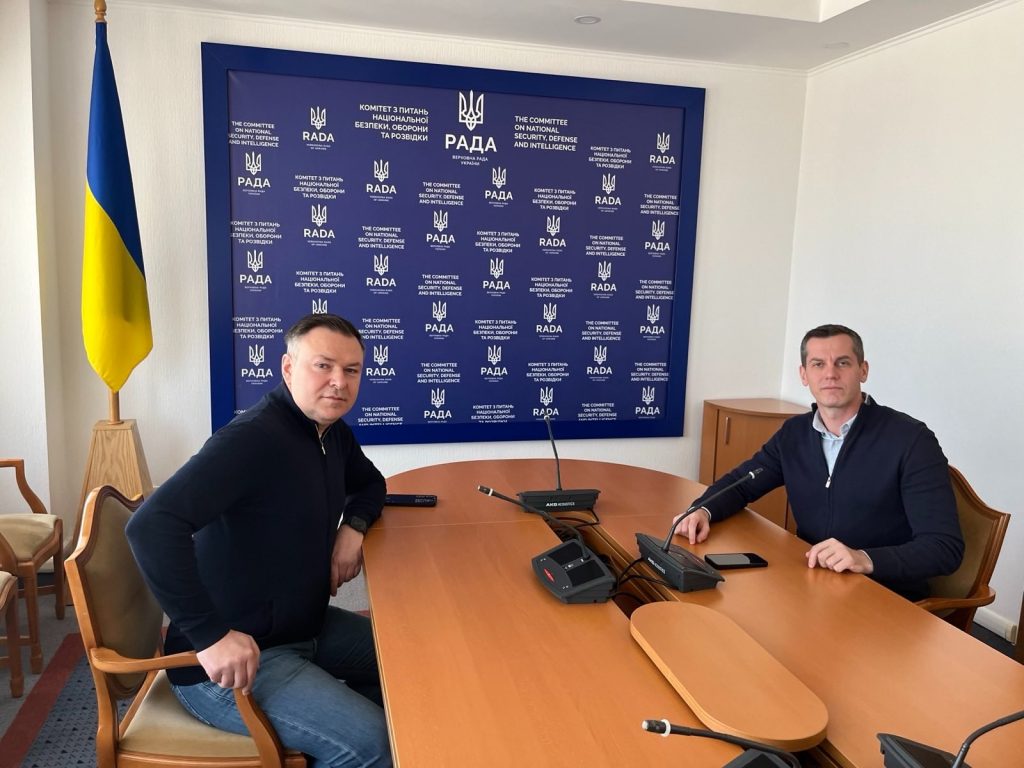
The Head of the Ukrainian Center for Security and Cooperation Serhii Kuzan, together with the Head of the Verkhovna Rada Committee on National Security, Defense, and Intelligence Oleksandr Zavitnevych, discussed recent developments affecting Ukraine’s national security.
(Hereinafter – direct speech) S.K.:
“How would you comment on the recent appeal by Atlantic Council experts to the President of the United States regarding support for Ukraine, which was presented to the Ukrainian audience at a security forum by former U.S. Ambassador to Ukraine and leading Atlantic Council analyst John Herbst?“
O.Z.: First of all, let me remind you that the Atlantic Council is a powerful American non-governmental expert institution of the highest caliber. Their conclusions and statements have a direct impact on shaping Washington’s official position, public opinion among ordinary Americans and Europeans, as well as experts from NATO countries. The leadership and leading experts of this center maintain working contacts with world leaders and engage in exchanges on geopolitics and national security. By the way, at the end of May this year, an Atlantic Council delegation visited Kyiv and met with President of Ukraine Volodymyr Zelenskyy.
We are grateful to the Atlantic Council experts who consistently and convincingly support Ukraine in the Russian-Ukrainian war. Moreover, they are proponents of the idea of Ukraine’s full integration into NATO. Importantly, this is not just a call from experts. It is about the creation of a working group of former ambassadors, diplomats, and heads of military institutions in Europe. All of them are united by a single goal – to develop proposals to accelerate Ukraine’s accession to NATO through the Washington Summit to be held next year.
This fully aligns with Ukraine’s position – the most reliable security guarantee for Ukraine, and the foundation of global Euro-Atlantic security, can only be Ukraine’s membership in NATO. Ukrainian defenders, at the cost of their lives resisting Russian aggressors, have effectively formed a new NATO standard – the resilience of national resistance to occupation. This can become a strong basis for modernizing many Euro-Atlantic principles, primarily in countering threats from Moscow and other challenges to the Alliance.
Ukraine has proven its right to receive an invitation to join the North Atlantic Alliance and to begin the accession process. Only this can demonstrate to Moscow the futility of further aggression or planning it in the future, not only against Ukraine but globally.
S.K.: Much attention in the Memorandum and among experts in general is paid to the situation at the front. Could you comment on it?
O.Z.: The assessment of the situation at the front is provided by the country’s top political leadership, while authorized representatives of the defense forces report on the current situation daily. It is difficult for me to add anything. However, I would like to draw attention to something else. For certain reasons, since spring this year, public and expert attention has been focused primarily on the counteroffensive. This has resulted in coverage of only one component of our defense forces’ summer-autumn campaign.
I will briefly outline our achievements resulting from the heightened focus on the counteroffensive, which significantly demoralized the enemy.
All this demonstrates how broad the spectrum of planned measures was for our defense forces’ summer-autumn campaign.
S.K.: How would you characterize certain remarks by American experts regarding the pace of U.S. and NATO military assistance to Ukraine?
O.Z.: Members of the Committee I chair maintain active dialogue with Western policymakers, allowing frank discussion of all issues related to foreign security assistance. However, we clearly distinguish where dialogue with American experts ends and where internal U.S. debates begin. We do not cross that line.
S.K.: What convinces partners to support Ukraine?
O.Z.: Our strength lies in the truth: the Russian-Ukrainian war is not merely a war for Ukraine’s territorial integrity and independence. It is a value-based, worldview war between the forces of good and justice and the forces of Russian evil and barbarism. Ukraine is not the final destination of Russia’s bloody aggression, but only an intermediate stop. If we do not jointly stop and destroy the Russian war machine, it will destroy everyone who resists it.
These theses are clearly articulated in the addresses of President Zelenskyy, parliamentarians, and diplomats to partners worldwide.
An important role in uniting efforts to support Ukraine is played by the Peace Formula proposed by President Zelenskyy, which has already been joined by 70 international actors and is acquiring global significance.
Foreign visitors are deeply impressed by the unity of our society, faith in our defense forces, and belief in the temporary nature of hardships. After such visits, there is no talk of fatigue – instead, partners bring proposals for further cooperation.
Thus, we have every reason to be confident that the Russian occupier will continue to suffer heavy losses on the battlefield due to Ukrainians’ effective use of Western weapons and equipment.
13.06.2025
At the summit of the Bucharest Nine (B9) and Nordic countries held on June 2, 2025,…

13.06.2025
The full-scale war against Ukraine is setting new rules and military doctrines that must be taken…

09.06.2025
In the fall of 2024, the Kremlin took another step toward renewed nuclear blackmail. On September…


