


Mariupol is Putin’s blueprint for occupation, and the world is barely paying attention
18.05.2026
When Russia launched its full-scale invasion of Ukraine in 2022, Mariupol quickly became the site of…
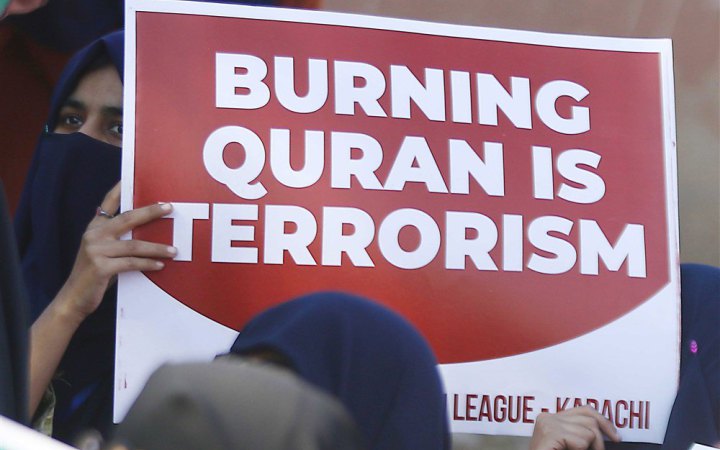
In October, the Turkish parliament is expected to ratify Sweden’s application to join NATO. Sweden submitted its application last year, but in addition to the Kurdish issue, relations between the two countries have also been negatively affected by scandalous Quran-burning actions. Russia’s interference played a role in fueling the conflict.
CHRONOLOGY OF EVENTS
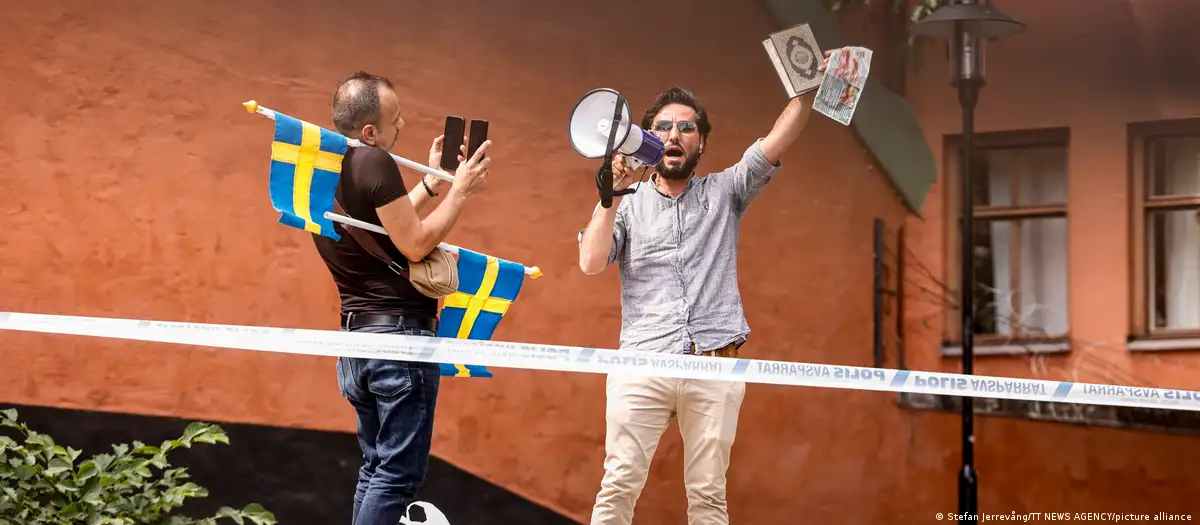
During September, two public Quran-burning actions took place in Malmö, Sweden. According to media reports, each gathered around 150–200 people. The organizers were Iraqi refugees Salwan Momika and Salwan Najem, who had previously carried out similar actions in Sweden on June 28 near the central mosque in Stockholm and on July 21 and 31 near the Iraqi Embassy in the capital. Earlier, on January 21, 2023, Danish far-right politician Rasmus Paludan, who also holds Swedish citizenship, burned a Quran in front of the Turkish Embassy in Stockholm.
Source: sverigesradio.se
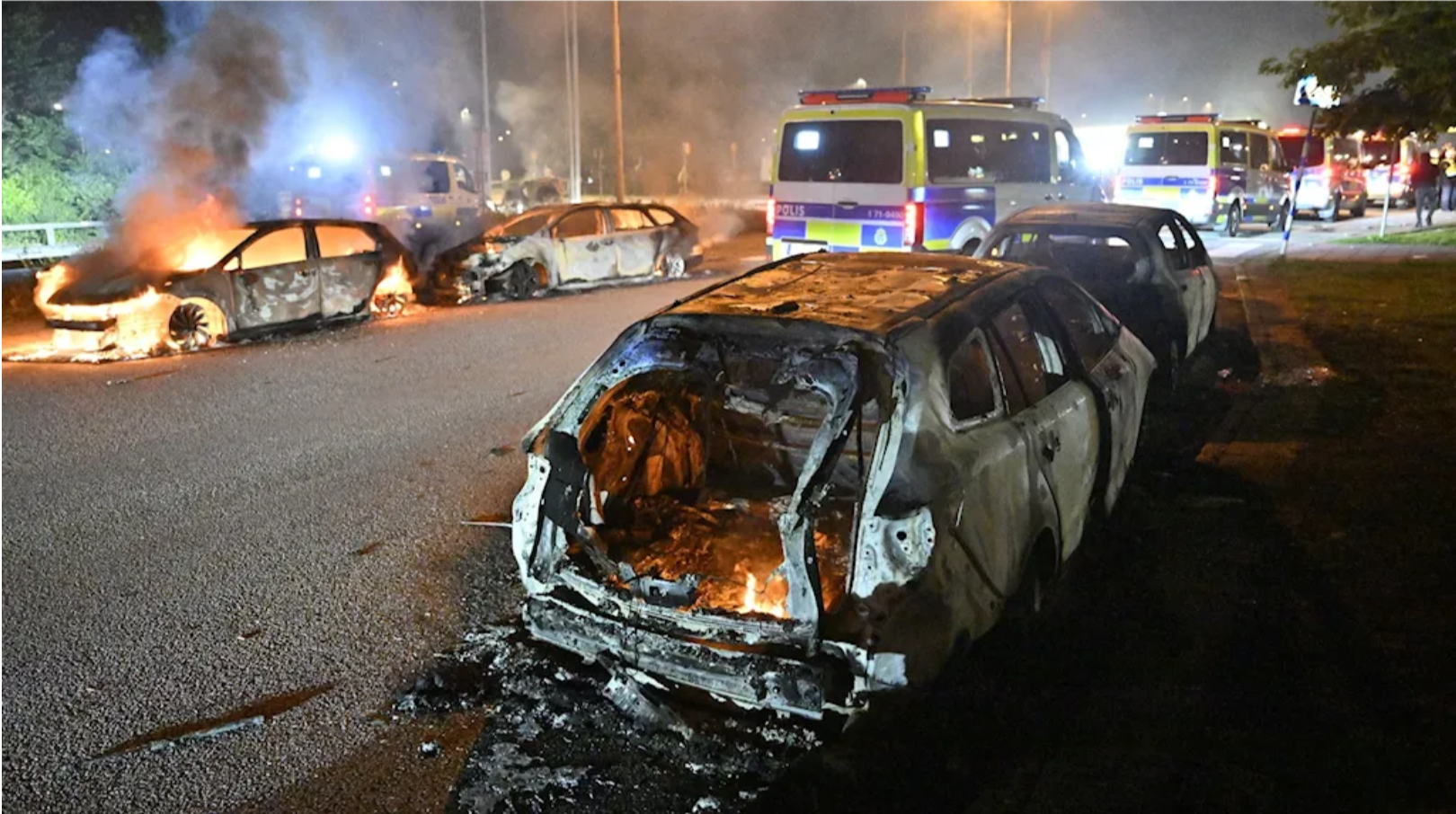
The Quran burnings on September 3 and 30 provoked a series of clashes: locals attempted to stone both the organizers and police vehicles that evacuated Salwan Momika. Some individuals also set fires.
An important aspect of these events is the demonstrative display of the Swedish flag during the desecration of the holy book.
As a result of the series of actions, Sweden’s security services were forced to raise the terrorism threat level from elevated (3) to high (4) on a five-point scale. Citizens were urged to remain vigilant and prepared for disinformation.
Source: static.dw
REACTION OF ISLAMIC REPRESENTATIVES
The Swedish arsonists show no intention of stopping and continue to exploit Sweden’s legislation on freedom of assembly to provoke society. At the end of August, media reported that Salwan Momika submitted 12 new applications to burn the Quran in September, and attempts are likely to continue in October.
These actions not only sparked an international scandal but also incited Muslim communities worldwide against Sweden, directly affecting the country’s security and reputation. Notably, they began in January—during negotiations between Turkey and Sweden on NATO accession—and now, in October, ahead of the expected ratification by the Turkish parliament, this activity is only increasing.
Since the first such actions occurred in January in front of the Turkish Embassy—when Sweden’s NATO accession process was already active—Turkish President Recep Tayyip Erdoğan immediately reacted, sharply criticizing the Swedish authorities:
“Those who allowed such a crime to be committed in front of our embassy can no longer expect goodwill from us regarding their NATO application,” – Erdoğan stated. Turkey also canceled a visit to Ankara by Sweden’s Minister of Defense, Pål Jonson.
During the events of July 20 (the second burning), hundreds of Iraqis stormed and set fire to the Swedish Embassy in Baghdad in response to information about the approved permit for the action. On July 21, the Iraqi government expelled Sweden’s ambassador from the country.
THE RUSSIAN TRACE
Signs of Russian influence behind the Quran burnings were noticed by the media as early as winter. The initiator of the burning in front of the Turkish Embassy, Rasmus Paludan, told the Swedish newspaper Dagens Nyheter that he was encouraged to protest by Chang Frick, a former MP from the nationalist Sweden Democrats party. Frick had previously worked as a freelance journalist for the video agency Ruptly, which is linked to the Russian propaganda channel RT (Russia Today).
Chang Frick confirmed that he helped Paludan pay the permit fee but claimed he proposed holding an anti-Turkey protest in Sweden without insisting on burning the Quran. The British Guardian also recalled that in a 2019 conversation with the New York Times, Frick jokingly said he worked for Russia, showing Russian rubles from a trip and saying: “This is my real boss! This is Putin!”.
Following a “standard scenario,” such actions that discredit democratic governments, divide societies in EU countries, and complicate NATO expansion are widely and prominently covered by Russian media. Previously, UCBSS analysts described similar Russian tactics in the Czech Republic.
Analysts from the Swedish Psychological Defence Agency (MPF), a unit of Sweden’s Ministry of Defence, documented around one million publications about Sweden and the Quran burnings since late June. These used manipulative headlines and claims that Swedish authorities “support Quran burnings” and are “enemies of Muslims.” Analysts noted that the materials were published by Russian outlets Russia Today and Sputnik, even though they were produced in Arabic.
Similar narratives were actively spread by Russian federal agencies, including TASS.
“Actors supported by Russia are actively spreading false claims that the Swedish state is behind the desecration of holy books. Fueling this campaign is a cheap and effective way for Russia to weaken NATO and its partners. While global attention should be focused on Russia’s ongoing brutality in Ukraine, anger is being redirected toward Sweden,” – said Sweden’s Minister for Civil Defence Carl-Oskar Bohlin on July 26.
Notably, in Russia itself, at least two copies of the Quran were burned this year alone. One incident occurred after protests against the construction of a mosque in Moscow. However, Russia did not face anything close to the reaction Sweden received.
CONCLUSIONS FOR SWEDEN
Swedish authorities have so far failed to prevent mass actions that damage the country’s reputation. The main reason lies in Swedish legislation. Previously, police rejected applications to burn the Quran in Stockholm, but courts overturned these decisions, citing interference with the constitutional right to freedom of assembly.
An effective solution could be a legislative ban on burning the Quran or other sacred books. This idea is being considered not only in Sweden but also in Denmark, where several Quran-burning actions have taken place.
Having learned from Sweden’s experience, the Danish government rejected objections from some opposition parties claiming such a ban would violate freedom of speech. Democratic countries are beginning to recognize the loopholes in their systems that Russia exploits—and to notice these connections.
The story of Quran desecration in Sweden clearly demonstrates how hostile propaganda can exploit democratic societies to undermine national security and complicate international relations.
At a time when international law is being blatantly violated in the heart of Europe by a permanent UN Security Council member committing war crimes, all free countries should carefully reassess their security—investigating internal provocations and Russian involvement in them to protect themselves from the tentacles of a terrorist state.
18.05.2026
When Russia launched its full-scale invasion of Ukraine in 2022, Mariupol quickly became the site of…

05.05.2026
Russia pressed every Donbas sector in April, with assault tempo at a two-month high. The territorial…

16.03.2026
It is in the war against Ukraine that Russia is trying to adhere to this non-linear…


