


Mariupol is Putin’s blueprint for occupation, and the world is barely paying attention
18.05.2026
When Russia launched its full-scale invasion of Ukraine in 2022, Mariupol quickly became the site of…
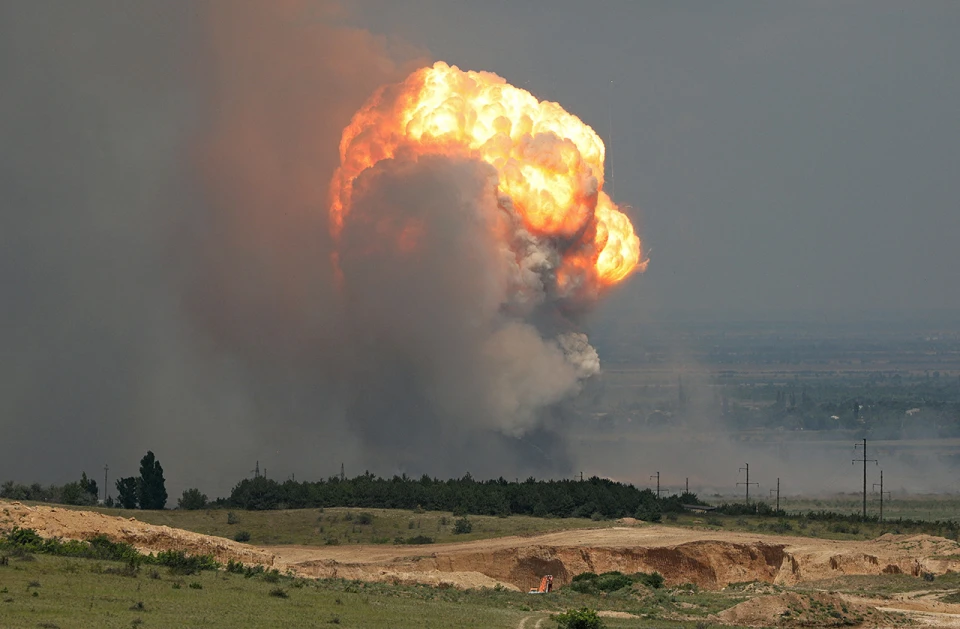
Tatarstan, Kuban, Leningrad region… This is far from a complete list of Russian territories that Ukrainian drones have recently been reaching, inflicting tangible losses on the enemy. Their strikes target both elements of the military economy that generate significant financial revenues for Russia and supply its army with resources for warfare (oil refineries, oil and gas terminals, storage facilities, etc.), as well as direct military targets.
Ukrainian drones will fly beyond the Urals
From January to April of this year alone, Ukrainian air attacks hit 48 targets. Since January 2024, at least 29 oil and gas and metallurgical industry facilities, oil terminals, and storage sites have been struck, along with at least 19 defense industry and military targets, including airfields on Russian territory. The geography of these strikes continues to expand. From Russia’s border regions—Kursk, Belgorod, and Bryansk—Ukrainian drones have begun flying deeper into Russia. In particular, on January 21, an oil and gas terminal in the Leningrad region was hit at a distance of more than 1,000 kilometers, and on April 2, a facility in Yelabuga (Tatarstan), where Russian-Iranian Shahed drones are assembled, was struck. And this is not the limit, according to Ukraine’s Defense Forces: in the near future, the operational range of Ukrainian drones is expected to increase to 3,000 km, enabling strikes on targets beyond the Urals.
At the same time, both the frequency and the number of drones used are steadily increasing. According to Russia’s Ministry of Defense, on April 5, during the night attack on Russian airfields in Morozovsk and Yeysk, Ukrainian special services used at least 53 drones simultaneously. Overall, over four months Ukraine employed eight different types of unmanned aerial vehicles, including two jet-powered models.
Clearly, the ability to launch such “swarms” of drones depends on production capacity—and that capacity is growing rapidly. In 2023, Ukraine increased UAV production and deliveries more than 120-fold as part of broader wartime efforts to develop and manufacture drones aimed at narrowing the gap with Russia’s strike capabilities. At least ten Ukrainian manufacturers are currently known to be successfully producing medium- and long-range UAVs. In November last year, it became known that one of them launched serial production of a kamikaze drone with a strike range of 1,000 kilometers.
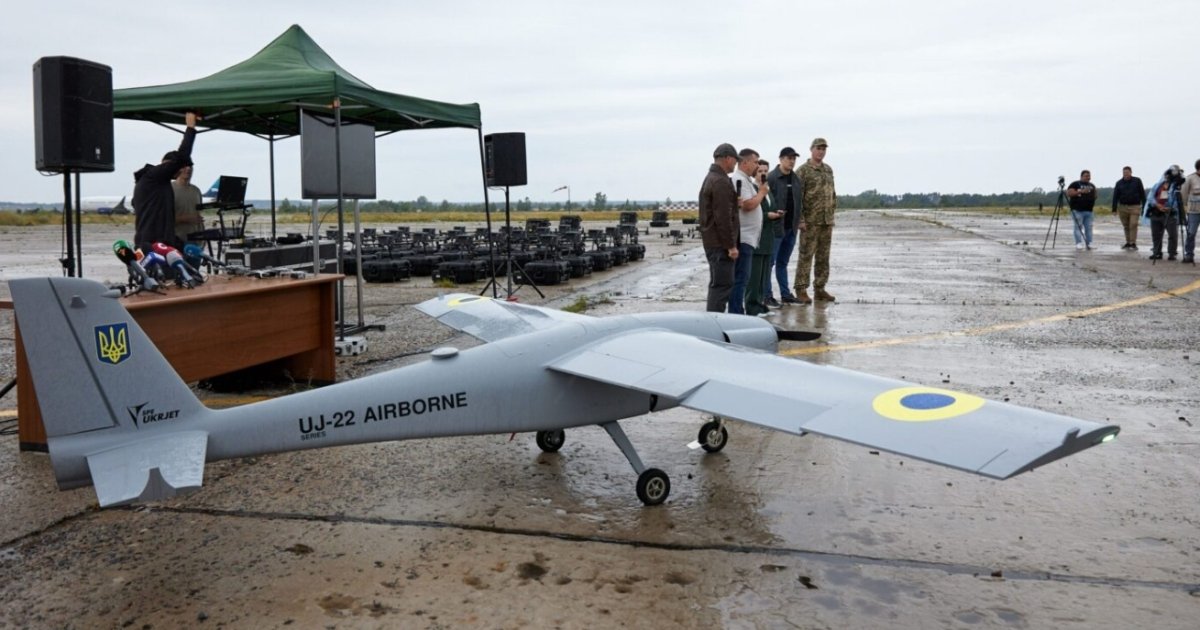
Ukrainian UJ-22 drone at an airfield. Photo: dev.ua
Ukrainian authorities expected this year to establish production of more than 10,000 medium-range drones and over 1,000 drones with a range exceeding 1,000 km. Already in February 2024, Minister of Strategic Industries Oleksandr Kamyshin stated that Ukraine has caught up with Russia in the production of UAVs comparable in characteristics to Russian-Iranian Shahed drones.
“Ukraine has a plan aimed at reducing Russia’s potential, which includes the aggressor’s military industry, critical military targets, airfields, enemy command-and-control centers, and more.”
said Kyrylo Budanov, head of Ukraine’s Defense Intelligence, in an interview with The Washington Post following a strike on the Dzhankoi airfield.
According to the intelligence chief, bringing the war onto Russian territory directly affects the situation on the Ukrainian front. Budanov also noted that Ukraine plans further drone attacks, as well as cross-border operations by Russian volunteer units operating inside Russia with HUR support, in order to demonstrate Putin’s inability to protect his own territory.
Challenges facing Russian air defense
Strikes deep inside Russian territory have become a serious problem for the Russian authorities—primarily due to direct damage to oil and gas facilities, the defense industry, and military targets. For example, as a result of attacks on Russian oil refineries, Russia’s refining capacity has decreased by about 10% compared to last year. Meanwhile, the April 5 attack on the Russian military airfield in Morozovsk, Rostov region—home to Su-27 and Su-34M frontline bombers used by Russia’s Aerospace Forces to drop guided bombs on Ukrainian positions and frontline cities—destroyed at least six enemy aircraft.
However, the Kremlin now faces another acute problem related to the deployment of its air defense systems. For a long time, Russia’s size was a strategic advantage, as Ukraine lacked the means to strike targets more than 100–160 kilometers from the border. With the scaling up of drone numbers and their maximum range, Ukraine is countering Russia’s strategic depth with increased drone use. As a result, Russia’s vast territory is turning from an advantage into a liability, increasing the risk of strikes on new targets across the European part of the country.
This is because covering such a vast area with Russia’s existing air defense systems is extremely difficult. Currently, more than 50 Pantsir air defense systems are deployed to counter UAV attacks. After intensified strikes on oil refineries, Russia raised the issue of installing electronic warfare systems at industrial facilities—primarily at the expense of their owners—since there are not enough surface-to-air missile systems to provide object-based protection for all such critical sites. Russia is also forming mobile air defense groups similar to Ukraine’s, equipped with ZU-23-2 anti-aircraft guns mounted on trucks and heavy machine guns on pickup trucks. However, due to the vast dispersion of air defense assets across Russia, these efforts will not be fully effective. As a result, Russia’s leadership may face a choice: protect airspace over military formations along the occupied territories of Ukraine or reinforce protection of its own infrastructure inside Russia.
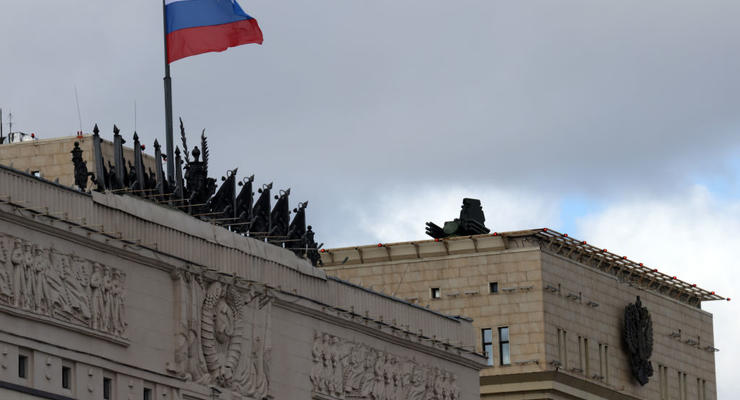
Pantsir-S1 air defense system on the roof of Russia’s Ministry of Defense / Photo: Getty Images
It is worth recalling that earlier this year the Kremlin was already forced to redeploy air defense systems to Moscow and Crimea from other Russian regions, including at least from the Far East. It is also likely that S-400 systems were previously transferred from the Kaliningrad region to compensate for losses sustained during the war in Ukraine.
Such stretching of Russian air defense systems affects not only the protection of ground facilities but also aerial cover, leaving aircraft increasingly vulnerable. This was evident in the mass destruction of Russian Su-34 bombers in early 2024, when 13 aircraft were shot down. Another major blow was the downing of two Russian A-50U airborne early warning aircraft and an Il-22 airborne command post. On April 19, 2024, for the first time since the full-scale invasion began, a Russian Tu-22M3 long-range strategic bomber—carrier of Kh-22 cruise missiles—was destroyed along with its missiles. The aircraft was hit by a Ukrainian air defense missile at a distance of 300 km from Ukraine’s border.
“De-Russification” of Crimea
It is assumed that a certain number of air defense systems have already been redeployed from the temporarily occupied territories of Ukraine to Russia, leaving those areas without adequate cover. In just the past week, four targets in the enemy’s rear in occupied territories were struck, including the headquarters of the “Center” group of forces in Luhansk. As part of a successful operation by Ukraine’s Defense Forces under the command of Oleksandr Syrskyi, the Dzhankoi airfield in Crimea was also hit. According to HUR, the strike destroyed four S-400 launchers, three radar stations, an air defense command post, and “Fundament-M” airspace monitoring equipment. For the first time in a long while, the strike involved seven MGM-140 ATACMS tactical missiles, which the United States supplied to Ukraine in autumn 2023 with cluster warheads. Following the approval of a new $60 billion U.S. military aid package in April 2024, it is safe to say that such strikes will become more frequent.
Overall, Crimea has become a particularly important target for air strikes on facilities critical to Russia. Since the beginning of the year, at least six military targets on the peninsula have been hit, including the 222nd communications hub of the 31st Air Defense Division, an underground command post and communications center at Saky airfield, the radar base at Belbek airfield, the main special communications hub of the Russian Black Sea Fleet, and the Dzhankoi airfield mentioned above. These strikes continue despite Russia’s intensive efforts to protect the peninsula both in the air and at sea—but to no avail.
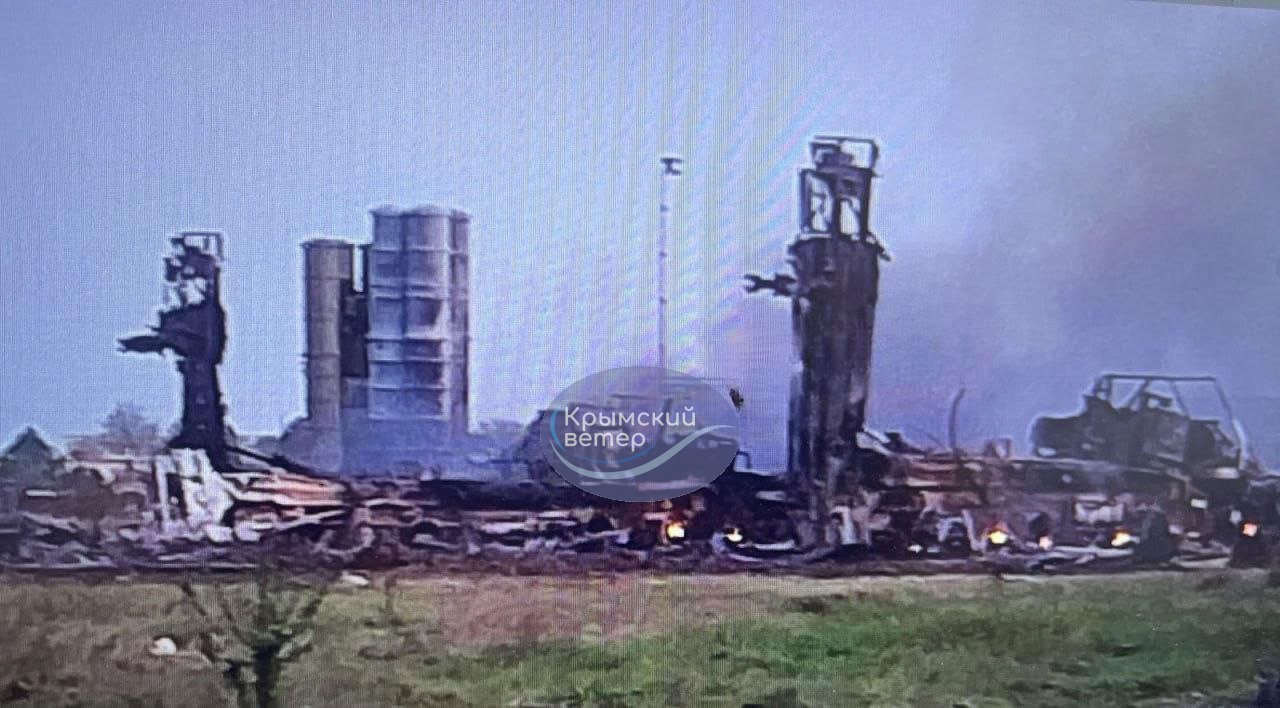
Destroyed S-400 launchers at Dzhankoi airfield. Photo: Krymsky Viter
The systematic activity of Ukraine’s Defense Forces in this direction is part of broader efforts to de-occupy southern Ukraine and Crimea. The “thousand cuts” tactic employed by Ukraine through strikes on Russian territory significantly weakens the enemy’s defensive potential.
These attacks also clear the battlefield for the future use of Western F-16 aircraft. At the same time, by striking deep inside Russia, Ukraine stretches Russian air defense assets. Under these conditions, Kyiv is carving out a window of opportunity before the enemy manages to strengthen protection of its facilities with electronic warfare systems and form enough mobile fire groups capable of countering drones. This window must be used—and it also serves as a signal to Ukraine’s partners to accelerate military assistance so that Ukraine can gain the upper hand.
The article was published in The Moscow Times
18.05.2026
When Russia launched its full-scale invasion of Ukraine in 2022, Mariupol quickly became the site of…

05.05.2026
Russia pressed every Donbas sector in April, with assault tempo at a two-month high. The territorial…

16.03.2026
It is in the war against Ukraine that Russia is trying to adhere to this non-linear…


