
The Ukrainian Security and Cooperation Centre (USCC) team got started in 2010, the year when dictatorship came back to Ukraine, led by Viktor Yanukovych's pro-Russian mafia clan. Over the next three years, amid a rapid attack on freedom of speech and democracy, the team members focused their efforts on building community networks, organising patriotic training, working with Ukrainian youth, cultural and educational events, and strengthening ties with Ukrainian diaspora communities around the world.
Attack by Berkut special forces on a peaceful demonstration against the Yanukovych regime. In the centre is Serhiy Kuzan, future head of the USCC (March 2012).
The main focus of activities was on building a pool of people who were ready to join civil resistance against Yanukovych's regime and Russian influence in Ukraine. Even before the events of Euromaidan, future members of the USCC team co-organised protest campaigns such as “Stand Up,” “No Vote for the Authorities,” “Euroadvance”, and a number of other similar initiatives.
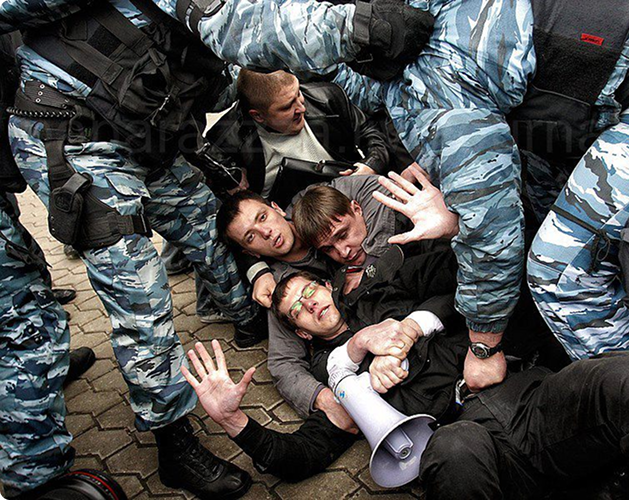
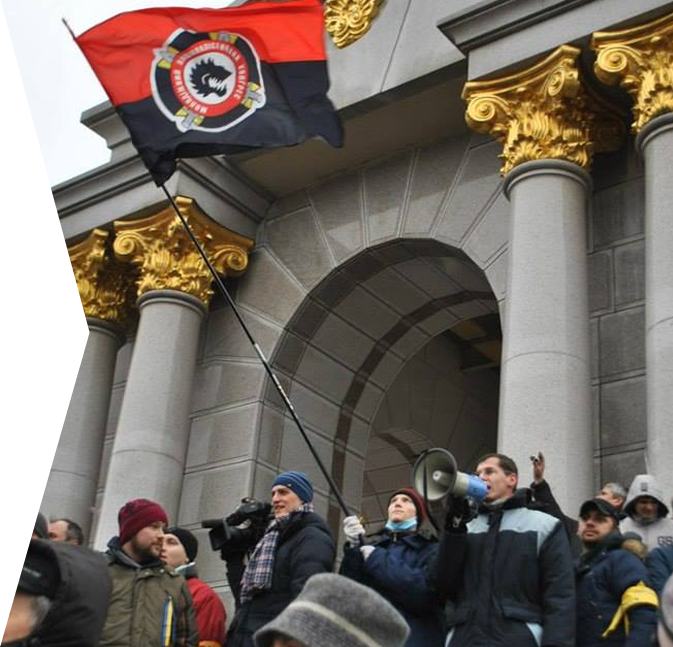
The Revolution of Dignity became a turning point for the future USCC team. Even before the start of Euromaidan, team members co-organised a campaign to collect signatures in support of Ukraine's Euro-Atlantic integration. With the start of protests on 22 November 2013, team members took an active part in their preparation in Kyiv and the regions. After the brutal beating of students by the regime's security forces from the Berkut special unit on the night of 29 November, the mobilisation of activists began. On 1 December, hundreds of thousands of people marched to Independence Square (Maidan), where clashes with security forces took place.
The column led by Serhiy Kuzan was the first to occupy the central part of Maidan – the Independence Stele – and then participated in the events near the Presidential Administration.
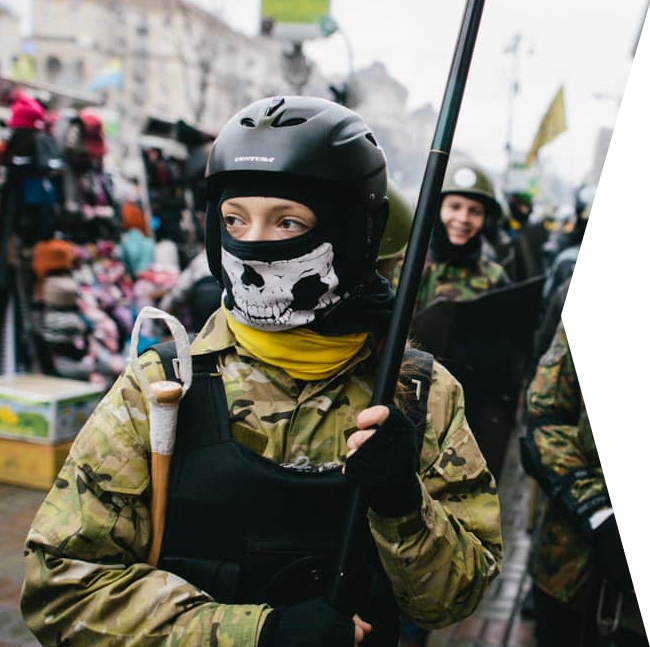
Olesya Goryainova – future deputy head of the USCC at the head of the column of the 14th Maidan Self-Defence Unit (January 2014)
During 94 days of resistance to the pro-Russian regime, the team members were engaged in providing supplies, recruiting new members for the Maidan Self-Defence Forces, and coordinating protests as part of the 14th Self-Defence Unit in Kyiv, while activists in the regions participated in blocking local government buildings to prevent security forces from advancing on the capital.
After the victory of Maidan, the first hundreds of volunteers immediately went to the front. There was an urgent need to support the volunteer and regular Ukrainian forces, which were in decline. The team members quickly deployed a volunteer network with a central office in Kyiv and regional offices. Over more than 12 years of war, the Security and Defence Forces of Ukraine have received more than $10 million in aid: from ammunition, clothing and protective equipment in 2014 to high-precision technology, weapons, medical equipment and transport. During this time, close cooperation was established with the commanders of units that took an active part in the Anti-Terrorist Operation and the Joint Forces Operation. With the arrival of the new Ukrainian government in 2019, most of these commanders headed key departments in the national security and defence sector of Ukraine. The work to support the Ukrainian Army continues to this day.
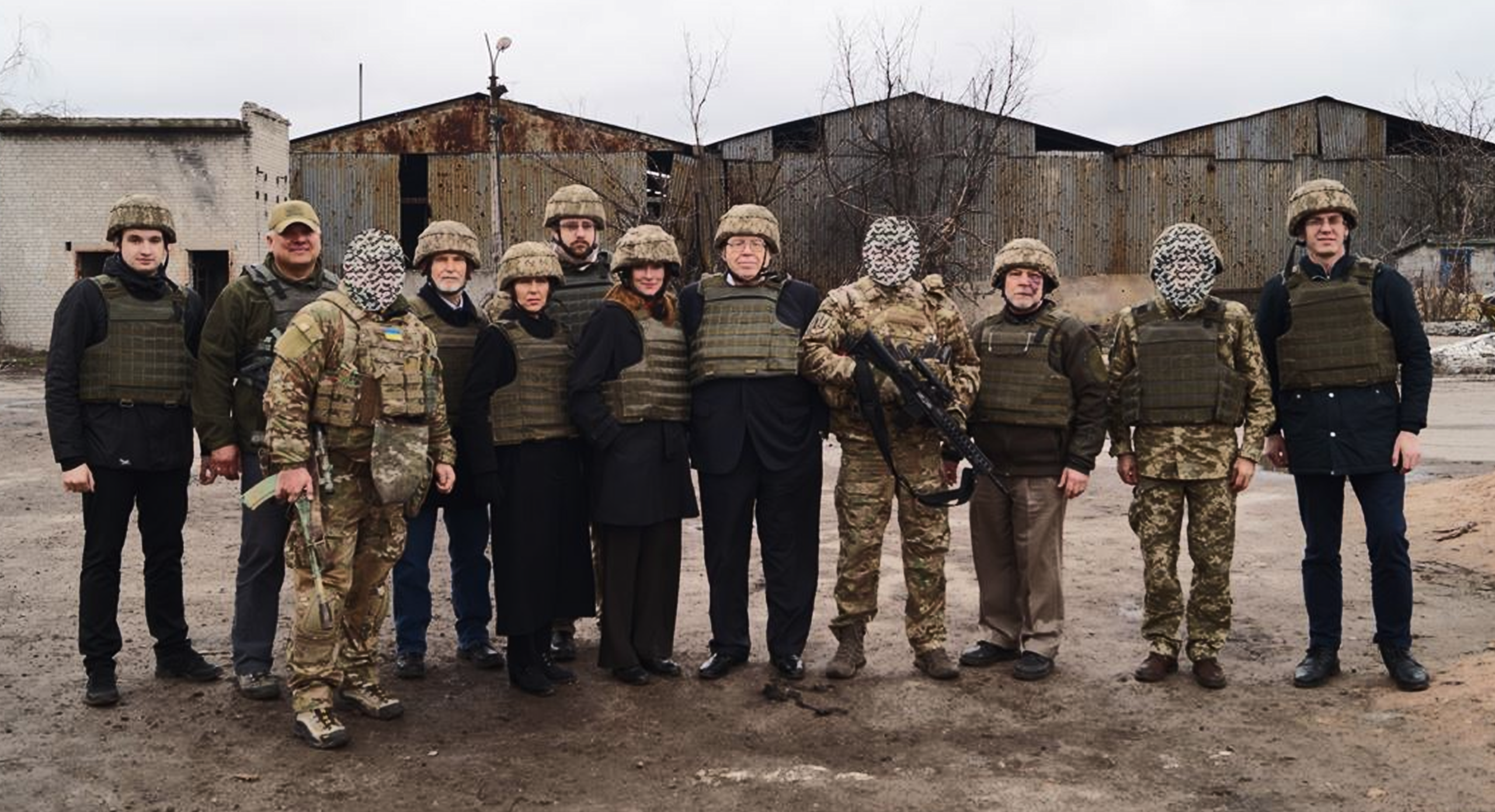
Representatives of the USCC with a delegation from the American Foreign Policy Council (April 2018, Avdiivka)
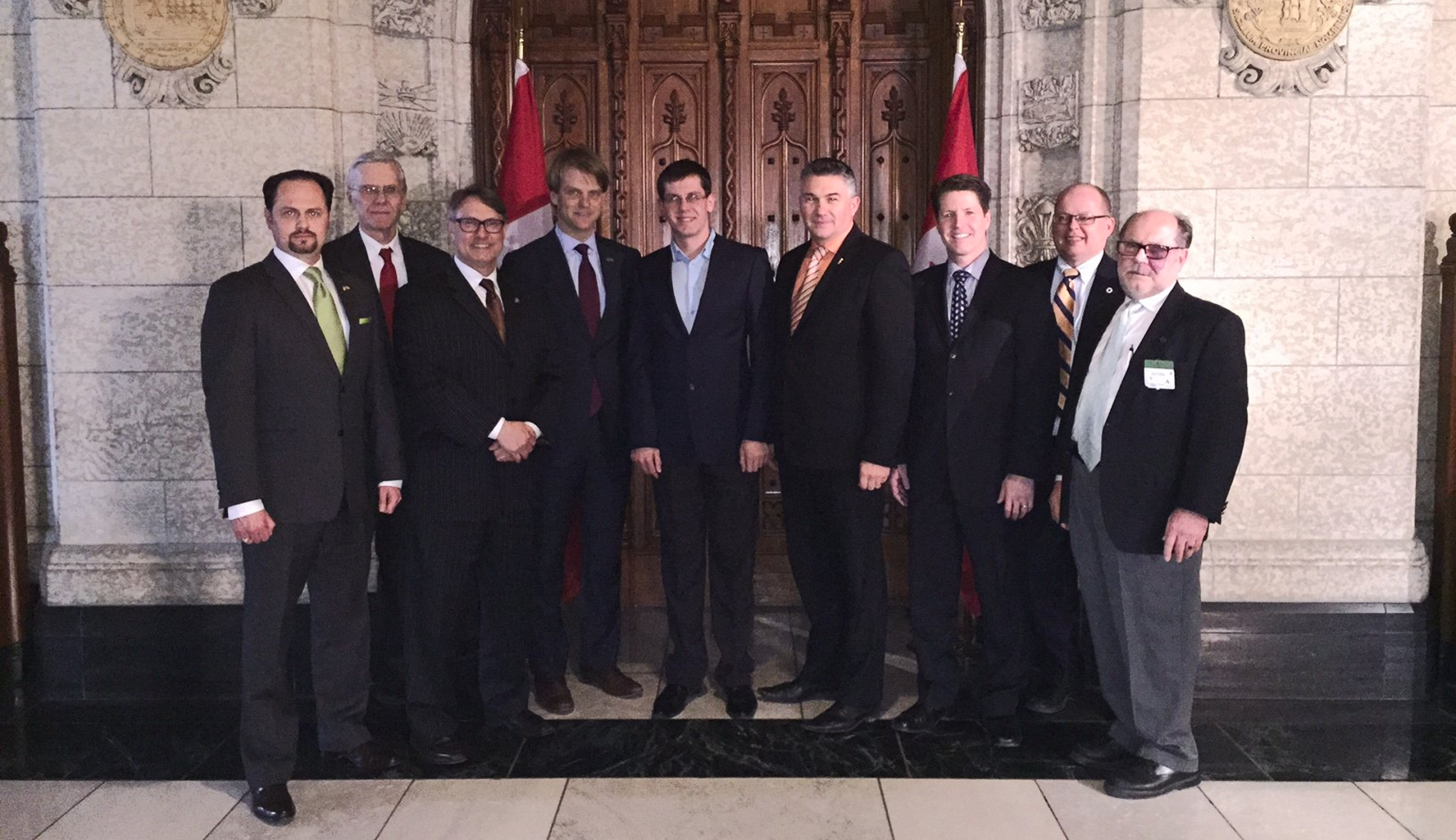
In addition, team members presented the collected facts about Russian aggression to members of the Western community, including the Canadian Parliament, non-governmental and governmental institutions, and think tanks in the United States and Canada. Thanks to the team's work within the framework of the Mission East project, dozens of delegations of leading scientists, analysts, journalists and opinion leaders visited the Russian-Ukrainian front line and told the truth about Russian aggression to Western audiences in their reports.
Serhiy Kuzan, Head of the USCC, after delivering a speech on Russian aggression in the Canadian Parliament (2014, Toronto)
With the stabilisation of the front line, members of the USCC team returned to developing public networks to counter Russian agents in Ukraine, forming their own initiative, "Turn Off Russian," in 2016. Over the course of five years, the team has implemented a number of initiatives aimed at weakening Russian influence in Ukraine, among which the following are particularly noteworthy:
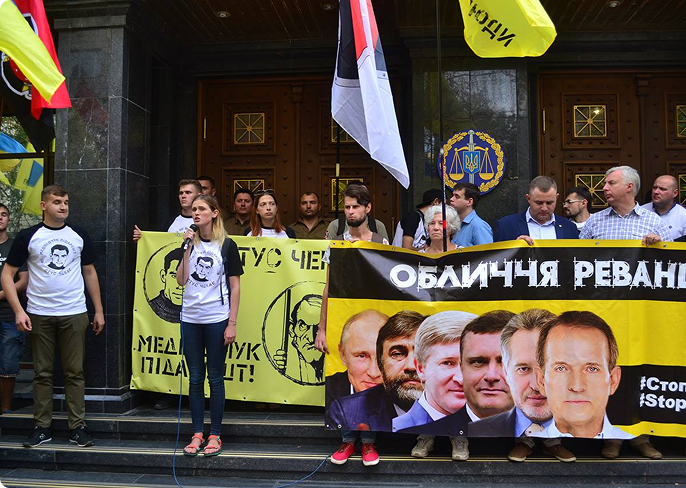
– A campaign against Viktor Medvedchuk, an ally of Russian dictator Vladimir Putin, which brought together hundreds of activists across Ukraine. Dozens of protests, lawsuits, and pickets were organised against Medvedchuk's TV channels NewsOne, ZiK, and 112. During the public protests, team members were subjected to physical pressure from militants of the Svarog group, which was responsible for the security of the pro-Russian oligarch's structures. The factual basis collected by the campaign activists was handed over to law enforcement agencies, and in February 2021, the National Security and Defence Council of Ukraine imposed sanctions on Medvedchuk, closed his TV channels, and began liquidating criminal structures.
Solomiya Khoma, head of the international department of the Ukrainian Centre for Security and Defence, with a report on Viktor Medvedchuk's criminal activities near the Prosecutor General's Office of Ukraine (September 2018, Kyiv)
– The “Unity for Victory” campaign, which included a series of events and round tables with the participation of public opinion leaders, parliamentarians, and journalists to consolidate resistance to Russian aggression and prevent internal destabilisation of the socio-political situation in Ukraine – the Russian special operation “Maidan-3” .
– The “FreeMarkiv” campaign, which organised solidarity actions around the world in support of Ukrainian National Guard soldier Vitaliy Markiv, who was convicted in Italy on fabricated charges based on Russian propaganda. At the end of 2020, Vitaliy Markiv was acquitted and released from an Italian prison.
Based on the theoretical framework and personal experience in countering Russian influence networks, established communication with representatives of Ukrainian law enforcement agencies, and international connections, the team members decided to establish their own analytical centre. Thus, on 2 April 2021, the Ukrainian Security and Cooperation Centre (USCC) was established, with the main goal of countering Russian hybrid influence in Ukraine and around the world, as well as promoting reforms in Ukraine's national security and defence sector.
One of the first campaigns of the USCC was the successful advocacy of draft law No. 5557 "On the Fundamentals of National Resistance," which was supported by a constitutional majority of the Verkhovna Rada of Ukraine. Later, as advisors, the team members established a public communications system for the Command of the newly created branch of the Ukrainian army. With the start of the full-scale invasion, it was the Territorial Defence Forces that mobilised tens of thousands of volunteers who joined the newly created brigades under martial law.
For almost a year before the full-scale invasion by the Russian Federation, the USCC team conducted an in-depth analysis of the readiness of Russian troops to attack Ukraine, which was transmitted weekly to the Ukrainian special services, emphasising the inevitability of intervention. The USCC was one of the few think tanks that consistently demonstrated Ukraine's ability to withstand the onslaught of superior Russian forces, while leading analytical centres and security service leaders gave Ukraine only a few days to months to resist the Russians.
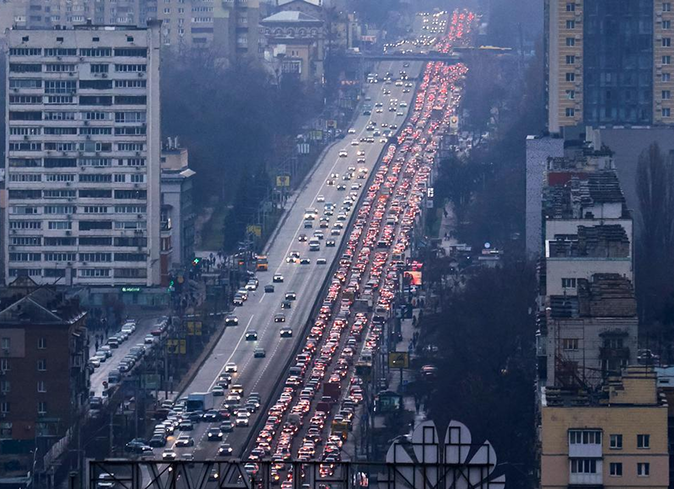
From the first days of the full-scale invasion, members of the USCC team decided to remain in Kyiv, stepping up the work of the volunteer network to support the Security and Defence Forces of Ukraine, which were rapidly increasing in number. The Ukrainian army again needed ammunition, protective equipment, medical supplies, and barricades against Russian armoured vehicles. In addition, as advisers to the Command of the Territorial Defence Forces of the Armed Forces of Ukraine, team members took on the responsibilities of official communication and coordination of volunteers. In particular, contact centres were organised to coordinate new recruits joining the ranks of the Ukrainian army. This project subsequently received support from the Government of Canada.
A network of informants was formed among the activists in the regions through which Russian troops were moving. They transmitted information about the locations of the occupiers in real time, which was processed 24/7 by USCC analysts, providing more than 3,500 reports to representatives of the Ukrainian Defence Forces for strikes.
As Russian troops fled from the Kyiv region and other northern regions of Ukraine, USCC analysts recorded the crimes of the Russian army in the liberated Ukrainian territories. Hundreds of photos of tortured civilians and destroyed cities formed the basis of the photo exhibition "A Year of Resilience. Point of No Return," which was presented in dozens of European cities, including in front of the UN headquarters in Geneva and the Romanian Parliament.
Throughout 2024, the USCC conducted research for the US Department of Defence and the US Military Command in partnership with experts from King's College London to monitor and analyse the deployment and strengthening of Russian security forces in border regions and in Russia's national republics.
In addition, the USCC analysed the socio-political situation in Russia, the activities of pro-Russian forces in Ukraine, and the Kremlin's readiness for a full-scale invasion during 2021-2022 for the Ukrainian Defence Forces, while also examining the impact of individual factors on the stability of Russian power and protest sentiments. Based on the results of practical measures within the framework of the research, more than 100 information campaigns were conducted to verify the identified "weak spots" and the level of informational influence on the activities of national and opposition movements in Russia and the TOT.
With the stabilisation of the front line and the demand from Western and Ukrainian society for relevant analysis of the Russian invasion and Ukraine's resilience, the USCC team took its strategic communications to a whole new level.
In 2024-2025 alone, Ukrainian and international media outlets published:
– at least 2,000,700 comments and articles by USCC experts: BBC, Financial Times, The Economist, Al Jazeera, The Guardian, The New York Times, Washington Post, The Wall Street Journal, etc.; in 80 countries around the world. The total estimated audience reach was 1.5 billion users.
– 435 analytical articles and columns published in leading Ukrainian and international media outlets and think tanks: Atlantic Council, The Telegraph, The Hill, War on the Rocks, El Independiente, The Moscow Times, Dagens Nyheter, Lawfare, Kyivpost, etc.
– Members of the USCC team spoke and participated in 435 international events in European countries and organised over 130 meetings with politicians, experts, representatives of parliaments and governments of Belgium, the Czech Republic, Germany, Sweden, Canada, the United States, France, the United Kingdom, and the European Parliament.
With a wide range of partners abroad, the USCC has created a Network for Identifying and Countering Russian Influence, which includes opinion leaders, experts, journalists, and activists from around the world. Since 2022, the USCC has initiated 20 public campaigns and co-organised more than 300 events, involving more than 100,000 people. As a result of these campaigns, the following has been achieved:
– The family of Boris (chairman of JSC "Tactical Missile Armament Corporation" of the Russian FederationObnosov ) has been added to the sanctions lists of the European Union and the Czech Republic, and his family's property has been seized. As a result, Russians began selling their property in Prague (Karlovy Vary).
– The CONSUL group of companies s.r.o., the Czech branch of the Smolensk Aviation Plant, which was used to circumvent sanctions, was added to the Czech Republic's sanctions lists.
– A number of anti-Ukrainian provocations in the Czech Republic were prevented by inciting (inspired by Russian special services) conflict between Ukrainian refugees and the Roma minority. The campaign was conducted in cooperation with the Minister of the Interior of the Czech Republic.
– The Russian Red Cross stopped publicly collecting aid for Russian military personnel: the materials of the USCC campaign were provided to the head of the International Committee of the Red Cross, after which an official statement was received from the head of the Russian Foreign Ministry, S. Lavrov.
– To create platforms for discussion of the war, Russian interference and disinformation, a photo project entitled “A Year of Resilience. The Point of No Return” was prepared, compiling facts about Russian war crimes in Ukraine. The exhibition was presented at the Parliamentary Assembly of the Council of Europe in Strasbourg, in front of the UN headquarters in Geneva, and in the Romanian Parliament, which was personally announced by the President of the Romanian Senate, Alina Gorghiu.
Seven international events were organised in Germany, Belgium, Switzerland, Romania and Ukraine with the participation of members of parliament, leading think tanks and civil society organisations in Europe, including three public discussions in Munich on countering Russian influence in the humanitarian, economic and socio-political spheres, in cooperation with the German Friedrich Naumann Foundation.
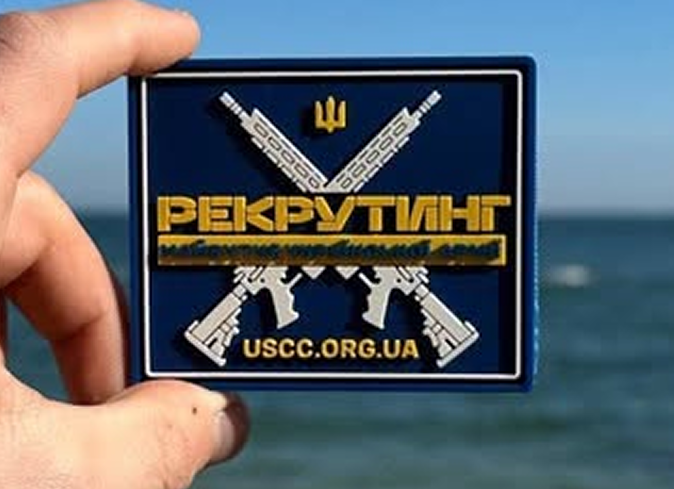
The Ukrainian Defence Forces Recruitment Support Centre is one of the largest projects of the Ukrainian Centre for Security and Defence Studies, established in 2024 to develop and support the military recruitment system.
At the end of 2024, Commander-in-Chief of the Armed Forces Oleksandr Syrskyi ordered all brigades of the Armed Forces to set up recruitment groups. Recruitment centres were also established for each branch and type of military and forces. In December, at the request of the UCRS, a survey was conducted on Ukrainians' awareness of recruitment, as well as their fears, barriers and motivations for military service. Based on the results, the USCC team developed a communication framework and launched a national information campaign to highlight the possibility of voluntary recruitment for citizens.
At the same time, the USCC launched cooperation with recruitment centres and brigades to strengthen the internal capabilities of units in terms of recruitment and communication. The USCC team helped partner units to streamline internal processes, organise media work and attract recruitment applications through digital tools. The USCC also launched a contact centre to assist brigades with the initial processing of telephone calls. The USCC sociological service has already conducted five studies to determine how to effectively communicate the topic of recruitment.
Throughout 2025, the efforts of the USCC and its partners resulted in over 98,000 applications to the Ukrainian Armed Forces (UAF) units and an average increase of 97% in the number of applications to each partner unit. As of February 2026, the USCC cooperates with 36 units, including individual battalions, brigades, recruitment centres and corps. The team is scaling up its successful experience to strengthen the capabilities of as many UAF units as possible. In addition, the USCC has prepared an analytical document describing problems in the field of military recruitment and proposals for their solution.
Join us with a donation in a way that is convenient for you and help make our work more effective and impactful. To everyone who contributes — endless thanks and hugs.
Learn more about our activities...Contact for media:
 [email protected]


