


Mariupol is Putin’s blueprint for occupation, and the world is barely paying attention
18.05.2026
When Russia launched its full-scale invasion of Ukraine in 2022, Mariupol quickly became the site of…
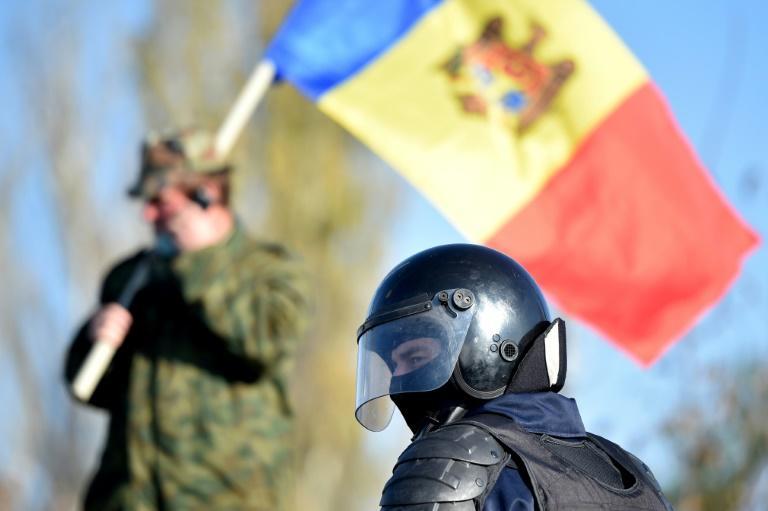
Every time an electoral process begins in Moldova, issues related to the occupied territories become more acute. This was the case during the 2020 presidential elections, and now the issue of the self-proclaimed Transnistria (PMR) is gaining momentum again in connection with the snap parliamentary elections scheduled for July 11.
As a rule, pro-Moscow candidates use rhetoric about friendship with Russia in the context of a possible settlement of the conflict, the withdrawal of so-called peacekeepers, and the removal or disposal of the arsenal from Cobasna (ammunition left in Transnistria as a legacy of the USSR’s 14th Army). To some extent, this is true, since Russia begins to partially fulfill its obligations only when a government loyal to the Russian Federation is in power in Moldova. If pro-European forces come to power, the negotiation process is sabotaged and frozen for an indefinite period.
With Maia Sandu’s victory in the presidential elections, Moldova may see a further shift toward a pro-European government this year, which is absolutely unacceptable to the Kremlin. According to the latest sociological survey conducted by the International Republican Institute (IRI) on April 21, 2021, 33% of respondents are ready to vote for President Sandu’s party “Action and Solidarity” (Moldovan: Partidul „Acțiune și Solidaritate”, PAS). In second place is the Party of Socialists of the Republic of Moldova (Partidul Socialiştilor din Republica Moldova), led by former president and Kremlin ally Igor Dodon, with 19% support.
Under such circumstances, no party would gain a parliamentary majority. Therefore, Dodon decided to form a left-wing bloc together with the communists, and they are now campaigning together to defend Moldova’s “sovereignty.”
For her part, Sandu, demonstrating her anti-Moscow stance, has repeatedly demanded that Russia withdraw its troops from Transnistria. Currently, two components of Russian forces are present there: “peacekeeping forces” deployed in PMR under the agreement of July 21, 1992, and the Operational Group of Russian Forces, including the so-called “PMR border guards,” who operate there completely illegally. Sandu advocates the withdrawal of both and the replacement of the peacekeeping mission with a civilian international mission under an OSCE mandate, which again does not suit the Kremlin.
The issue of the presence of so-called “border guards” in the Security Zone (a demilitarized buffer zone 225 kilometers long) resurfaced after May 11 due to a tragic incident in which “with the direct involvement of representatives of Tiraspol’s illegal security structures, a Moldovan citizen drowned in the Dniester River.” Thus, the sides once again emphasized their positions regarding PMR.
Meanwhile, in Transnistria itself, the number of Moldovan citizens without official residence registration is increasing. As a result, they will vote using separate additional voter lists, which creates additional risks of election fraud.
Read also: How “Georgian Dream” Is Destroying Georgia’s Dream?
At the same time, the pro-Russian PSRM is promoting an aggressive stance on ensuring that residents of Transnistria are able to vote in the snap elections under any circumstances. The leader of the PSRM parliamentary faction, Corneliu Furculiță, accused Moldova’s right-wing parties of obstructing Transnistrians’ voting rights in the upcoming elections.
Meanwhile, Dodon criticized and called “militant” a statement by U.S. Ambassador Derek Hogan, who said during a speech at a state university that “Chisinau must control the Transnistrian region.”
At the same time, Transnistrian political analysts are issuing warnings that if Maia Sandu’s party wins and a coalition government is formed, Moldova will be governed from the U.S. embassy, while Chisinau will exert economic pressure on Transnistria, pushing the region into the epicenter of tension.
Although increased activity by pro-Russian forces in support of the electoral bloc of the Communist Party (PCRM) and the Party of Socialists (PSRM) in Transnistria has not yet been observed, there are other noteworthy developments.
By its decision of June 5, 2021, Moldova’s Central Election Commission (CEC) allowed the opening of three polling stations in PMR territory (one in Corjova, Dubăsari district, and two in the municipality of Bender), which caused strong dissatisfaction among right-wing political parties. The “Dignity and Truth Platform” party (Platforma DA) appealed to the Chisinau Court of Appeal and later to the Supreme Court to challenge the CEC’s decision, arguing that these settlements are located in territories not controlled by Moldova’s constitutional authorities.
According to information from our sources in Ukrainian special services, this CEC decision was likely the result of an agreement between the so-called president of Transnistria, Vadim Krasnoselsky, and former Moldovan president Igor Dodon, reached during their trips to Moscow in March this year. The reason is that voters in Transnistria traditionally support pro-Russian candidates, which is, of course, beneficial for the Russian Federation.
Later, the CEC of Moldova introduced amendments under which the three polling stations (in Corjova and two in Bender) would ultimately not be opened.
Thus, we can observe how, on the eve of elections in Moldova, Moscow activates mechanisms refined over many years: intimidation through claims of external “American governance,” threats of worsening Russian–Transnistrian relations if pro-European candidates win in Chisinau, warnings about the collapse of Russia’s “peacekeeping” mission in PMR, allegedly leading to renewed confrontation, halting the disposal of obsolete weapons, and promoting narratives about Moldova being absorbed by Romania and losing its statehood.
All these statements serve a single overarching goal: to preserve Russia’s influence over internal developments not only in PMR but also in Moldova as a whole. This aims to hinder rapprochement with the West for territories not controlled by Russia and to maintain a frozen conflict near the borders of the EU and NATO as a tool for exerting pressure on them.
Photo: SERGEI GAPON/AFP/EAST NEWS
Author: Dmytro Bednin
18.05.2026
When Russia launched its full-scale invasion of Ukraine in 2022, Mariupol quickly became the site of…

05.05.2026
Russia pressed every Donbas sector in April, with assault tempo at a two-month high. The territorial…

16.03.2026
It is in the war against Ukraine that Russia is trying to adhere to this non-linear…


