


Mariupol is Putin’s blueprint for occupation, and the world is barely paying attention
18.05.2026
When Russia launched its full-scale invasion of Ukraine in 2022, Mariupol quickly became the site of…
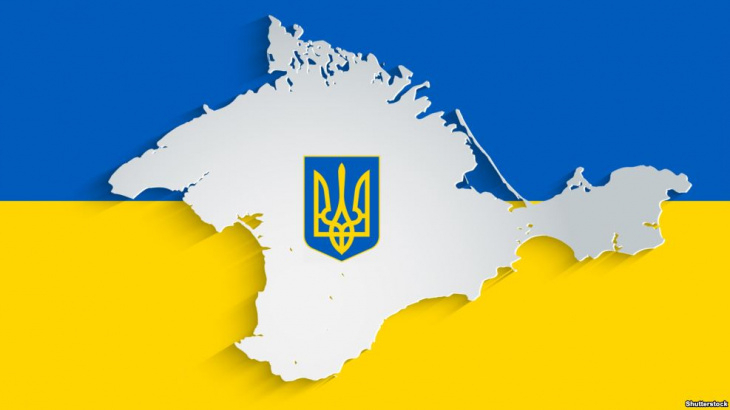
The Verkhovna Rada of Ukraine officially declared February 20, 2014, as the date marking the beginning of the temporary occupation of Crimea. It was in February 2014 that Russian troops without insignia seized administrative and strategic facilities on the peninsula, while Ukrainian military bases were blocked and neutralized.
The occupation of Crimea violated the fundamental principles of the UN Charter and the Helsinki Final Act of the Conference on Security and Cooperation in Europe, and became a challenge for international organizations as well as a direct threat to international security.
A hotspot emerged in the very center of Europe, and Ukraine found itself in a state of undeclared war with the Russian Federation, which also spread to the eastern regions of the country. Since then, the war has claimed the lives of 14,000 people, more than 40,000 have sustained various injuries, and over 1.5 million Ukrainians have become internally displaced persons.
In 2021, seven years after the occupation, Ukraine proposed a new international consultative and coordination format to counter Russia — the Crimea Platform. It is intended to become the forum that will return the issue of annexation to the international agenda and ultimately contribute to the de-occupation of the peninsula and its return to Ukraine. Achieving this goal requires the consolidation of the entire international community and international organizations.
International response to the attempted annexation
It should be recalled that in response to the occupation of Crimea in 2014, the European Union introduced a number of sanctions and restrictions against Russia, which are regularly extended.
The Parliamentary Assembly of the Council of Europe and the OSCE adopted a number of documents on non-recognition of the attempted annexation of Crimea, and the UN General Assembly adopted Resolution 68/262 “Territorial Integrity of Ukraine.” In this resolution, the UN General Assembly called on states not to recognize any change in the status of Crimea and emphasized that the so-called “referendum” of March 16, 2014, was illegal and could not serve as a basis for any change in the status of the peninsula.
However, the Kremlin, for which Crimea and especially the city of Sevastopol are not only a matter of “victory” but also an important element of the ideology of the “Russian world,” stated that “the issue is closed and resolved.”
Life under occupation
After the occupation, the Crimean peninsula was effectively transformed into a military base, where gross violations of international and humanitarian law, as well as human rights, are taking place. In particular, political, religious, and ethnic persecution has become systematic; forced Russian passportization of the population has occurred; illegal conscription into the Russian armed forces has taken place; mass militarization of children and adolescents has been carried out; private property has been expropriated; and the cultural and historical heritage and environment of the peninsula have been destroyed.
Despite an order by the International Court of Justice, the representative body of the indigenous people of Crimea — the Mejlis of the Crimean Tatars — remains banned, while Russian security services regularly conduct searches and detentions of Crimean residents.
In addition, Russia is deliberately changing the demographic composition of the peninsula’s population. Since the beginning of the occupation, more than 46,000 residents of Crimea have been forced to leave; nearly 5,000 Ukrainian orphaned children have been illegally transferred to the territory of the Russian Federation; and more than 2,500 people have been deported. At the same time, according to various estimates, between 170,000 and 200,000 Russians have moved to Crimea (205,559 according to the Federal State Statistics Service of the Russian Federation).
In addition to changing the population, Russia is also carrying out extensive militarization of Crimea, modernizing military equipment and strengthening military groupings. According to the Main Intelligence Directorate of the Ministry of Defense of Ukraine, even before the so-called “referendum,” Russia transferred up to 7,000 troops to the Ukrainian peninsula, while the occupation itself involved about 20,000 servicemen within the Black Sea Fleet alone, not counting the FSB, National Guard, and other security structures.
Today, the number of Russian servicemen in Crimea has increased 2.5 times and amounts to up to 32,500 personnel. As for armaments, almost the entire spectrum of bomber and fighter aviation, combat ships, S-400 air defense systems, and anti-ship missile systems “Bal” and “Bastion” are concentrated on the peninsula. Russia also constantly creates provocations and interferes with navigation in the Black and Azov Seas, which constitutes a violation of international law, in particular the UN Convention on the Law of the Sea.
What does Ukraine propose, and how does it plan to return Crimea?
The Crimea Platform will focus on five practical areas of work:
The Platform’s activities are envisioned at all levels, from states and governments to a network of Ukrainian and international experts from various fields, including security and foreign policy. This network will provide analytical and informational support to the Platform’s activities and will play an active role in ensuring a high level of public visibility.
The launch of the Crimea Platform is scheduled for August 23, on Ukraine’s National Flag Day and on the eve of the 30th anniversary of the restoration of Independence. In addition to the symbolic significance of the chosen date, the seriousness of the Platform will be confirmed by the presence of world leaders and members of the EU and NATO, who have already announced their participation in the Ukrainian initiative. At present, the list of foreign guests has not been made public due to threats and the aggressive reaction of the Kremlin.
Read also: How Russia is destroying Crimea’s unique historical and cultural heritage
Thus, Russia’s Foreign Ministry spokesperson Maria Zakharova, commenting on Ukraine’s efforts to de-occupy Crimea, threatened any countries and organizations that would take part in the Crimea Platform, calling it “an unfriendly step toward Russia and a direct encroachment on its territorial integrity,” as well as “a threat of aggression against two constituent entities of the Russian Federation.”
Perhaps this is the best characterization and recognition of the Platform, which has not even officially started yet.
Author: Oksana Kuzan
18.05.2026
When Russia launched its full-scale invasion of Ukraine in 2022, Mariupol quickly became the site of…

05.05.2026
Russia pressed every Donbas sector in April, with assault tempo at a two-month high. The territorial…

16.03.2026
It is in the war against Ukraine that Russia is trying to adhere to this non-linear…


