


Ukraine Is a Key Pillar of Europe’s Defense
13.06.2025
At the summit of the Bucharest Nine (B9) and Nordic countries held on June 2, 2025,…
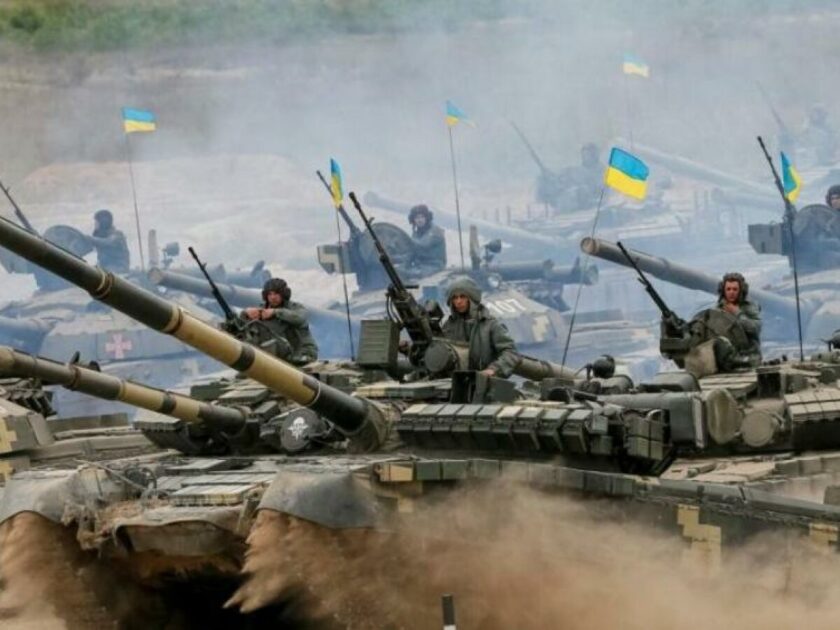

Regardless of the answer to this question, Ukraine is preparing for total resistance under conditions of complete encirclement, while continuing to defend all of Eastern Europe.
Serhii Kuzan, Head of the Ukrainian Center for Security and Cooperation
The Kremlin’s course toward destabilizing Europe was chosen long ago, and the threat posed by the Russian Federation continues to grow each year. NATO’s increased activity on its eastern borders is, on the one hand, a positive demonstration of capability. On the other hand, Russia’s challenge has exposed the fragility of the democratic systems of NATO’s “link states,” as seen in countries such as Hungary. In any case, even the combined military-industrial capacity of Eastern European countries cannot match that of Russia, which is currently on the rise.
Another important fact is that all these countries lag behind Ukraine in military capability — even without considering Ukraine’s unique combat experience gained over more than seven years of war. Thus, the only real way to deter Russia in Europe is cooperation between NATO and Ukraine — specifically in Ukraine, the only country with successful long-term experience in resisting Russian aggression.
This is increasingly being acknowledged. Head of Ukrainian military intelligence Kyrylo Budanov states that Ukraine’s integration into NATO is irreversible and could occur very rapidly.
“For a long time, the main arguments for delaying or denying Ukraine’s integration into NATO were the lack of modernization of the Armed Forces, barely visible structural reforms, and an unstable political situation. But now everything has changed significantly. Our army ranks high in international ratings,” Budanov comments.
Assessing the geopolitical agenda, Budanov notes that Ukraine may become a welcome guest even with unresolved issues, as NATO realistically assesses the situation under Russia’s permanent aggression against Eastern Europe and Ukraine, recognizing Ukraine’s key role in Europe’s collective security system.
Russia understands this as well. Therefore, its main tactical objective is to neutralize Ukraine by all available means (including military force) as the strongest security link on NATO’s eastern flank.
THE RUSSIAN THREAT TO THE REGION
Russia is increasing its military potential for a new phase of aggression against Ukraine by:
– increasing the quantity of weapons along Ukraine’s borders, including in Belarus;
– rearming existing units and modernizing equipment;
– testing and deploying new weapons systems.
Beyond the military component, Russia continues to employ other tools of hybrid aggression. The reality, however, is that Europe can still feel relatively safe because Ukraine stands in Russia’s way — and until the aggressor “resolves” the situation in Ukraine, it cannot move further west.
At the same time, Russia’s diplomatic rhetoric toward Ukraine is becoming increasingly aggressive. The denial of aggression combined with force buildup provides grounds to expect another escalation of war.
In the arms race, Russia’s military-industrial complex holds a strategic advantage over Ukraine’s. The disproportionate scale of Western assistance forces Kyiv to rely primarily on its own capabilities. After more than seven years of war exhausting Ukraine’s economy, defense spending reached 6% of GDP in 2021 — the highest burden among European countries. The state is operating at maximum wartime capacity, and further strain may simply be unsustainable.
UKRAINE: RESPONSE TO THE THREAT
Ukraine cannot invest even more in defense spending — but it can become a nation at war. In recent years, Ukraine has been reforming its national security and defense sector, transforming a cumbersome post-Soviet system into a modern defense complex capable of rapid integration into the Western collective security system without losing combat effectiveness during wartime transformation.
Three components are required:
A NATION AT WAR
The world continues to sit at the poker table of war, raising the stakes. Ukraine will not fold. The key question now is whether the West will.
13.06.2025
At the summit of the Bucharest Nine (B9) and Nordic countries held on June 2, 2025,…

13.06.2025
The full-scale war against Ukraine is setting new rules and military doctrines that must be taken…

09.06.2025
In the fall of 2024, the Kremlin took another step toward renewed nuclear blackmail. On September…


