


Mariupol is Putin’s blueprint for occupation, and the world is barely paying attention
18.05.2026
When Russia launched its full-scale invasion of Ukraine in 2022, Mariupol quickly became the site of…
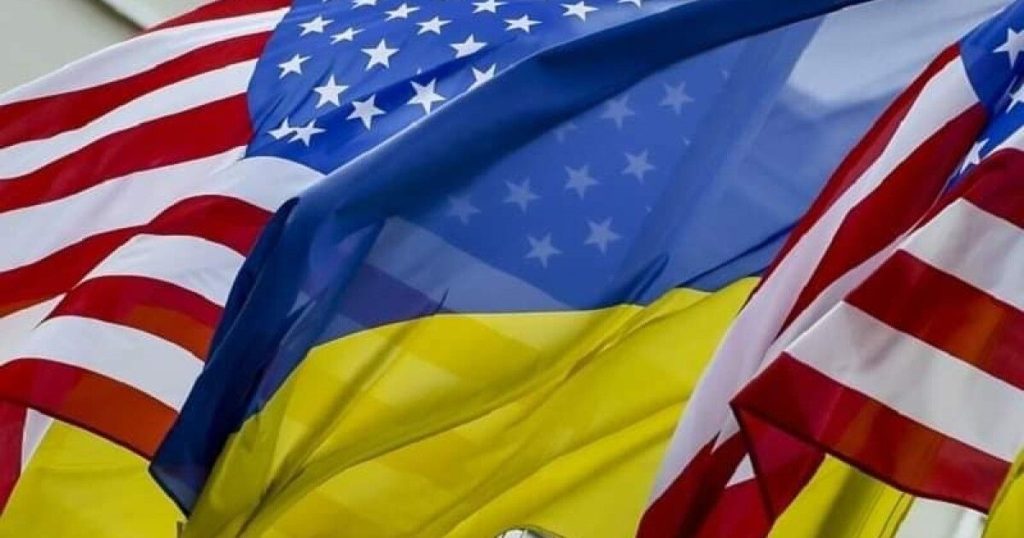

The long-suffering first meeting of the presidents of Ukraine and the United States is taking place at a far from ideal moment for our country. Instead of discussing the “expansion and deepening” of cooperation between our allied states, preparations for September 1 are unfolding in a tense atmosphere, for very concrete reasons.
THE BEGINNING OF THE BIDEN ADMINISTRATION
Biden’s statements about supporting Ukraine and condemning Russia at the beginning of the year were genuinely encouraging. We witnessed a surge in activity in military cooperation, statements of support from newly appointed U.S. Secretary of Defense Lloyd Austin, his active coordination of an anti-Moscow coalition, and demonstrations of military strength toward Moscow. And of course, we all remember how Biden called Putin a killer — the feeling of justice prevailing that day did not leave me, nor many Ukrainians around the world.
Cooperation with the military continues even now — we have full mutual understanding in this sphere. However, problems began with the “political wing” of the United States. The first so-called warning sign was the publication of priorities by the newly appointed State Department: China, climate, and, of course, COVID. The issue of Ukraine and the Russian-Ukrainian war simply dropped out of the key priorities, although just a few years ago the State Department confirmed to us that Ukraine was among its top five priorities. For the first time, there emerged a sense that saber-rattling and demonstrations of American power toward Russia were nothing more than an attempt to secure better positions for future negotiations. And soon after, we saw confirmation of this in the sluggish stance of the American leader following talks with Putin in Geneva.
EUROPE AND CHINA
Why did this happen? The Biden administration is building a global coalition against China, and it appears that Russia was invited into it. The price of such an alliance was the unblocking of the Nord Stream 2 gas pipeline — a joint energy project of Russia and Germany. After its launch, these two countries will no longer need “logistical coordination” with Eastern European states, and most importantly — with Ukraine.
If one compares the logistics of the Northern and Southern pipelines, it becomes clear that these energy routes bypass the main U.S. allies: Poland, Romania, and Ukraine. Naturally, Ukraine together with Poland will feel vulnerable after the launch, as there will no longer be a coordinated European transit policy. Russia has managed to divide Europe.
OPPOSITION IN THE UNITED STATES
Here our interests coincided with the opposition to the government in a broad sense. And this is not only about supporters of the currently opposition Republican Party. Deals with Moscow (whether red or Putin’s) have traditionally provoked natural resistance among a large part of American society. Republicans sharpen this confrontation by appealing to the understandable terms of the age-old rivalry between Moscow and Washington. Abandoning Ukraine today is one of the strongest arguments against Biden’s policy.
Biden understands well that the “Ukraine card” can play both for and against him. Hence the postponement of the presidential meeting and the reluctance to allow Zelenskyy to gather both chambers of Congress in Washington. The problem is not that Biden fears Zelenskyy, but that geopolitical realities have formed this way, and the issue of Ukraine has been painful not only for him but also for his two predecessors. At the same time, the Ukrainian actor-turned-president has already shown that he can play geopolitical games to the end. This may sound pretentious, but Biden is even more interested in a successful outcome of the meeting than Zelenskyy. And in order to “reassure” Ukraine, the U.S. and Germany prepared a whole set of measures, including visits to Kyiv by heavyweight political figures such as Chancellor Merkel.
AFGHANISTAN
Against this backdrop of rising tension in Europe and at home, the U.S. received a scandal involving:
1) A miscalculation by its own intelligence regarding Afghanistan (the local government was expected to hold out at least until the end of the year — meaning all negotiations on building an anti-China coalition should have been completed);
2) Accordingly, the failure of an organized evacuation of allied forces (horrifying scenes of panic at Kabul airport spread around the world, instantly making Afghanistan a U.S. problem again).
I do not want to analyze the decision to withdraw troops itself. The American logic is clear: for a future confrontation with China, money is needed, and America can no longer afford a massive corruption sinkhole of 1–2 trillion taxpayer dollars in the form of Afghanistan.
One can also analyze forecasts: by withdrawing troops, the U.S. creates problems for an entire region, especially for neighboring states — primarily Russia and China. I will not analyze possible influences of Pakistani intelligence on the Taliban, economic prospects for China, or threats to Russian-controlled Tajikistan and Uzbekistan. It seems to me that the rapid Taliban offensive called into question the adequacy of analysts and 20 years of U.S. policy toward the country. Such a swift, unopposed change of power has more signs of a national revolution than a military confrontation between government forces and terrorists.
Thus, despite a logical and correct decision to end the military mission in Afghanistan, the execution mechanism struck President Biden personally: inability to predict system collapse, inability to guarantee protection for loyal Afghans, total corruption, loss of military equipment and technologies — all this forms a sense of U.S. defeat in a long war with the Taliban. And now we see how the entire Russian and Chinese disinformation system works to amplify this feeling in Western societies, portraying America as weak and treacherous, capable of abandoning its allies.
UKRAINE
Against this background, right on the eve of Zelenskyy’s visit to Biden, the U.S. is hastily trying to communicate the Afghanistan topic.
1. Through official channels — that the decision to withdraw troops is actually correct and beneficial for Ukraine, as it will divert Russian forces from eastern Ukraine;
2. Through loyal opinion leaders — the most absurd justifications are voiced, such as: “America decided not to tolerate Afghanistan’s corrupt regime, so it withdrew support. We must work hard on reforms to earn America’s trust and avoid Afghanistan’s fate.”
Well, nice attempts to somehow explain the failure shatter against basic logic: does this mean the U.S. tolerated corruption for 20 years? After all, Biden worked at least since the Obama presidency. Or did all intelligence agencies fail to detect corruption for 20 years? Or let us honestly admit that Afghanistan had the system built for it. And it turns out that enormous corruption did not prevent the transfer of high-precision weapons to the Afghan army (which terrorists captured without a fight). Billions were injected into the Afghan economy without conditions or institutions. It turns out “it was allowed.” Even U.S. military bases were allowed. But if U.S. troop withdrawal from Afghanistan creates such inconvenience for Russia, then where is America’s clear stance: Russia, get out of Crimea and Donbas? Where is the consistent policy, the “red lines” for the occupier, the high-precision weapons in quantities sufficient to deter Russia from attack? If Ukraine is the “shield of Europe,” why does the entire burden fall solely on the Ukrainian economy?
For eight years the Kremlin has waged an open war against Ukraine. During these years, we have felt support from Western allies in diplomacy, military instructors, and mostly non-lethal aid. However, in our war neither coalition soldiers nor the full spectrum of American weapons are fighting. Therefore, the high price for freedom, independence, and the values of Western democracy is paid by the Ukrainian people — in lives and health of soldiers and civilians, and economically.
Human losses
Since the beginning of Russia’s aggression in Ukraine, according to the UN:
Territorial losses
Russia has occupied 44,000 square kilometers — 7% of Ukraine’s territory: the Crimean Peninsula and parts of Donetsk and Luhansk regions.
In addition, as of July 6, 2021, according to the Unified Information Database on Internally Displaced Persons, 1,473,650 IDPs were registered from the temporarily occupied territories of Donetsk and Luhansk regions and Crimea (~3.5% of Ukraine’s population). The actual number is even higher.
Damages
Ukraine’s losses from Russia’s annexation of Crimea amount to about $135 billion — three quarters of Ukraine’s GDP in the last pre-annexation year, 2013. And this is only the minimum proven estimate.
Losses from Russia’s occupation of parts of Donetsk and Luhansk regions amount to about $120 billion.
Financial costs
Ukraine’s defense budget is almost 6% (5.93%) in 2021 and 5.4% of GDP in 2020. For comparison, in 2020 only Turkey spent more on defense in Europe — 2.8% of GDP, while Germany spent 1.4%.
Comparison of U.S. military aid to Afghanistan and Ukraine
According to the U.S. Congress, America spent a record $143 billion on rebuilding Afghanistan. Of this, $88.32 billion went to creating Afghan security forces. Meanwhile, U.S. aid to Ukraine totals only about $3.7 billion.
That is, military aid to Afghanistan averaged $4.4 billion per year, while Ukraine received about $358 million per year.
Despite troop withdrawal, the U.S. and NATO promised Afghanistan’s democratic government $4 billion annually to fund its forces. Ukraine, meanwhile, was promised three sovereign loan guarantees of $1 billion each.
Yet despite enormous losses, Ukraine for the 8th year continues to act as the shield of Europe, defending the values of freedom and democracy. And we have clear criteria of effectiveness:
For comparison: in the occupied ORDLO alone, Russia deployed 480 tanks, while Germany has only 222 in total.
At the same time, recognizing Ukraine as the “shield of Europe” is inconvenient for some countries, as it entails additional obligations. Meanwhile, Germany and Russia try to convince the democratic community that Russia poses no threat and acts only within its own geopolitical interests.
Having waged a hybrid war against Russia for seven years, we know our adversary and its “signature,” recognizable worldwide.
2. Russia has absorbed Belarus and moved even closer to EU borders, with catastrophic consequences:
3. Russia stops only where it is stopped.
In conclusion, today Russia’s advance into Europe is stopped only by Ukraine, which continues to resist and defend democratic values at any cost. Therefore, Western partners must share this cost.
Commitment to democracy must come not only from Ukraine but also from allies in Europe and North America. Yet the scale of aid to Ukraine is nowhere near that given to Afghanistan, which collapsed in less than a month after decades of massive support.
The Kremlin’s authoritarian model is essentially a Eurasian Taliban — a state based on Orthodox fundamentalism known as the “Russian world.” It does not recognize nations’ rights to self-determination, freedom, or democracy. Borders do not exist for it (Crimea, ORDLO, Abkhazia, South Ossetia, Transnistria, etc.). Russian forces shoot down civilian planes (MH-17), torture (Izolyatsia prison in Donetsk), and kill.
TWO PATHS FOR THE WEST
The truth is that today the civilized world looks in horror not only at the Taliban, but at the United States, which withdrew security guarantees from the Afghan people. Hence the fair questions: can Western promises be trusted? Has diplomacy exhausted itself, leaving only brute force?
The Afghanistan case presents the collective West with two paths:
First: further disintegration of Western institutions, as “their security guarantees no longer mean anything” — a narrative actively promoted by Russia and China.
Second: mobilize and correct the situation, demonstrating unwavering determination of Western democracy. The first step must be to stop Russia’s interference, force accountability, and restore the territorial integrity of Ukraine, Moldova, and Georgia. Demonstrate the victory of the Western collective security system, which after Afghanistan lies in Ukraine.
This is the key issue that must be resolved at the meeting of the two presidents. Only an adequate solution will assure Europe and U.S. civil society that the Western collective security system is strong and resilient.
Source: https://umoloda.kyiv.ua/number/0/2010/160027
18.05.2026
When Russia launched its full-scale invasion of Ukraine in 2022, Mariupol quickly became the site of…

05.05.2026
Russia pressed every Donbas sector in April, with assault tempo at a two-month high. The territorial…

16.03.2026
It is in the war against Ukraine that Russia is trying to adhere to this non-linear…


