


Mariupol is Putin’s blueprint for occupation, and the world is barely paying attention
18.05.2026
When Russia launched its full-scale invasion of Ukraine in 2022, Mariupol quickly became the site of…
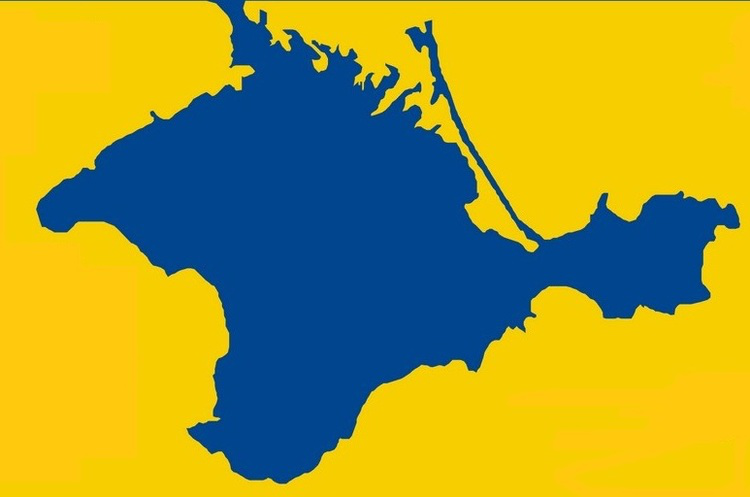
Despite loud Russian celebrations marking the “return” (in reality, the occupation) of Crimea, at the level of the Russian Federation the peninsula has for eight years remained recognized only formally.
According to information from our sources in the Ukrainian security services, not only international companies but also major Russian ones fear sanctions for the occupation of Crimea, which has resulted in a complete absence of investment. In particular, this has led to the decline of the scientific, technical, and industrial capacities of once most powerful enterprises on the peninsula.
For example, the enterprise “Dvoyiakorna Bay” is a strategic facility for the production, repair, testing, and maintenance of military equipment. However, at present the plant carries out no production activity due to the lack of orders and the mismatch of its material and technical base with the requirements for enterprises of the Russian defense-industrial complex.
Our sources also report a similar situation at the “More” shipbuilding plant—once one of the leading Ukrainian enterprises on the peninsula, which specialized in the construction of military vessels with dynamic support principles.
Currently, the plant’s workload is less than 20% of its potential capacity and continues to decline due to the absence of orders, including from the Ministry of Defense of the Russian Federation. This is despite the fact that 100% of the company’s shares are illegally under federal ownership of the Russian Federation.
At the same time, the “More” plant has no possibility of attracting commercial orders, as it is included in Western sanctions lists. Private individuals also refuse to purchase vessels from an enterprise located in occupied Ukrainian territory. The Russian government even attempted to find orders for the military plant in the fishing industry. In particular, negotiations were held with private entrepreneurs, and Resolution No. 1917 of the Government of the Russian Federation dated December 27, 2019 was adopted. It provides subsidies to Russian organizations by reimbursing 30% of the cost of a new vessel on the condition that the order is placed at domestic shipyards and the vessel is subsequently used in fishing for five years under the Russian flag. However, Crimean shipyards remained outside the interest of Russian entrepreneurs.
All this has also led to the fact that the plant, which has production and technological potential for the simultaneous implementation of several projects, as of July 19, 2021 had wage arrears totaling 44.352 million rubles. The enterprise has no funds to repay the existing debt.
Thus, Crimea has turned into a kind of ghetto—a subsidized region where money from the Russian state budget is burned, once successful enterprises stand idle, and the threat of a humanitarian catastrophe grows every year. This is acknowledged even by Russian State Duma deputies themselves.
“Those who have been to Crimea have seen how different it is from mainland Russia. It is some kind of ‘under-Russia’, not ‘Little Russia’, not ‘Novorossiya’, but precisely ‘under-Russia’,” said State Duma deputy Pavel Shperov during his speech in parliament in 2018. He also admitted that there is no all-Russian banking system on the peninsula, Russian mobile operators and insurance companies do not operate there, and there are problems with property registration.
Banking system
Before the occupation, more than 70 banks with Ukrainian and foreign capital operated in Crimea. After the annexation, Ukrainian banks immediately left the peninsula, and the Russian Central Bank revoked several licenses from Russian banks that remained there.
Since then, 34 Russian banks began operations in Crimea at different times. As of 2021, only six remain, and all of them are under international sanctions.
You will not find Russia’s largest banking giants on the peninsula—Sberbank of Russia, VTB, Gazprombank, or Alfa-Bank. It is important to understand that these are not merely private banks. Gazprombank is in fact almost entirely state-owned; 92% of VTB’s share capital is also under state control, as is 50% of Sberbank. The heads of these banks are people close to President Putin.
The European Union imposed sanctions on the above-mentioned banks from the first days of the occupation, joined by the United States. Later, sanctions were imposed on those Russian banks through which interference in the internal affairs of other countries occurs. As a result, servicing Crimea became the prerogative of smaller banks focused exclusively on the domestic market. Federal state and private banks completely ceased operations due to sanctions requirements.
Because of this, residents of occupied Crimea often encounter situations like the following. A comment from a Crimean resident:
“Such a dialogue happens to me quite often.”
Crimean residents themselves say that to obtain a Sberbank card they have to travel to “neighboring Russia.” Only there can they receive Visa and MasterCard cards. But then another problem arises—within Crimea they cannot pay with Russian cards at international companies such as Amazon or eBay, or pay for services like Google Play or Netflix. To do this, Crimeans are forced to look for intermediaries in Russia who, for an additional fee, provide money transfer services.
Business and state-owned companies
A similar situation exists with big business. Russian federal companies never entered the Crimean market. The Kremlin tries to compensate for the lack of private investment with budget injections—for example, the Federal Target Program for Crimea provides for the allocation of 1 trillion rubles. However, most of these funds cannot be implemented due to the lack of contractors willing to undertake the work.
Before 2014, the Russian group X5 Retail Group operated on the peninsula. After the occupation, it closed its stores and over eight years has never returned. The company refuses to publicly state its official position on Crimea.
The same applies to the state-owned Gazprom—the corporation never entered the Crimean market. As early as November 2014, the head of the Russian parliamentary energy committee Ivan Grachev stated that Gazprom would not operate in Crimea due to Western sanctions. In 2017, company representatives admitted they feared sanctions, particularly the risk they posed to completing export gas pipelines. Thus, in this matter as well, Russia chose a geopolitically more important project—the completion of Nord Stream 2—over legitimizing Crimea before the world.
For the eighth year, the state-owned company Russian Post has also refused to operate in Crimea. In 2014, the Russian government specially created a clone—“Crimean Post.” As it turned out, Russian Post even cooperates with Crimean Post only through private intermediaries, to avoid direct interaction with the peninsula and thus evade sanctions. Back in 2018, the head of the Russian Post network development department stated that the company would not enter the occupied Crimean territory.
In May 2018, the CEO of Russia’s largest grocery retail chain Magnit, Khachar Pombukhchan, told journalists that the company had no plans to open branches in Crimea. In July of the same year, this was confirmed by his successor Olga Naumova.
In 2018, a bill was even introduced in the State Duma to impose financial and criminal sanctions on Russian companies for complying with Western sanctions. The Russian government supported it. However, major Russian companies criticized the bill, and the Russian Union of Industrialists and Entrepreneurs issued a statement warning of the “inadmissibility of adopting the bill, as it would worsen the business climate.” As a result, it was postponed—just like attempts to force Russian business, eight years into the occupation, to recognize Crimea as Russian.
Author: Solomiia Khoma
18.05.2026
When Russia launched its full-scale invasion of Ukraine in 2022, Mariupol quickly became the site of…

05.05.2026
Russia pressed every Donbas sector in April, with assault tempo at a two-month high. The territorial…

16.03.2026
It is in the war against Ukraine that Russia is trying to adhere to this non-linear…


