


Mariupol is Putin’s blueprint for occupation, and the world is barely paying attention
18.05.2026
When Russia launched its full-scale invasion of Ukraine in 2022, Mariupol quickly became the site of…
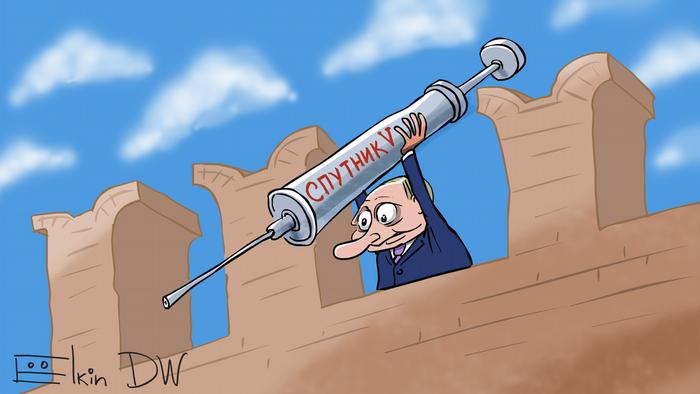
Russia is carrying out forced “voluntary” vaccination of the population, including residents of occupied Ukrainian territories, using its own COVID-19 vaccines that have not been approved by the European Medicines Agency (EMA).
According to sources of the Ukrainian Center for Security and Cooperation (UCSC) within Ukrainian security services, Russian authorities have created conditions in the temporarily occupied territories of Donetsk and Luhansk regions that make avoiding vaccination with questionable vaccines almost impossible.
The Russia-controlled authorities of the so-called “DPR/LPR” have driven the situation into a critical economic state, forcing residents to travel en masse to the Russian Federation for work. However, entry into Russia now requires a “vaccination certificate.”
Due to the deterioration of the epidemiological situation, Russian authorities have set up traffic police checkpoints at the entrances to certain regions, where documents are checked around the clock. A vaccination certificate is also required for students studying in Russia. Russian universities do not allow students into buildings if they are not vaccinated against coronavirus or lack the relevant antibodies.
At the same time, even residents of the occupied territories who independently registered for vaccination back in February are still waiting for vaccines. As a result, hospitals in Donetsk and Luhansk regions are already offering to sell COVID-19 vaccination certificates. Prices range from 4,000 to 5,000 rubles (approximately 1,360–1,700 UAH), depending on the speed of issuance.
Vaccination with Russian-made drugs raises serious doubts regarding both quality and safety. As a reminder, Russia has still not provided the necessary information on clinical trials of “Sputnik V” to the EMA. The regulator notes that submission deadlines have long passed.
In addition to “Sputnik V,” Russia is vaccinating with other domestic products — “EpiVacCorona” and “CoviVac.” These were registered before the completion of Phase III trials. According to WHO documents, developers of “EpiVacCorona” never submitted an Expression of Interest (EOI) for vaccine quality assessment.
As for the vaccine “CoviVac”, there is no international data confirming its quality at all.
Despite this, on June 21 Russia officially introduced mandatory vaccination for workers in the trade and service sectors in the regions.
However, information about forced “voluntary” vaccination with Russian vaccines appeared long before that — back in autumn 2020. Thus, the Kremlin effectively tested the drugs on people.
Occupied territories of Donetsk and Luhansk regions
In the Russian-occupied territories of eastern Ukraine, vaccination with “Sputnik” officially began on February 1. The vaccine was delivered under the guise of “humanitarian aid.”
However, as early as September, information appeared on social media about vaccination with a Russian drug, presumably “EpiVacCorona” (approved only in Russia and Turkmenistan), of Russian military personnel from the 1st Army Corps of the 8th Army of the Southern Military District stationed in Ukraine. Vaccinations were administered by Russian military infectious disease doctors and epidemiologists. According to local doctors, “total” vaccination of all personnel with Russian-produced serum was carried out.
They vaccinated Russians first, then the so-called “republic leadership and administrative and law enforcement bodies of the DPR,” followed by teachers and doctors.
Russian military doctors recorded the condition and bodily reactions to the vaccination, including side effects. Thus, a forced ‘voluntary’ human trial of the vaccine was effectively conducted. Upon learning this, local doctors refused to be vaccinated first.
With the official launch of vaccination, the leader of the militants of the “DPR,” Denis Pushilin, was demonstratively vaccinated with “Sputnik V” on camera. However, locals expressed distrust in comments and public forums, doubting that Pushilin had actually received an untested vaccine.
In addition, “Sputnik V” has many contraindications. Side effects reportedly include numbness of limbs, abscesses, and heart problems in people aged 50+. According to social media reports, these side effects were the reason why the leader of the “LPR,” Leonid Pasechnik, who has heart problems, refused vaccination.
Among the contraindications is a clause stating that vaccination with Sputnik is contraindicated for people who have had COVID-19 within the last six months. However, in the so-called “LPR,” mass testing was not conducted due to a critical shortage of tests. When hospitals ran out of beds in October 2020, the “republic’s” Ministry of Health issued a directive to label everything as pneumonia. As a result, determining who had COVID-19 and who did not has become problematic.
On February 11, media reported mass refusal of vaccination among civil servants of the so-called “LPR.” In the Pervomaisk military commandant’s office, 79% of personnel refused vaccination; in Antratsyt, 85% of the city’s medics refused, stating: “First of all, people do not want to risk their health. The quality and therapeutic properties of ‘Sputnik V’ raise doubts.”
For refusing vaccination, medics were threatened with denial of bonuses for working with COVID-19 patients, and security personnel were threatened with deployment to the front line.
According to UCSC sources in Ukrainian security services, as of June 20, 2021, more than 60% of the personnel of the Ministry of Internal Affairs in the temporarily occupied territory of Donetsk region had been vaccinated with “Gam-COVID-Vac” (the export version of Sputnik V). In particular, up to 100% of the central apparatus personnel and the Operational Service Directorate (external surveillance service), as well as up to 50% of district and city departments of the so-called “DPR” Ministry of Internal Affairs, were vaccinated.
Occupied Crimea
In mid-spring, the occupation administration of Crimea began intensive preparations for the tourist season. Initially for the May holidays, when around 2 million tourists were expected. For the summer season, occupiers forecasted 8–10 million visitors.
Preparations began with forced vaccination. On April 23, the occupation administration announced that more than 3,000 workers in the resort and health sector — those working in hotels, sanatoriums, and other recreational facilities — had been vaccinated. It also announced plans to vaccinate at least another 4,500 employees.
On June 9, the Russia-controlled Crimean Minister of Health reported that only 7% of peninsula residents had received both components of the Russian coronavirus vaccine, expressing surprise that 11,000 Crimeans did not show up for their second dose of Sputnik V. By July 7, this number had increased to over 17,000.
On June 10, it was announced that more than 7,000 hotel and sanatorium workers had been successfully vaccinated. The same day, reports spread online that employees of the Bilohirsk district administration were threatened with dismissal if unvaccinated. The head of the administration denied threats, stating she had held a “preventive” conversation with subordinates.
On June 16, the so-called Crimean Minister of Health and the Vice Prime Minister for Finance of the occupied peninsula urged business leaders to conduct explanatory work with employees about vaccination necessity, threatening lockdowns and citing companies that pay bonuses to vaccinated staff.
Following these statements, the management of the “Titanium Investments” plant in Armiansk announced that around 20% of employees had already been vaccinated.
On June 22, following Moscow’s example, occupiers mandated vaccination for service sector employees in Crimea. The decision applies to resort workers, catering staff, tour guides, and transport employees.
The following day, record vaccination numbers were announced: on June 23, 11,754 Crimeans received coronavirus vaccination with the Russian vaccine. Vaccination plan fulfillment reached 31%.
On July 7, the Russia-controlled Crimean Ministry of Resorts and Tourism stated that 65% of sanatorium employees had been vaccinated with Sputnik V.
Crimean residents complain en masse about forced vaccination, stating they are given only one option: vaccination or dismissal.
Interestingly, record vaccination figures in Crimea were recorded at a time when the peninsula was experiencing severe weather, leaving most cities, including medical facilities, in a catastrophic condition.
The Russia-controlled Crimean Mufti Emirali Ablayev called on Crimean Tatars to get vaccinated, although there is no information on whether the mufti himself was vaccinated. Notably, Emirali Ablayev is known for his pro-Russian stance and has even been suspected of involvement in the persecution of Crimean Tatars by Russian security services.
Special attention should be paid to the situation at the Artek children’s camp. There, mass vaccination began on April 22. On June 20, isolated COVID-19 cases were recorded at the camp, which had 2,500 children present.
The next day, Artek management announced that the total number of infected was 12, and 60 schoolchildren (aged 9–15) and 12 counselors were isolated in an observation facility. In total, 16 counselors who had undergone mandatory vaccination were isolated. At the same time, the camp continued operating normally.
No further information about increasing case numbers was provided. Meanwhile, parents complained on social media that children were taken into isolation without prior notice, without medical or police escort, transported 100 km to the former Priboy sanatorium (Yevpatoria). Parents describe horrific conditions: children are forbidden from leaving rooms and are poorly fed. Around 150 children were transferred to Priboy. Mass transfers from Artek continue.
Vaccination in Russia
Information about forced vaccination in Russia itself, including Moscow, began appearing more than six months before the official introduction of mandatory vaccination and several months before the official announcement of mass vaccination in December.
As early as September–October 2020, management of a Moscow hospital, citing an alleged order from the Moscow Health Department, forced employees to be vaccinated with Sputnik V, threatening dismissal for refusal. Employees of the Moscow Department of City Property faced the same problem.
In addition to forced vaccination, cases of vaccine substitution without patient consent were documented, including administering “EpiVacCorona” instead of Sputnik V, whose effectiveness is also questionable.
Amid widespread dissatisfaction with mandatory vaccination, Russian authorities attempted to shield the Kremlin leader from backlash. On June 30, during a live broadcast, Putin stated he opposed mandatory vaccination, shifting responsibility to regional leaders “who exercised their right.”
However, on June 24, Kremlin spokesperson Dmitry Peskov stated that although vaccination remains voluntary, service sector workers who refuse should seek employment in other fields.
Russian authorities also attempted to boost the image of Sputnik V. During the same broadcast on June 30, Putin claimed he was vaccinated with Sputnik V. According to Peskov, the vaccination took place behind closed doors on March 23 without photo or video evidence. However, Putin later stated he was vaccinated “apparently in February” and mentioned “Vector,” making it impossible to verify which vaccine he actually received.
Meanwhile, more evidence of the ineffectiveness of Russian vaccines continues to emerge. On July 5, TASS reported the hospitalization of Russian Human Rights Ombudsperson Tatyana Moskalkova. On April 29, she posted a video of herself receiving a “domestic” vaccine. Doctors stated she needed a second dose in two weeks. Despite receiving both doses, she was hospitalized. Social media users speculated she was vaccinated with “EpiVacCorona,” though the vaccine’s official account denied this.
Russia is now facing a problem of its own making. For years, it spread anti-vaccination disinformation across social media in various countries and launched a campaign to discredit Western vaccines. Ultimately, this may have shaped Russians’ negative attitudes toward all COVID-19 vaccines.
From the outset, the Kremlin understood that vaccine development could be a powerful geopolitical tool. That is why, rushing to register the world’s first “safe” vaccine, Russia announced its vaccine before even starting Phase III trials. Thus, in autumn 2020, the Kremlin effectively conducted forced “voluntary” vaccine trials on people, including residents of the occupied territories of Ukraine.
Cartoon by Sergey Yolkin
Authors: Oksana Kuzan and Solomiia Khoma
18.05.2026
When Russia launched its full-scale invasion of Ukraine in 2022, Mariupol quickly became the site of…

05.05.2026
Russia pressed every Donbas sector in April, with assault tempo at a two-month high. The territorial…

16.03.2026
It is in the war against Ukraine that Russia is trying to adhere to this non-linear…


