


Mariupol is Putin’s blueprint for occupation, and the world is barely paying attention
18.05.2026
When Russia launched its full-scale invasion of Ukraine in 2022, Mariupol quickly became the site of…
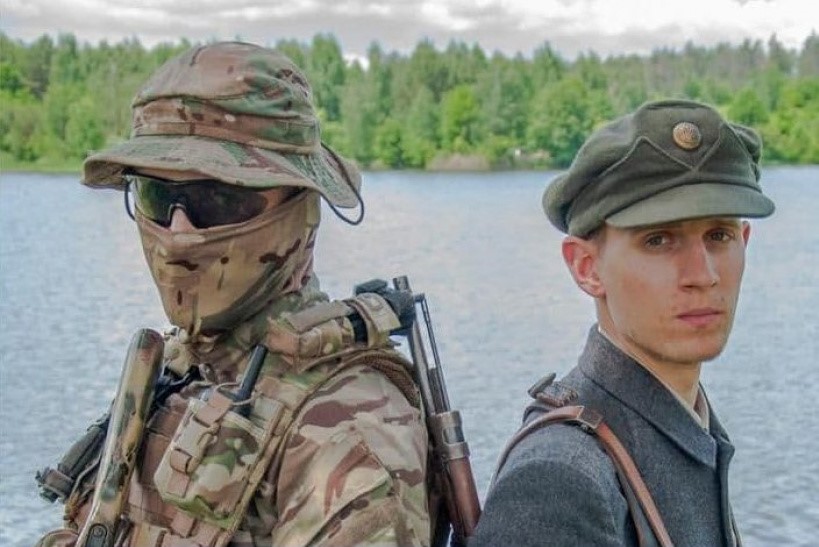
The history of Ukraine in the 20th century is filled with heroic chapters of the struggle to restore independence. After World War I, the independent Ukrainian People’s Republic and the West Ukrainian People’s Republic emerged on Ukrainian lands and, on January 22, 1919, united into a single, sovereign state.
Unfortunately, the lack of unity within the political leadership of that time led to the loss of state independence. However, a national resistance movement against the Russian-Bolshevik occupation continued to operate in Ukraine. Its most well-known representatives were the insurgents of “Kholodnyi Yar” (named after the area in the Cherkasy region). Only through brutal repression and man-made famines was the Kremlin able to temporarily subdue Ukrainians.
The outbreak of World War II brought Ukraine a new chance. On June 30, 1941, in Lviv, the Organization of Ukrainian Nationalists (OUN) proclaimed the Act of Restoration of the Ukrainian State. A close associate of Stepan Bandera, Yaroslav Stetsko, was appointed Head of Government. Shortly after this declaration, the Nazis arrested the initiators of the Act and launched a wave of bloody repression. In response to Nazi occupation, the national resistance movement intensified once again — through the underground OUN network and partisan units of the Ukrainian Insurgent Army (UPA).
The end of World War II did not bring peace to Ukrainian lands. Victory over Nazi Germany became possible at the cost of strengthening another evil — Stalin’s Soviet Union. The injustice of the postwar settlement for Ukraine and the legitimization of Soviet occupation led to the continuation of armed resistance, which lasted until the early 1960s. Moscow managed to suppress Ukrainians only through hundreds of thousands of punitive forces, mass repression, and prisons.
The curtailment of armed struggle did not lead to the disappearance of national resistance. Ukrainians around the world continued the fight on the diplomatic front, demanding the isolation of and new sanctions against the Soviet Union. Ukrainians and representatives of other oppressed peoples of the USSR resisted the communist system in prisons and labor camps. The uprisings in Kengir, Norilsk, and Vorkuta were among the most notable acts of defiance against totalitarianism. Moreover, Ukrainian dissidents, following a partial easing of repression, launched a new wave of resistance in defense of national and human rights.
The resistance of Ukrainian students in October 1990, known as the Revolution on Granite, became one of the final nails in the coffin of the “evil empire.” Less than a year later, on August 24, 1991, Ukraine restored its independence.
During nearly 30 years of independence, Ukrainian national resistance has at least twice fundamentally altered the trajectory of the state. The Orange Revolution of 2004 brought democratization and civil liberties. The Revolution of Dignity in 2013 effectively thwarted Moscow’s plans for the gradual occupation of Ukraine.
Russia’s armed aggression in 2014, the occupation of Crimea, and parts of the Donetsk and Luhansk regions triggered a new wave of Ukrainian national resistance. Thanks to tens of thousands of soldiers, volunteers, and volunteer fighters, as well as the diaspora that lobbied for support for Ukraine and the provision of lethal weapons, Russia’s “blitzkrieg” failed. The enemy was forced to change tactics but did not abandon its goals.
It is no secret that the development of Ukrainian national resistance in defense of statehood and independence during the current Russia–Ukraine war has been extremely challenging. Poor organization of mobilization, especially in the early stages, shortages of equipment and supplies — these are only the tip of the iceberg. Volunteer units operated outside the legal framework for a significant period of time. The issue of granting combatant status to volunteers only began to move forward last year. The legal protection and status of Ukrainian citizens operating in temporarily occupied territories on behalf of Ukrainian special services remain unresolved to this day.
Despite the stabilization of the front line, periodic escalations and the growing likelihood of a full-scale offensive by the Russian Federation fuel anxiety and panic in society. A unified system for preparing citizens for an active phase of war and organizing resistance to occupiers is still absent.
That is why, at the end of March this year, the Military Security Strategy was approved. In addition to Ukraine’s irreversible course toward NATO, it enshrines the concept of “comprehensive defense.”
The essence of this concept lies in the fact that Ukraine does not seek military parity with Russia in terms of weapons or troop numbers, as this would lead to economic exhaustion, excessive militarization of society, and, ultimately, social collapse. Simply put, Ukraine would risk becoming a “North Korea” in the center of Europe. If Ukraine cannot match Russia in the size of its army, it can at least ensure that the land “burns under the feet” of occupiers — by deploying an organized, rather than spontaneous, national resistance to aggression.
It was with this goal in mind that a working group of military personnel, veterans, and volunteers, acting on behalf of the President, registered Draft Law No. 5557 “On the Foundations of National Resistance” at the end of May. The draft law proposes a fundamentally new approach to organizing Ukraine’s defense.
First. The draft law introduces mandatory military training for Ukrainian citizens regardless of gender — starting at school and continuing thereafter, especially for those who have not served in the armed forces.
Second. The Territorial Defense Forces are established as a separate, fifth branch of the Armed Forces of Ukraine (alongside the Ground Forces, Air Force, Navy, and Special Operations Forces). Territorial defense will consist of two components:
– a military component — territorial defense brigades (one in each region) and battalions (in each district);
– a volunteer component — voluntary units formed within territorial communities.
The latter will be allowed, in particular, to use their own hunting firearms to perform territorial defense tasks.
In addition to direct tasks related to defending specific territories from aggression and protecting critical infrastructure, territorial defense forces may also be engaged in protecting civilians during emergencies. All territorial defense fighters — both military personnel and volunteers — will be protected by law. The shameful situations of 2014, when volunteers lacked legal protection, must never be repeated.
Third. The draft law regulates the resistance movement operating in occupied territories. This movement will obstruct the actions of occupying forces and participate in intelligence, information-psychological, and other special operations. In addition to Ukrainian citizens, foreigners and stateless persons may also be involved. Members of the resistance movement will be eligible for combatant status and social and legal protection equal to that of servicemembers — including Ukrainians already operating in occupied territories.
Despite the progressive nature of the draft law, it already faces significant criticism. If Draft Law No. 5557 is not adopted in the second reading, the formation of national resistance, under the Budget Code, will be postponed at least until 2023 — a delay that could prove fatal under conditions of war with Russia.
A lack of unity in society and misunderstandings among political elites more than a century ago led to the loss of Ukrainian statehood and independence. For over 70 years, as history shows, national resistance helped us reclaim our long-awaited freedom — which we now defend with weapons in our hands. Today, we face another chance to move closer to our historic dream: to protect ourselves from our eternal enemy and confidently advance toward the family of free European nations, becoming a full member of the democratic world.
Whether we squander this chance or finally prepare for the full-scale war that has threatened us for eight consecutive years depends solely on us.
Only in unity lies our strength. Freedom and Glory to Ukraine!
18.05.2026
When Russia launched its full-scale invasion of Ukraine in 2022, Mariupol quickly became the site of…

05.05.2026
Russia pressed every Donbas sector in April, with assault tempo at a two-month high. The territorial…

16.03.2026
It is in the war against Ukraine that Russia is trying to adhere to this non-linear…


