


Mariupol is Putin’s blueprint for occupation, and the world is barely paying attention
18.05.2026
When Russia launched its full-scale invasion of Ukraine in 2022, Mariupol quickly became the site of…
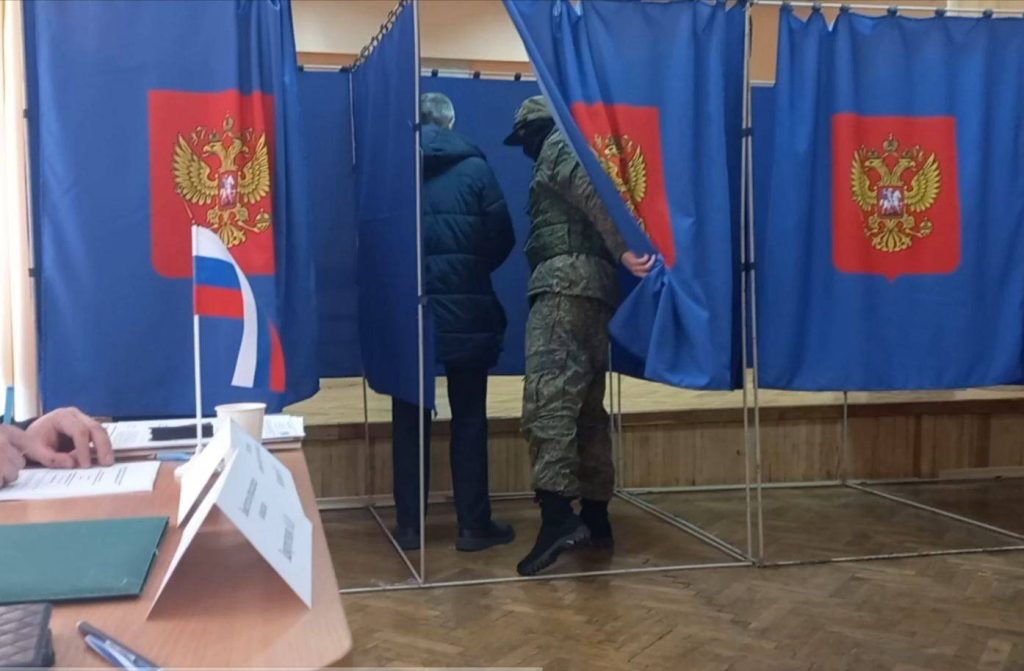
Vladimir Putin has ruled Russia for more than 24 years — among Soviet or Russian leaders, only Stalin surpasses him in terms of time in power. However, having been “re-elected” in March for another six-year presidential term, Putin may well surpass Stalin, who led the Soviet Union for 30 years. Of course, if he lives that long.
The appearance of elections in Russia puts the West at a crossroads — whether to recognize Putin as a legitimate president or not — while simultaneously sending a clear signal to other authoritarian states that are either open allies of Russia or playing neutrality — China, Iran, North Korea: Akela is strong and continues to lead his pack into battle against democracies.
Read about the course and consequences of Putin’s “elections” in a new analytical piece by the USCC team.
Opposition Without a Position on the Ballot
Long before voting day in usurped Russia, the outcome of the elections could be predicted with confidence. According to a poll conducted in November 2023 by the Levada Center, Putin was ahead of his closest potential competitor, Gennady Zyuganov, by 56.7 percentage points.
The 2024 Russian presidential “elections” were held for the first time without a single nominal “opposition” candidate. One such figure, Grigory Yavlinsky, leader of the Yabloko party, officially met with Putin in the fall. A few months later, in December, Yavlinsky announced that he was withdrawing his candidacy. Notably, ahead of the second anniversary of the full-scale invasion, Yavlinsky published a lengthy text calling on Ukraine and Ukrainians to surrender and make peace with Russia.
Among those who intended to run and positioned themselves as opposition was Boris Nadezhdin. He was promoted by a broad circle of Russian liberals, and long lines during the collection of signatures in various Russian cities were presented as a revival of the opposition movement and a sign of hope.
Despite this, Boris Nadezhdin — with only 1% support — was not allowed to run by the Russian authorities. According to the Central Election Commission, the reason was allegedly an excessive number of errors in the collected signatures.
Journalist Yekaterina Duntsova was also barred from the race. She later came under pressure from authorities and in January was detained by police under the pretext of a drug test.
Through these actions, the Russian regime — holding absolute power — demonstrated fear and insecurity even toward technical candidates. In this context, the death of leading opposition figure Alexei Navalny shortly before the elections, killed by the Russian regime through the penitentiary system, is highly symbolic. Actions by security services surrounding Navalny’s burial show the regime feels threatened even by the dead.
Everyone to the Polls: Propaganda Calls
Given that Putin’s victory was never in doubt, many Russians did not plan to vote, believing he would win regardless.
As a result, officials used all available methods to boost turnout and ensure “correct” voting. Journalists documented cases of public sector employees and students being forced to vote through incentives, social benefits, financial rewards, or intimidation.
Authorities likely aimed for around 80% turnout to match Kremlin-controlled VTsIOM polling, which claimed 70% intended to vote. Officially, turnout reached 77.44%, a record for Russia.
Ironically, opposition activity after Navalny’s death also contributed, including the “Noon Against Putin” action — a protest at polling stations to vote against Putin or spoil ballots.
More radical protests included arson attacks and ballot box vandalism. Central Election Commission head Ella Pamfilova reported eight arson attempts, though the real number is likely higher. She blamed Ukraine for these actions.
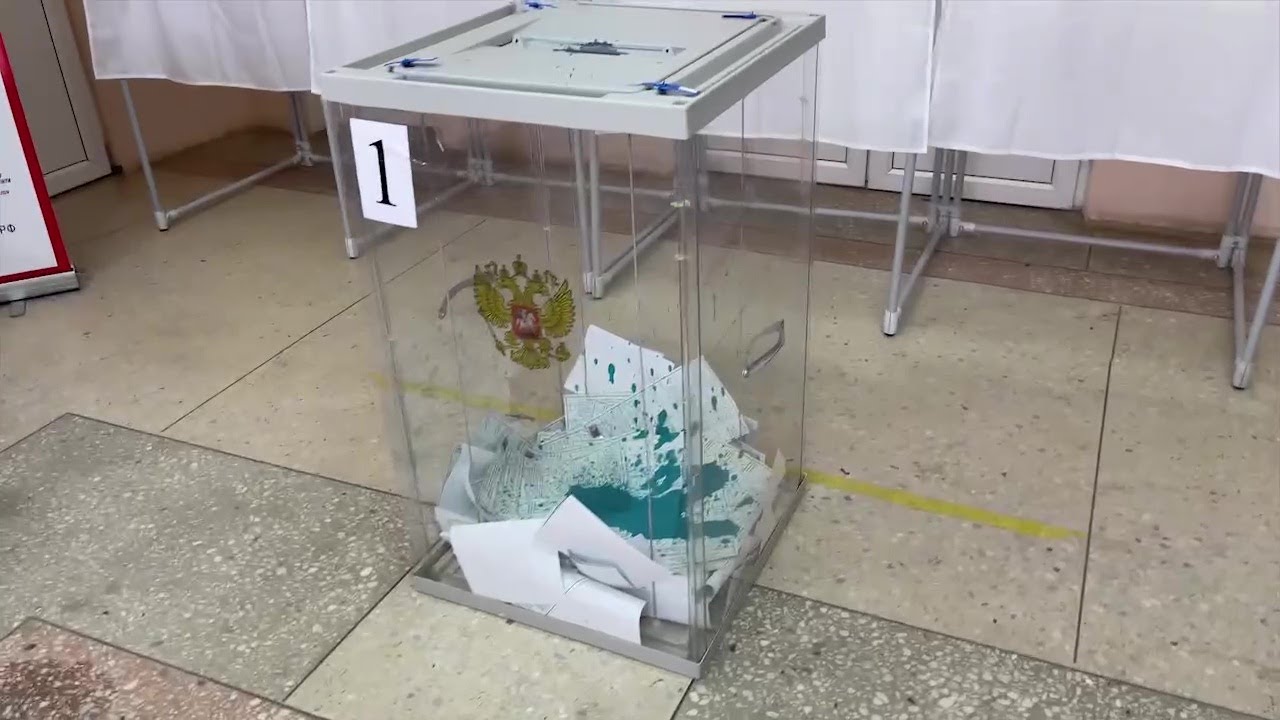
Authorities responded with threats of criminal prosecution, classifying such acts as terrorism or sabotage, despite existing laws prescribing fines or community service. Russia’s Interior Ministry reported 66 criminal and 155 administrative cases.
Elections During a “Special” War
The 2024 elections were held amid Russia’s so-called “special military operation” — the war against Ukraine — including on occupied Ukrainian territories, where Russian military personnel voted.
Polling stations were set up inside military units, allowing Russian troops stationed in occupied areas of Ukraine to vote.
Despite redeployments of Rosgvardia units to secure voting in border regions, Russian forces failed to ensure security, exposing Kremlin weakness.
Pseudo-Elections in Occupied Territories and Foreign “Observers”
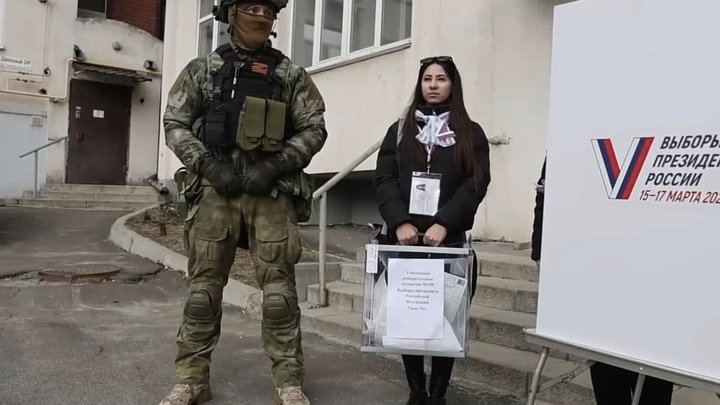
Voting in occupied regions began in early March. According to Ukraine’s National Resistance Center, local administrators were tasked with reaching 30% turnout — using any means necessary.
Russian authorities registered 4.5 million voters in occupied areas, despite earlier figures indicating only 3.2 million residents — inflating numbers by 80%.
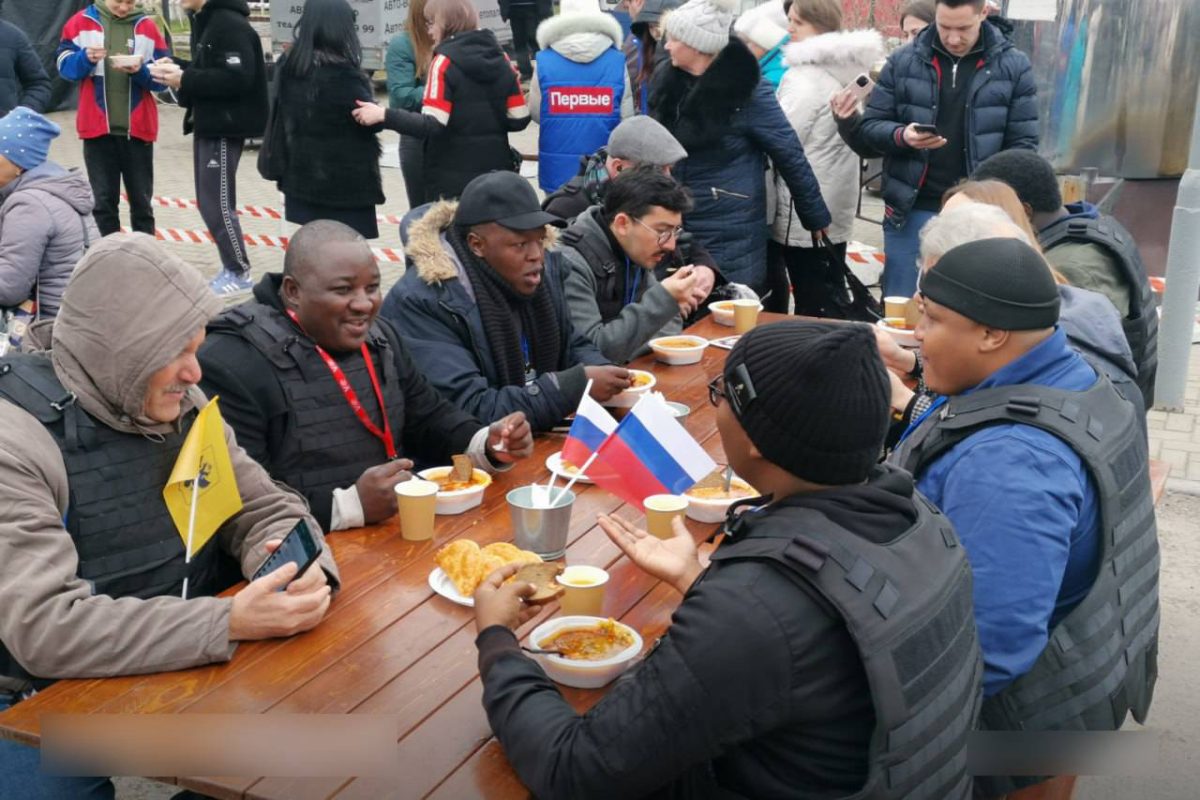
“International observers” were invited to legitimize the process, excluding OSCE institutions, and instead welcoming extremists, pro-Kremlin activists, and participants of the “World Youth Festival 2024.”
Consequences
The Kremlin sought to demonstrate total public support for Putin, both to the West and domestically. After 25 years in power, authoritarian methods will only intensify: militarization, repression, censorship, forced mobilization, and economic centralization focused on war.
Putin’s re-election and subsequent processes pose a threat not only to Ukraine but to the entire civilized world. Europe must recognize Russia as a long-term threat and prepare accordingly.
18.05.2026
When Russia launched its full-scale invasion of Ukraine in 2022, Mariupol quickly became the site of…

05.05.2026
Russia pressed every Donbas sector in April, with assault tempo at a two-month high. The territorial…

16.03.2026
It is in the war against Ukraine that Russia is trying to adhere to this non-linear…


