


Mariupol is Putin’s blueprint for occupation, and the world is barely paying attention
18.05.2026
When Russia launched its full-scale invasion of Ukraine in 2022, Mariupol quickly became the site of…
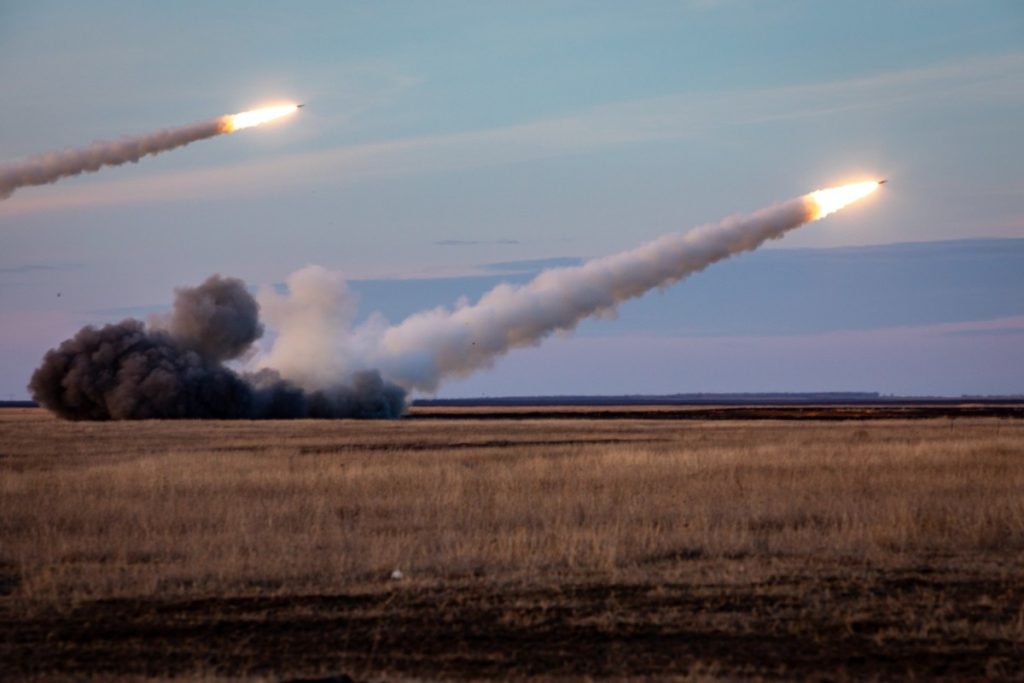
Two years ago, on May 31, 2022, U.S. President Joe Biden stated in his op-ed for The New York Times that the United States would provide Ukraine with HIMARS systems. The column specifically noted that the White House neither encouraged nor allowed Ukraine to strike targets beyond its borders. “We do not want to prolong the war just to inflict pain on Russia,” the U.S. president wrote at the time. Today, some restrictions are being eased, but American officials insist that overall U.S. policy on attacks against targets in Russia has not changed — long-range strikes deep inside Russian territory remain prohibited.
However, the war has now entered its third year, and Russia’s aggression has not diminished. On the contrary, Russia is using guided aerial bombs to strike cities with populations in the millions, particularly Kharkiv, and over recent months has destroyed 80% of Ukraine’s thermal power generation and one-third of its hydroelectric generation, leaving Ukrainians facing an extremely difficult winter. Moreover, in a recent statement made on the eve of the Peace Summit, Putin once again confirmed that he can only be stopped by force. The question of allowing Ukraine to strike Russian territory with Western weapons is increasingly gaining support among Western leaders. President Volodymyr Zelenskyy also raised this issue in Washington on the sidelines of the NATO summit. In particular, UK Prime Minister Keir Starmer stated on July 9 that Ukraine may use British long-range Storm Shadow missiles to strike Russia, according to Bloomberg.
Shift in Ukraine’s partners’ policy
The discussion about responding to Russian aggression within the framework of international law began on May 3, 2024, following a statement by UK Foreign Secretary David Cameron. He said Ukraine has the right to strike targets in Russia with British weapons, as Moscow is attacking Ukrainian territory. To date, more than a dozen countries have supported Ukraine’s right to respond symmetrically to Russia using weapons they supply.
Nevertheless, the United States remains the most critical country in this matter. Only Washington can quantitatively and qualitatively meet Ukraine’s needs for long-range weapons. The U.S. is currently the only country with sufficient stockpiles across a wide range of long-range weaponry. If Washington grants Ukraine permission to use these weapons to strike military targets in Russia, it could encourage other allies to provide their own long-range weapons, such as Germany’s Taurus cruise missiles. Germany currently refuses to supply them, believing this could draw Berlin into a war with Russia. The German missile has a higher probability of target destruction and a longer range than, for example, Storm Shadow, meaning its use by Ukraine’s Defense Forces would make strikes on legitimate targets in Russia more effective.
On May 31, President Volodymyr Zelenskyy reported that Washington had allowed limited use of U.S.-supplied weapons in Russia’s border regions adjacent to Kharkiv. Later, the United States allowed Ukraine to use American weapons to strike any Russian forces attacking across the border, not only those near the Kharkiv region. However, this is only a half-measure. For effective defense, the United States must fully lift restrictions, including permitting the use of long-range weapons against legitimate military targets throughout the Russian Federation.
At present, Kyiv still cannot respond symmetrically, being limited to its own territory occupied by the Kremlin and a strip of Russia’s border regions within 100 kilometers of Ukraine. Meanwhile, Russia strikes Ukrainian military and civilian targets almost daily from its own territory, using a wide range of weapons — from strategic aviation and bombers to MLRS and air defense systems — killing civilians and destroying entire cities.
The material was published on War on the Rocks
18.05.2026
When Russia launched its full-scale invasion of Ukraine in 2022, Mariupol quickly became the site of…

05.05.2026
Russia pressed every Donbas sector in April, with assault tempo at a two-month high. The territorial…

16.03.2026
It is in the war against Ukraine that Russia is trying to adhere to this non-linear…


