


Mariupol is Putin’s blueprint for occupation, and the world is barely paying attention
18.05.2026
When Russia launched its full-scale invasion of Ukraine in 2022, Mariupol quickly became the site of…
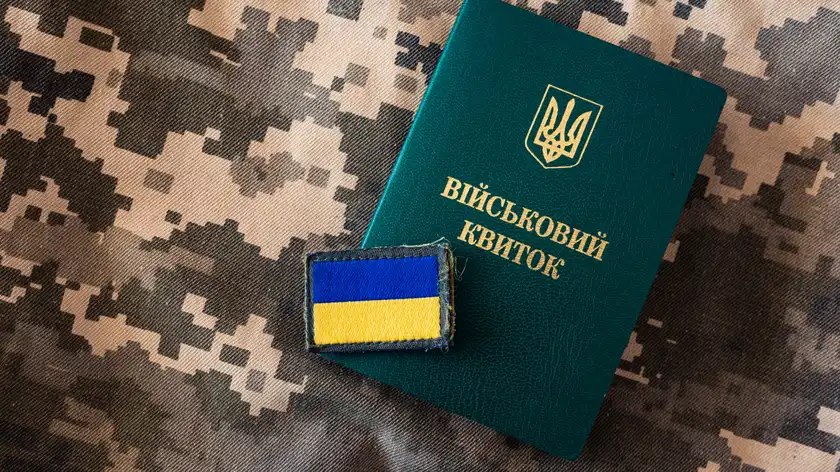
With the start of Russia’s full-scale invasion of Ukraine, the President issued the relevant decrees introducing martial law and declaring general mobilization, the terms of which have since been regularly extended by the Verkhovna Rada.
It had long been noted that the mobilization law in force at the start of the war was outdated and that the military registration system was ineffective. While expert opinions were divided on the new draft mobilization law No. 10449 as well, adopting it—given the current external and internal factors—was vitally important. Ukraine must withstand the aggressor, and to do so it needs not only weapons, but also people.
Mobilization put on a military footing
President Volodymyr Zelenskyy declared general mobilization in Ukraine on the first day of Russia’s full-scale invasion, February 24, 2022.
Since then, the Verkhovna Rada has extended the duration of this presidential decree every three months, meaning that, from a formal standpoint, mobilization in Ukraine has been ongoing continuously for a third year.
Over this period, the situation with replenishing the armed forces with new recruits has changed significantly. While in the first weeks and months queues of volunteers formed outside recruitment offices, that flow soon dried up. As a result, to ensure a steady supply of personnel to the Armed Forces of Ukraine, mobilization began to be carried out using the “classic” method—by serving draft notices.
However, involving defenders in Ukraine’s defense exposed a number of problems in this process.
First, mobilization legislation that had not been updated for years correlated poorly with the challenges of wartime.
Second, it became clear that Ukraine’s military registration system was far from perfect. Territorial recruitment centers simply lacked information about the place of residence and social status of millions of military-age citizens who, in violation of the law, had avoided registering in order to stay out of the military system’s field of view.
As a result, streets, checkpoints, and entertainment venues became places where eligible men were sought out and served with draft notices. Often, this process was far from orderly.
It was during this period that a joke appeared in military circles: “We don’t need guys in our unit who couldn’t even escape the recruitment office,” reflecting the low quality of reinforcements.
Thus, the emergence of a new mobilization law became a demand of the times. No matter how difficult the work on it was or how heated the debates surrounding the document became, it ultimately reached the parliamentary chamber.
New law: key changes
On April 11, 2024, the Verkhovna Rada adopted mobilization law No. 10449 in its entirety. The document will enter into force on May 18, 2024, one month after it is signed by the President.
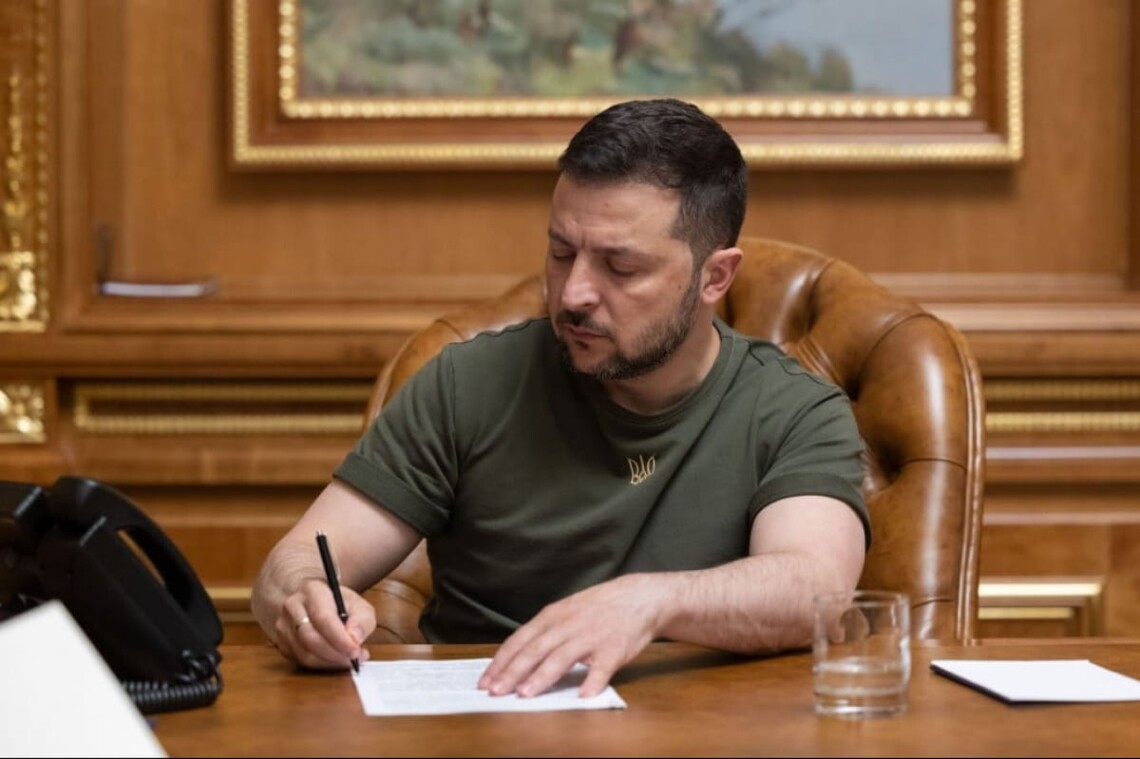
Photo: president.gov.ua | The President of Ukraine signed the new mobilization law
The main innovations of the law concern military registration and are intended to update the database of those liable for military service. This, in turn, should provide an answer regarding the overall manpower potential of Ukraine’s Defense Forces and put an end to the practice of searching for recruits on the streets.
Thus, in accordance with the key provisions of the law, within 60 days from the date it enters into force, all Ukrainian men aged 18 to 60 (including those abroad) must update their military registration data. Thereafter, for the entire duration of martial law, they will be required to carry their military registration documents and present them upon request by recruitment center officials or police officers.
The legislation introduces the concept of an electronic military service member’s account, which any Ukrainian man of conscription age may voluntarily create. This account will serve as the main channel of communication with the military system.
Men who are not registered for military service will be unable to obtain a foreign passport or, for those abroad, use consular services.
In addition, the law restricts draft evaders from working in public service positions and allows recruitment centers to initiate court proceedings to suspend their driving licenses.
The adopted law confirms the right to deferment from mobilization for parents with three or more children (except those in arrears on alimony payments), single parents, adoptive parents, as well as citizens whose close relatives were killed or went missing while defending Ukraine.
Exemptions from mobilization will also apply to law enforcement officers, members of parliament and up to two of their assistants each, heads of central executive authorities, and judges.
Full-time university and vocational school students, as well as teachers working at least three-quarters of a full workload, are not subject to conscription.
Mobilization of persons with disabilities, former prisoners of war, and men under the age of 25 is possible only on a voluntary basis.
The law separately stipulates that all mobilized individuals must undergo the required military training.
Demobilization and rotation
The main criticism of the new law from the military has been the absence of provisions on demobilization and rotation, which lawmakers decided to address in a separate bill.
However, the issue of rotations appears to be progressing even without being explicitly enshrined in law. In particular, Commander-in-Chief of the Armed Forces of Ukraine Oleksandr Syrskyi stated in an interview in late March that rotations of military units along the front line had already begun.
“Our people are heroes, but their strength is not limitless—they also need recovery and rest. That is why the process of rotating military units along the front line has already been launched, allowing us to fully restore combat capability, not only of equipment, but above all to ensure rest and recovery for our servicemen. To make this possible, we need people. That is why I would like every man of conscription age in Ukraine to understand: Ukraine’s ability to endure depends on his will and actions.”
said Syrskyi.
As for demobilization, some lawmakers believe that the term itself is not fully applicable under conditions of an ongoing war. Therefore, the new law is more likely to address the regulation of discharge for servicemen of the Defense Forces who are currently fighting.
“Of course, it would have been better to include clear terms of service. But to demobilize such a large number of people, we must be able to provide an equivalent number of replacements—and those people must be trained and equipped.”
said UCSS Chairman Serhii Kuzan, commenting on the mobilization law to the Financial Times.
Recruitment and mobilization
The mobilization law introduces changes to military ranks, including the new rank of recruiter, and separately defines the functioning of recruitment centers in Ukraine. Lawmakers retained provisions protecting recruits who enlist for service in a specific unit. This means that a person affiliated with a particular unit who reports to a recruitment center will be able to serve in that unit after completing training.
This innovation is particularly important amid the development of the recruitment system and recruitment centers, where individuals can choose a military specialty and join the armed forces voluntarily. By the end of July 2024, 22 new recruitment centers are planned to open, bringing the total to up to 32 nationwide. The main goal is to increase the number of new contract servicemen to 4,000–5,000 per month.
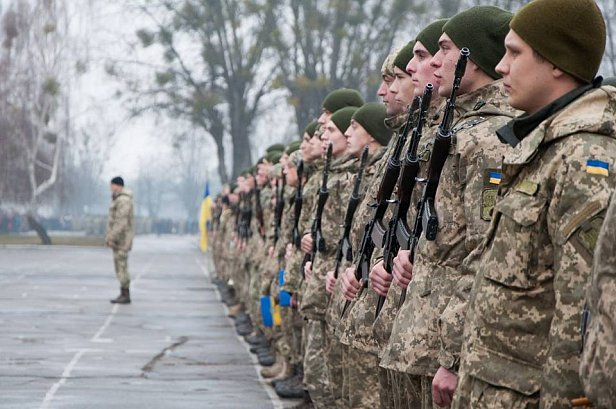
Photo: inforesist.org | Armed Forces of Ukraine
This practice is already widely used. Since the first months of the full-scale war, individual units such as the 3rd Assault Brigade, “Da Vinci Wolves,” and the special unit “Kraken” have successfully conducted their own recruitment. Last year, the Ministry of Defense also launched a recruitment program. And on March 14 of this year, a new recruitment algorithm for the Armed Forces of Ukraine was presented, operating through recruitment centers and online platforms.
At the same time, the procedure for those wishing to be mobilized differs from that for those seeking to sign a contract.
More necessary than ever
The adopted mobilization law is far from perfect. It is a compromise document with many problematic aspects. However, observers agree that its adoption in the third year of a war launched by Russia was overdue, and for several reasons.
First and foremost, the situation on the front line has long demanded intensified mobilization.
Ukrainian servicemen—many of whom have been fighting on the eastern front since the days of the Anti-Terrorist Operation in Donbas, effectively since 2014—have also been calling for stronger mobilization.
Finally, the adoption of the mobilization law became an element of Ukraine’s foreign policy game, as the country is in urgent need of financial and military assistance from its Western partners. Russian propaganda had promoted a narrative in the West questioning the advisability of supporting Ukraine, claiming it was allegedly incapable of organizing mobilization at the legislative level.
In this sense, the Verkhovna Rada’s adoption of the long-suffering law can be seen as fulfilling a request from the military and as a first step toward mobilizing the entire country and achieving future victory in the war.
18.05.2026
When Russia launched its full-scale invasion of Ukraine in 2022, Mariupol quickly became the site of…

05.05.2026
Russia pressed every Donbas sector in April, with assault tempo at a two-month high. The territorial…

16.03.2026
It is in the war against Ukraine that Russia is trying to adhere to this non-linear…


