


Mariupol is Putin’s blueprint for occupation, and the world is barely paying attention
18.05.2026
When Russia launched its full-scale invasion of Ukraine in 2022, Mariupol quickly became the site of…
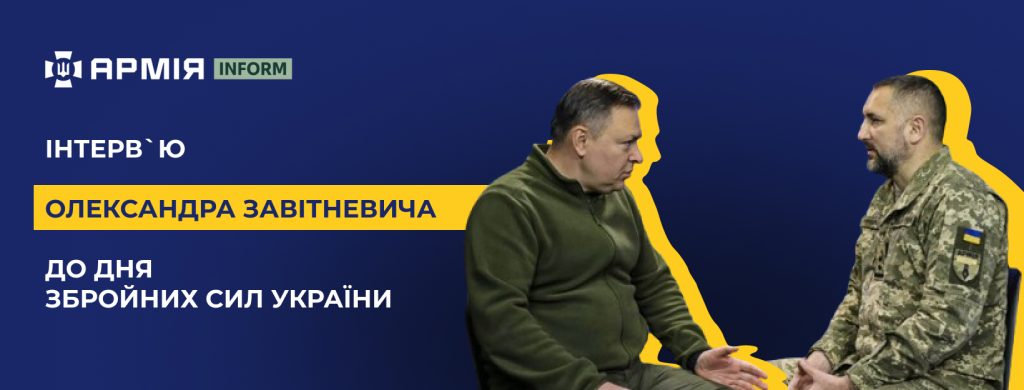
The Chairman of the Verkhovna Rada of Ukraine Committee on National Security, Defense, and Intelligence, Oleksandr Zavytnevych, shared the key results of the Committee’s work in 2023 with a correspondent of “ArmyInform”. Below we present excerpts from this interview. The full version is available at the original source.

(Here and below – direct speech):
— The very name of the Committee you chair, as well as its 14 areas of responsibility, clearly indicate that the Committee plays a leading role in establishing the legislative foundations for strengthening the country’s defense capability. What would you say is the most important achievement in this area?
O.Z.: I would divide the Committee’s work on strengthening defense capability into two areas: the first concerns meeting the needs of the Defense Forces, and the second concerns social protection of servicemen and their families. Efforts in the first area are focused on modernizing and expanding the capacities of Ukraine’s defense industry in line with priorities set by the Supreme Commander-in-Chief of the Armed Forces of Ukraine, aimed at implementing the tactics and strategy of victory over the enemy. Priority areas include ammunition and missiles, electronic warfare and drones, as well as new air defense capacities. Among the successful projects are the Ukrainian missile program launched back in 2021, the Defense Industries Forum held in September, and examples of successful joint production of certain weapons systems with partners. An important step forward for the defense industry will be the upcoming special conference between Ukrainian and American industries.
All members of the Committee clearly understand the value of every shell and every drone for Ukrainian defenders. Therefore, everything within the Committee’s competence is being done to ensure that the supply of domestically produced weapons and ammunition to the front is uninterrupted and provides the necessary quantities of arms and military equipment.
Among the legislative initiatives considered by the Committee, it is worth mentioning the Law on improving procedures for managing defense resources. It introduces principles of program and project management as the basis for effective defense resource management, taking into account NATO and EU experience. Another important document is the Resolution of the Verkhovna Rada of Ukraine “On Supporting the Defense-Industrial Complex of Ukraine under Martial Law.” Its title itself reflects the spirit of support for domestic manufacturers. This resolution guarantees contractors under state defense procurement contracts compensation for all economically justified costs related to contract execution, as well as profit (supplier remuneration) included in the cost of defense-related goods, works, and services, in accordance with contract terms.
— And what about the second area?
O.Z.: In the second area, the defining principle was that people in uniform—whether on the front line, on combat duty, or patrolling streets—should not be distracted by worries about whether their families are financially secure or what social protection they are entitled to, even in the event that an enemy bullet or shell takes their life.
First of all, this concerns the Law “On Amendments to Certain Laws of Ukraine Regarding Specific Issues Related to Military Service during Martial Law.” The Committee recommended legislatively securing the payment of monthly additional remuneration to servicemen during martial law and resolving the issue of leave for servicemen during martial law. I consider it important that the Committee supported mandatory completion of a basic combined-arms training course (lasting at least one month) for mobilized servicemen. Conscripts may, at their own request, be transferred to military service during mobilization or to contract service until demobilization is announced. All of this was reflected in the adopted law.
Committee members also actively worked on amendments to the draft law aimed at strengthening social protection for servicemen, police officers, and certain other categories. It regulates compensation for unused leave during martial law, including in cases of death of servicemen and police officers, one-time payments upon discharge from service, payments to servicemen taken prisoner or missing in action, as well as to their family members.
The Committee supported the law improving documentation and treatment procedures for servicemen during martial law. It simplifies the issuance of injury certificates (wounds, concussions, mutilations), both with and without formal investigation, and streamlines the exchange of medical and other documents between military units and healthcare facilities—servicemen no longer have to “walk” for documents; now documents “follow” the servicemen.
Amendments were also introduced to the Disciplinary Statute of the Armed Forces of Ukraine, granting the right, from the moment martial law is introduced or war is declared, to award the next military rank ahead of schedule more than once.
— What draft laws on social protection for servicemen are currently under Committee review?
O.Z.: First and foremost, this is Draft Law No. 10062, which aims to improve procedures for processing and using data in state registers for military registration and acquiring veteran status during martial law. It предусматриває the creation of an electronic register of persons liable for military service and an electronic account for conscripts, reservists, and those liable for service.
I would also like to highlight provisions that simplify the procedure for acquiring combatant status. Unfortunately, there are still cases where servicemen must go through offices, stand in lines, and collect paper documents. The automatic procedure provides that after completing a combat mission, authorized officers must, within five days, issue a certificate confirming participation in combat and enter the data into the Register. Combatant status will then be granted automatically, with an electronic identifier (QR code, barcode, or digital code).
Persons with disabilities resulting from the war (or their representatives) will be able to submit applications in paper or electronic form via the Diia portal or the Veterans Register, providing the necessary information or certified copies of documents.
Family members of servicemen who were killed, went missing, or died from injuries or illness sustained during the defense of Ukraine will also be able to apply in the same way.
The original material was prepared and published by ArmyInform and is republished by the Ukrainian Center for Security and Cooperation with the author’s consent.
18.05.2026
When Russia launched its full-scale invasion of Ukraine in 2022, Mariupol quickly became the site of…

05.05.2026
Russia pressed every Donbas sector in April, with assault tempo at a two-month high. The territorial…

16.03.2026
It is in the war against Ukraine that Russia is trying to adhere to this non-linear…


