


Mariupol is Putin’s blueprint for occupation, and the world is barely paying attention
18.05.2026
When Russia launched its full-scale invasion of Ukraine in 2022, Mariupol quickly became the site of…
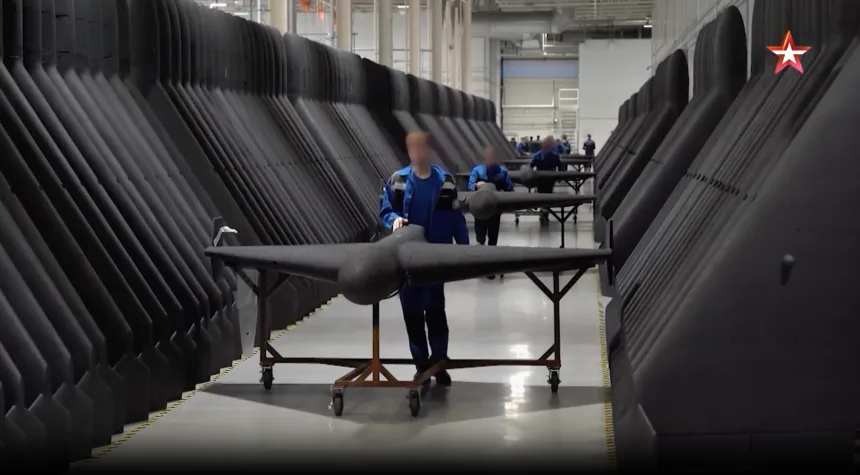
Russia has focused on the tactic of the mass use of strike drones to conduct aerial terror against Ukraine. In particular, Shahed-type UAVs have become the Kremlin’s key instrument in attempts to exhaust Ukraine’s air defense, destroy critical infrastructure, and intimidate the civilian population. This shift in strategy was a response to the failure of a rapid offensive and Russia’s inability to establish control over Ukrainian airspace in 2022.
Lacking its own production, Moscow turned to Iran, purchasing Shahed-136 drones and their manufacturing technologies, which made it possible to establish serial production of drones as early as 2023 in the Alabuga special economic zone in the Republic of Tatarstan.
Since 2024, Russia has modernized the drones by improving their design and protection against electronic warfare, and has almost completely switched to Chinese components, reducing dependence on Western technologies and accelerating production. According to information from Ukraine’s Main Intelligence Directorate, as of May 2025 factories were producing up to 170 drones per day, with output expected to rise to 190 per day by the end of the year.
The mass use of strike drones poses a serious threat, even despite the fact that Ukraine’s air defense is being modernized and is among the most effective in the world. During June 2025 alone, Russia used 5,169 strike drones in its attacks. As a result of missile and drone attacks in May 2025 across 17 regions of Ukraine, 1,019 people were killed or wounded, with around one-third of these casualties caused specifically by drone strikes. Under the command of Commander-in-Chief Oleksandr Syrskyi, the Armed Forces of Ukraine are forced to constantly seek more effective ways to counter mass attacks, when Russia can deploy up to 741 aerial attack assets in a single night, including more than 728 Shahed-type strike UAVs, as was the case on the night of July 9 during the attack on Ukraine.
Migrants in the service of drone production
About 4 million people are employed in Russia’s military-industrial sector, exceeding the population of some NATO countries. Despite this, the Kremlin acknowledges a personnel shortage both in the economy overall and in the defense industry — estimates indicate a shortfall of around 400,000 workers.
This is why Russian authorities plan to significantly increase the workforce, both by recruiting Russian citizens and by bringing in labor migrants. This particularly concerns Alabuga, the producer of Russian drones. Since 2022, the number of employees at the enterprise has increased at least twofold within a year and now exceeds 25,000 people.
Due to non-market-level high wages, which start at $2,170, the plant has virtually no competitors in its region, where the average salary is around $1,000. At the same time, the company’s management is actively seeking labor from Global South countries, offering slightly lower pay and worse working conditions.
Thus, at the end of 2024 it became known about the recruitment of women under the Alabuga Start program from African and Latin American countries; about 90% of them work on drone manufacturing, especially on parts that do not require advanced skills. Despite public scrutiny and complaints about working conditions, recruitment continues to this day.
The search for candidates is conducted by Russian embassies in African countries and by offices of Rossotrudnichestvo. Over the past few months alone, official pages of Russian institutions in the Central African Republic, the Democratic Republic of the Congo, and Ethiopia have published posts about the Alabuga Start project, through which candidates are selected in these countries.
For example, the Rossotrudnichestvo hub — the “Russian House in Bangui” in the Central African Republic — instead of promoting Russian culture, is in fact simultaneously engaged in recruiting labor for Russia’s military machine. Unfortunately, Rossotrudnichestvo offices have still not been sanctioned and continue to operate even in European countries.
Russia is also turning its attention to Central Asia: in March 2025, Alabuga signed a memorandum with Uzbekistan’s Migration Agency to recruit up to 10,000 citizens for employment. Active recruitment is conducted via social media and private recruitment companies that disseminate information about vacancies. In addition, reports highlighting success stories among Kyrgyz workers involved in drone assembly are regularly published, creating a positive image of working at the enterprise.
Overall, Alabuga’s management plans to recruit up to 25,000 new labor migrants, bringing the total workforce to 50,000 people. The seriousness of these plans is underscored by intentions to build an entire residential district to house 50,000 residents.
Author: Dmytro Zhmailo
18.05.2026
When Russia launched its full-scale invasion of Ukraine in 2022, Mariupol quickly became the site of…

05.05.2026
Russia pressed every Donbas sector in April, with assault tempo at a two-month high. The territorial…

16.03.2026
It is in the war against Ukraine that Russia is trying to adhere to this non-linear…


