


The Russia-Ukraine conflict has radically changed the understanding of modern warfare. Aviation no longer has absolute control of the air, and advanced tanks and armored vehicles have had their vulnerability exposed by relatively inexpensive unmanned systems.
And over three-and-a-half years of war, the Ukrainian army, inferior to the Russians in terms of mobilization and resources, has had to embrace asymmetric solutions, flexibility, and ingenuity, in particular by using drones in the air and at sea. That has required the establishment of drone labs and workshops close to the fighting forces.
Today, Unmanned Aerial Vehicles (UAVs) on both sides have led to the creation of “kill zones” — areas of 10km-20km (6-12 miles) where equipment or personnel are regularly destroyed. It is clear that a big part of future warfare involves drones.
After the full-scale invasion, Ukrainian units independently researched and perfected new ways of using UAVs in combat conditions, moving from simple observation to delivering ammunition and refining fire.
“We adjusted artillery strikes with a drone, while our other soldiers used maps. Then we compared the results, and the difference was very significant,” says Ivan, deputy commander of 59 Separate Assault Brigade of the Unmanned Systems Forces of the Armed Forces of Ukraine. “That was our first serious experience with drones in 2022. Later, we started using them to drop ammunition.”
Since then, innovation has driven the development of military technology, and the cycle for creating new models, or modernizing existing ones, has been cut to three to four months or even less.
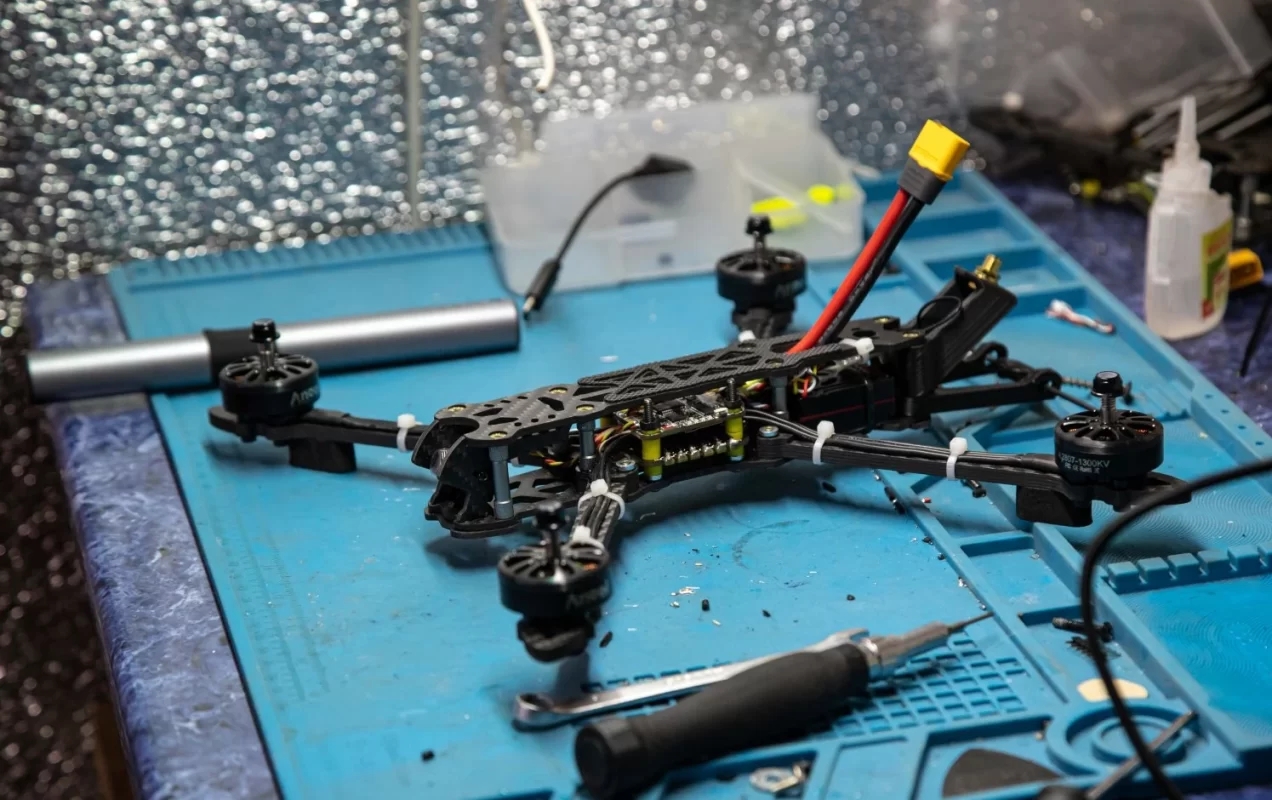
A vital role in the process is played by front-line drone workshop-laboratories, where UAVs are tested, repaired, improved, and sometimes created in accordance with the needs of the front line.
“We are the first to identify problems and understand what the front line needs. We are also the first to test new ideas and find solutions,” says Platon, head of the workshop of the Brigade’s 1 Battalion. “The main purpose is to ensure combat readiness.”
Such drone laboratories have proved their effectiveness, which is why virtually every Ukrainian unit now has its own frontline version so drone crews can concentrate on combat rather than maintenance and adaptation of UAVs.
“The larger the unit, the more specialized workshops it can afford,” says Andriy Khoma, commander of the special-purpose unmanned systems unit. “In particular, one unit may have a workshop that specializes exclusively in First-Person View [FPV], Mavic reconnaissance drones, or heavy bombers.”
The workshop-laboratories shorten the repair and renewal cycle, allowing rapid testing and implementation of tactical innovations without long delays in supply. And their proximity to combat operations means they can better serve the ever-changing demands of the war.
“Being close to the front-line forces us to constantly improve our technology. Since the contact line is dynamic, radio frequencies change quickly: some are working today, but tomorrow the enemy starts jamming them,” Khoma says. “The front-line workshop allows us to quickly reconfigure the drones and maintain their combat capability in such conditions.”
And they have had a dramatic impact on combat. Before the workshops were established, the effectiveness of FPV missions for Khoma’s units was around 30%, but after they were set up, that figure reached 70%.
The full article is published on CEPA
Author: Serhii Kuzan
Photo: АрміяInform